World Hepatitis Day 2026 and National Hepatitis Interventions
#GS-2 #GS-3 #Health #Governance & Social Justice #Government Policies & Interventions #Science & Technology #Biotechnology #National #International
Key takeaways
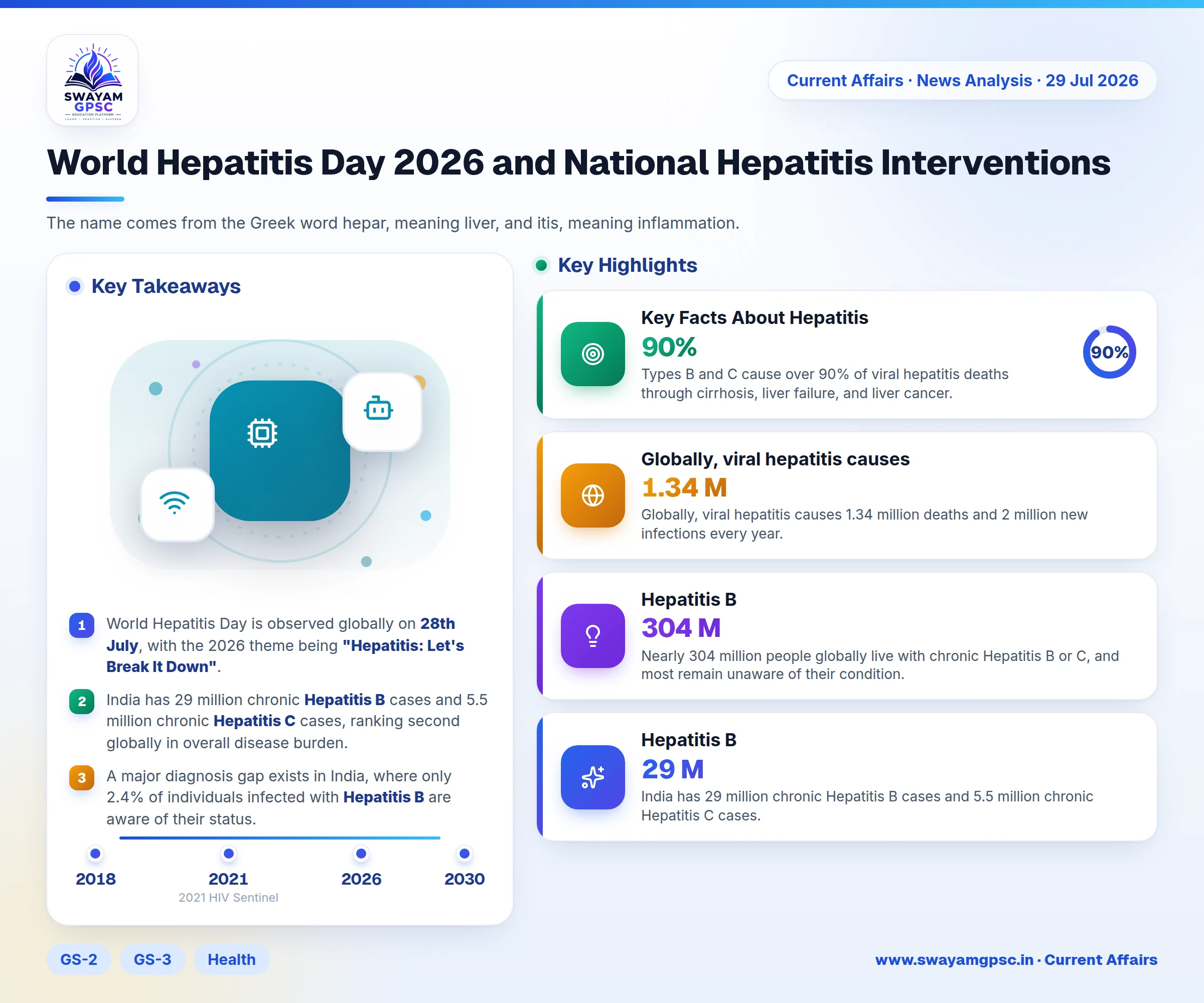
- World Hepatitis Day is observed globally on 28th July, with the 2026 theme being "Hepatitis: Let's Break It Down".
- India has 29 million chronic Hepatitis B cases and 5.5 million chronic Hepatitis C cases, ranking second globally in overall disease burden.
- A major diagnosis gap exists in India, where only 2.4% of individuals infected with Hepatitis B are aware of their status.
- The National Viral Hepatitis Control Programme (NVHCP) was launched in 2018 to eliminate viral hepatitis by 2030.
- Modern Direct-Acting Antiviral drugs can cure over 95% of Hepatitis C patients within 12 to 24 weeks.
Why in News
- The world observed World Hepatitis Day on 28th July to spread awareness about viral liver infections.
- The official theme for 2026 is "Hepatitis: Let's Break It Down", focusing on removing social and financial barriers to medical care.
Key Facts About Hepatitis
- Hepatitis refers to liver inflammation caused by viruses, alcohol, toxic drugs, or autoimmune diseases.
- The name comes from the Greek word hepar, meaning liver, and itis, meaning inflammation.
- Five distinct viral strains cause hepatitis, classified as types A, B, C, D, and E.
- Types A and E spread through contaminated food or water due to poor sanitation.
- Types B, C, and D spread through infected blood, bodily fluids, unsafe injections, or mother-to-child transmission during birth.
- Types B and C cause over 90% of viral hepatitis deaths through cirrhosis, liver failure, and liver cancer.
- Globally, viral hepatitis causes 1.34 million deaths and 2 million new infections every year.
- Nearly 304 million people globally live with chronic Hepatitis B or C, and most remain unaware of their condition.
- India has 29 million chronic Hepatitis B cases and 5.5 million chronic Hepatitis C cases.
- India accounts for 10% to 15% of the global Hepatitis B carrier pool, ranking second among high-burden countries.
- According to the 2021 HIV Sentinel Surveillance, Hepatitis B prevalence in India stood at 0.85%, while Hepatitis C was 0.29%.
- Only 2.4% of Hepatitis B cases in India are diagnosed, leaving a massive testing gap.
- India achieves 63% Hepatitis B birth-dose vaccine coverage, despite 93% coverage for the third vaccine dose in childhood.
- Common symptoms include persistent fatigue, poor appetite, nausea, abdominal pain, dark urine, and jaundice.
- Pregnant women infected with Hepatitis E face a significantly higher risk of acute liver failure.
- Hepatitis D is a defective virus that infects only individuals who already carry Hepatitis B.
- The World Health Organization (WHO) aims for a 90% reduction in new infections and a 65% reduction in deaths by 2030.
Modes of Transmission, Prevention, and Management
- Hepatitis A and E spread via the fecal-oral route through contaminated food or water.
- Prevention for Hepatitis A and E relies on clean drinking water, good hygiene, sanitation, and available vaccines.
- Treatment for Hepatitis A and E is supportive, focusing on hydration and nutrition since the infection resolves on its own.
- Hepatitis B transmits through infected blood, bodily fluids, and mother-to-child transmission during birth.
- Prevention for Hepatitis B involves giving newborns a birth dose vaccine within 24 hours, followed by doses at 6, 10, and 14 weeks.
- Chronic Hepatitis B is managed using daily antiviral medications based on clinical guidelines.
- Hepatitis C spreads through contact with infected blood, unsterile medical equipment, or shared needles.
- No vaccine exists for Hepatitis C, but safe blood transfusion practices and harm reduction programs help prevent its spread.
- Direct-Acting Antiviral drugs cure over 95% of Hepatitis C cases within 12 to 24 weeks.
- Hepatitis D spreads through infected blood and only affects people already infected with Hepatitis B.
- Vaccinating individuals against Hepatitis B automatically protects them from Hepatitis D infection.
National Viral Hepatitis Control Programme
- The Indian government launched the National Viral Hepatitis Control Programme (NVHCP) in 2018.
- The programme aims to eliminate viral hepatitis as a public health threat by 2030, supporting Sustainable Development Goal 3.3.
- It covers all five viral strains (A, B, C, D, and E) through preventive, diagnostic, and treatment services.
- The Integrated Disease Surveillance Programme monitors outbreak-prone Hepatitis A and E cases across the country.
- The government provides free diagnostic testing and essential medications for chronic Hepatitis B and C.
- Healthcare providers use the digital NVHCP Management Information System portal for paperless patient registration and monitoring.
Supporting National Health Programmes
- The Reproductive, Maternal, Newborn, Child, Adolescent Health and Nutrition (RMNCH+A) program conducts universal screening of pregnant women for Hepatitis B.
- The Universal Immunisation Programme (UIP) provides the birth-dose vaccine to all newborns within 24 hours.
- Newborns of Hepatitis B positive mothers receive both the vaccine and Hepatitis B Immunoglobulin at birth.
- The National AIDS Control Programme (NACP) screens high-risk populations and vaccinates eligible healthcare workers.
- The National Tuberculosis Elimination Programme (NTEP) shares its molecular testing machines to diagnose viral hepatitis.
- Patients can call the toll-free helpline 1800-11-6666 to get information on hepatitis prevention and nearby treatment centers.
- Blood banks screen donors and link individuals testing positive for Hepatitis B or C to treatment facilities.
Way Forward
- India needs sustained financial funding to strengthen primary healthcare facilities for liver care.
- Health authorities must expand screening campaigns to identify millions of undiagnosed carriers early.
- Hospitals must ensure that every newborn receives the Hepatitis B birth dose within the first 24 hours.
- Public health campaigns must dispel social stigma and educate communities about safe injection practices.