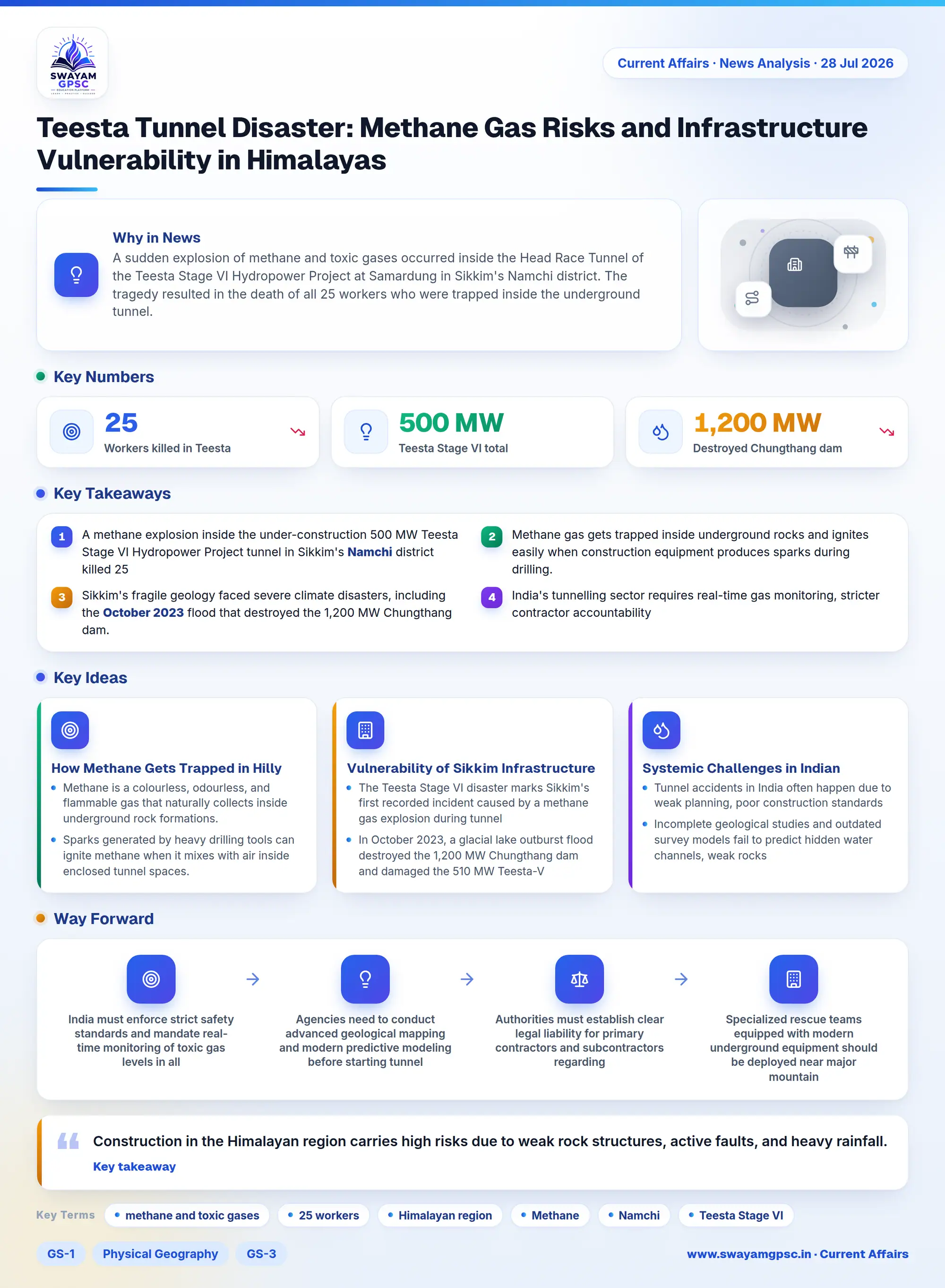
Teesta Tunnel Disaster: Methane Gas Risks and Infrastructure Vulnerability in Himalayas
#GS-1 #Physical Geography #GS-3 #Disaster Preparedness #National #Hydropower Infrastructure #Teesta Project
Why in News
- A sudden explosion of **methane and toxic gases** occurred inside the Head Race Tunnel of the **Teesta Stage VI Hydropower Project** at Samardung in Sikkim's **Namchi district**.
- The tragedy resulted in the death of all **25 workers** who were trapped inside the underground tunnel.
- This accident highlights the severe geological and safety risks involved in building large infrastructure in the **Himalayan region**.
How Methane Gets Trapped in Hilly Terrain
- **Methane** is a colourless, odourless, and flammable gas that naturally collects inside underground rock formations.
- Sparks generated by heavy drilling tools can ignite methane when it mixes with air inside enclosed tunnel spaces.
- Excavation work in the Head Race Tunnel disturbed gas-bearing rock layers and released methane into the working area.
- Gas stays stored inside porous rocks or remains trapped in isolated underground pockets in young rock formations.
- Microorganisms decompose ancient organic matter in carbon-rich strata over millions of years to produce natural methane gas.
- Oxygen-deficient conditions in waterlogged valleys accelerate the decomposition of organic materials by microbes.
- Geological fault lines and rock fissures allow underground methane to migrate into enclosed spaces like tunnels.
- Unmanaged solid waste dumps in hilly areas also produce methane when waste breaks down without oxygen.
- Southern Sikkim's **Namchi** region lies in the geologically complex **Rangit Tectonic Window** and contains small coal deposits.
- Standard engineering surveys detect rock stability and water risks but often fail to locate small gas pockets before drilling.
Vulnerability of Sikkim Infrastructure Projects
- The **Teesta Stage VI** disaster marks Sikkim's first recorded incident caused by a methane gas explosion during tunnel construction.
- In **October 2023**, a glacial lake outburst flood destroyed the **1,200 MW Chungthang dam** and damaged the **510 MW Teesta-V Project**.
- Sikkim belongs to a young and tectonically active mountain zone that experiences frequent landslides, earthquakes, and soil erosion.
- Heavy blasting and rock drilling for dams, roads, and rail lines weaken fragile hill slopes.
- Rapid urban construction, intense tourism, forest clearance, and improper waste disposal increase geological stability risks in the region.
- Extreme weather events like cloudbursts and melting glaciers create frequent flash floods that threaten hydropower assets.
Systemic Challenges in Indian Tunnelling Projects
- Construction in the **Himalayan region** carries high risks due to weak rock structures, active faults, and heavy rainfall.
- Tunnel accidents in India often happen due to weak planning, poor construction standards, and inadequate safety checks.
- Incomplete geological studies and outdated survey models fail to predict hidden water channels, weak rocks, and underground gas pockets.
- Construction sites often lack proper ventilation systems, emergency escape channels, fire safety tools, and continuous monitoring devices.
- Workers face high hazards because contractors fail to provide specialized training, personal protective gear, and clear safety protocols.
Way Forward
- India must enforce strict safety standards and mandate real-time monitoring of toxic gas levels in all underground sites.
- Agencies need to conduct advanced geological mapping and modern predictive modeling before starting tunnel excavation.
- Authorities must establish clear legal liability for primary contractors and subcontractors regarding workplace safety.
- Specialized rescue teams equipped with modern underground equipment should be deployed near major mountain infrastructure projects.