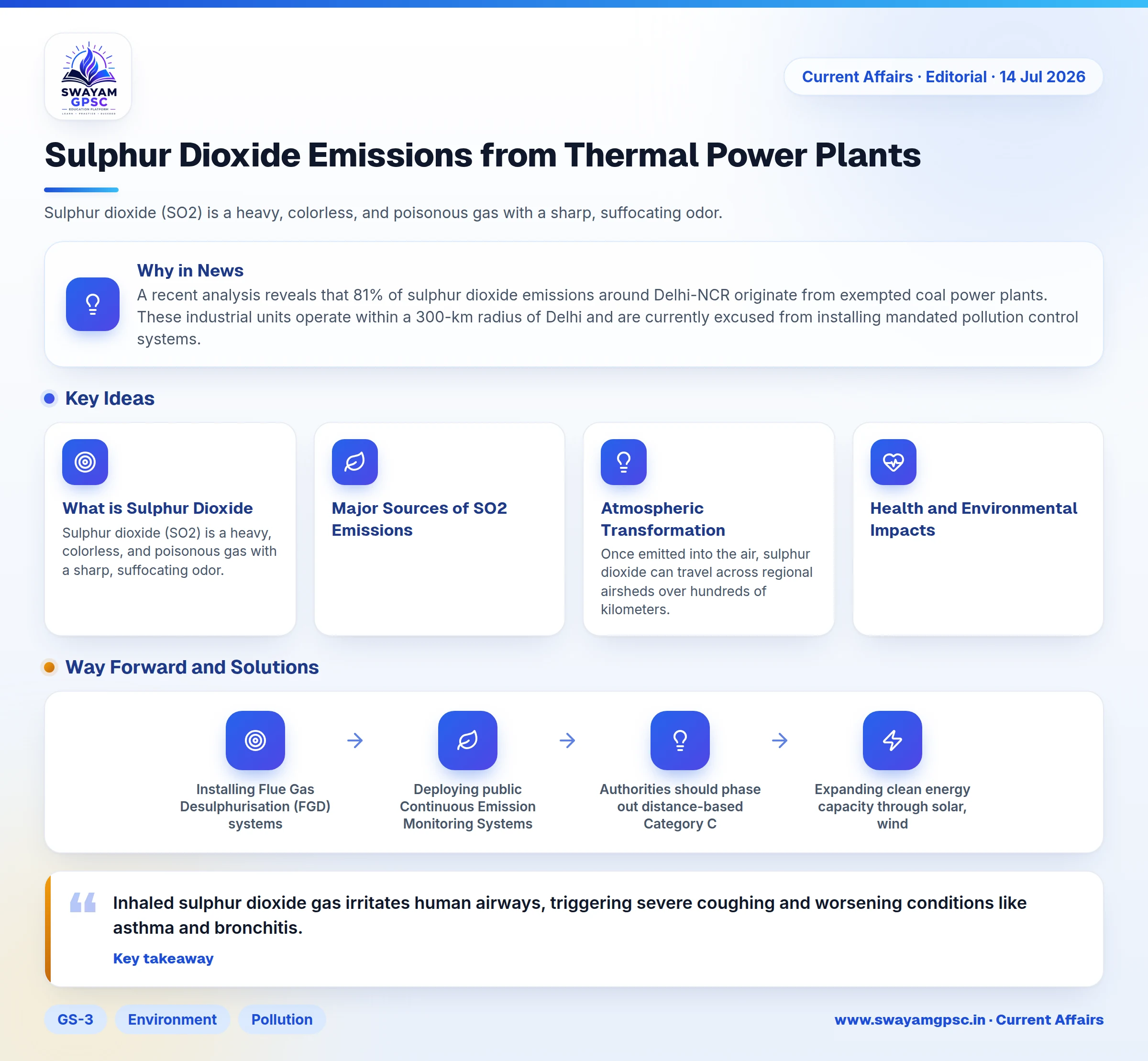
Sulphur Dioxide Emissions from Thermal Power Plants
#GS-3 #Environment #Pollution #Current Events #National #Sulphur Dioxide
Why in News
- A recent analysis reveals that 81% of sulphur dioxide emissions around Delhi-NCR originate from exempted coal power plants.
- These industrial units operate within a 300-km radius of Delhi and are currently excused from installing mandated pollution control systems.
What is Sulphur Dioxide
- Sulphur dioxide (SO2) is a heavy, colorless, and poisonous gas with a sharp, suffocating odor.
- It is a highly reactive chemical compound and ranks among the primary air pollutants monitored under global ambient air quality standards.
Major Sources of SO2 Emissions
- Thermal power stations burning sulphur-rich coal act as the single largest industrial driver of sulphur dioxide emissions.
- Oil refining and metal processing facilities that melt mineral ores such as copper, zinc, and iron release large volumes of the gas.
- Natural phenomena including volcanic eruptions, geothermal hot springs, and decomposing organic matter in wetlands contribute to baseline environmental levels.
Atmospheric Transformation
- Once emitted into the air, sulphur dioxide can travel across regional airsheds over hundreds of kilometers.
- The gas chemically reacts with water vapor and atmospheric oxygen to form acidic sulfate aerosols, creating dangerous PM2.5 particulate matter.
- It easily dissolves inside cloud water droplets to turn into sulphuric acid (H2SO4), which eventually falls as destructive acid rain.
Health and Environmental Impacts
- Inhaled sulphur dioxide gas irritates human airways, triggering severe coughing and worsening conditions like asthma and bronchitis.
- By producing fine particulate matter, the gas raises body inflammation, elevating the risk of strokes, heart disease, and early death.
- Direct exposure destroys plant leaves and reduces photosynthesis, while acid rain strips crucial nutrients from soil and harms aquatic life.
Way Forward and Solutions
- Installing Flue Gas Desulphurisation (FGD) systems in thermal plants can remove up to 95% of emitted sulphur dioxide using limestone scrubbers.
- Deploying public Continuous Emission Monitoring Systems (CEMS) ensures real-time emission reporting to stop data manipulation by factories.
- Authorities should phase out distance-based Category C exemptions because wind carries sulphur dioxide gas across long distances.
- Expanding clean energy capacity through solar, wind, and battery storage will lower national dependence on coal combustion.