Rethinking India's Food Safety and Public Health Framework
#GS-2 #Governance & Social Justice #Good Governance #Health #GS-3 #Food Processing #Food Security #Agriculture #Economy #Current Events #National
Key takeaways
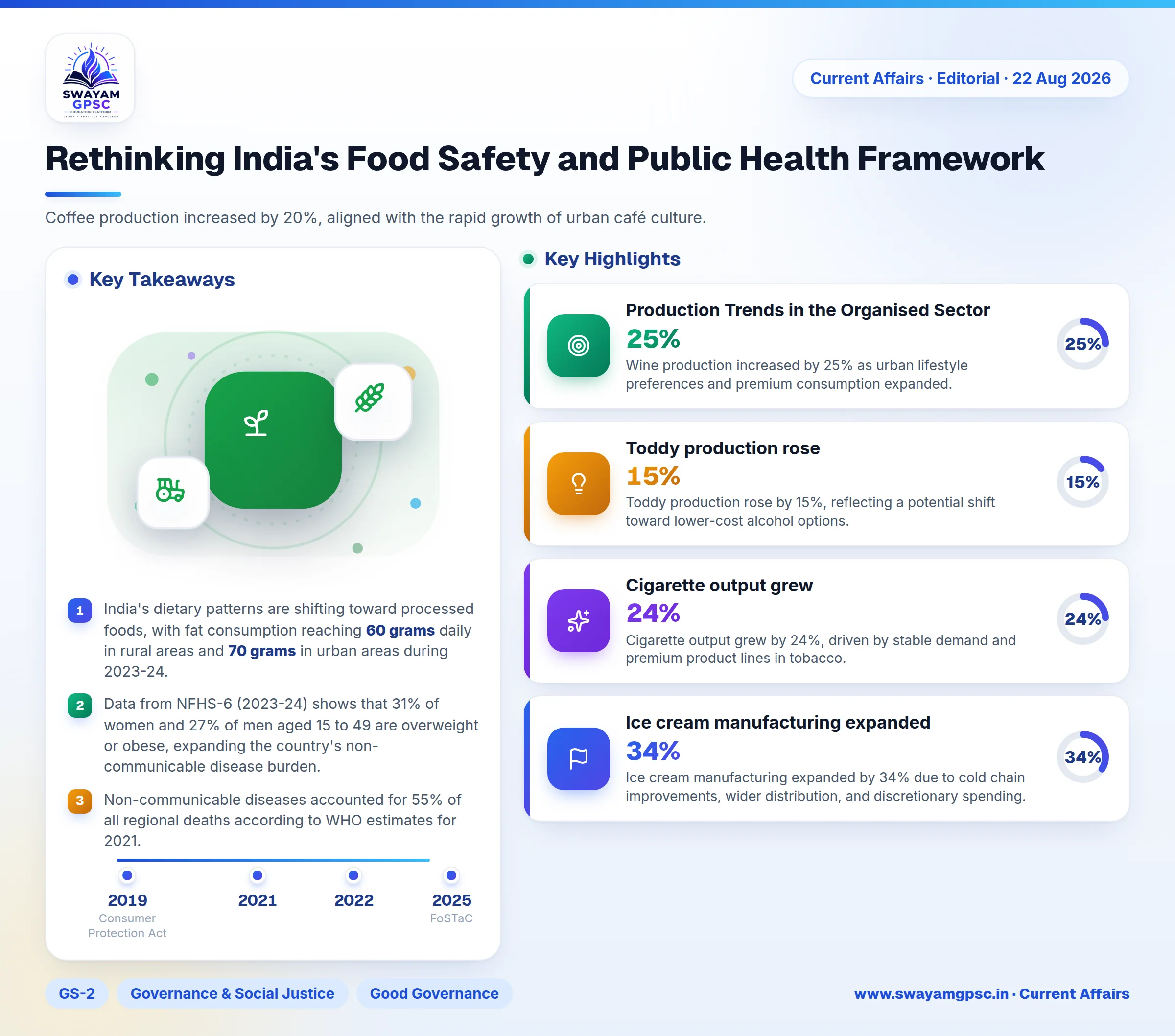
- India's dietary patterns are shifting toward processed foods, with fat consumption reaching 60 grams daily in rural areas and 70 grams in urban areas during 2023-24.
- Data from NFHS-6 (2023-24) shows that 31% of women and 27% of men aged 15 to 49 are overweight or obese, expanding the country's non-communicable disease burden.
- Non-communicable diseases accounted for 55% of all regional deaths according to WHO estimates for 2021.
- To curb health risks, FSSAI capped industrial trans-fat content in commercial fats to not more than 2% by weight starting January 2022.
- Key regulatory reforms require implementing mandatory Front-of-Pack Nutrition Labelling (FOPNL) and strengthening state enforcement capacity across supply chains.
Why in News
- Modern dietary habits and expanding industrial food production are transforming nutrition patterns across India.
- The shift toward processed foods has increased obesity rates and expanded the burden of non-communicable diseases.
- These dietary shifts highlight critical gaps in food safety enforcement, digital marketing rules, and public health governance.
Production Trends in the Organised Sector
- Wine production increased by 25% as urban lifestyle preferences and premium consumption expanded.
- Toddy production rose by 15%, reflecting a potential shift toward lower-cost alcohol options.
- Cigarette output grew by 24%, driven by stable demand and premium product lines in tobacco.
- Ice cream manufacturing expanded by 34% due to cold chain improvements, wider distribution, and discretionary spending.
- Coffee production increased by 20%, aligned with the rapid growth of urban café culture.
- Tea output grew modestly by 2.4% as the market matured and consumers explored alternative beverages.
- Prepared meal manufacturing grew by 23%, supported by busy lifestyles and quick food-delivery apps.
- Physical newspaper printing declined by 36% as readers shifted to digital news sources.
- Academic journal printing dropped by 68% due to widespread digitisation of scholarly publications.
- Pharmaceutical capsule output surged by 122%, indicating higher production capacity, export growth, and medicine demand.
Changes in India's Food Consumption Patterns
- Food items account for a declining share of overall family budgets in line with Engel's Law.
- In 2023-24, food represented 47% of rural spending and 40% of urban spending.
- Direct household spending on traditional cereals like rice and wheat fell to around 5% of rural budgets in 2023-24.
- Despite lower budget shares, cereals still supply 46% to 47% of rural protein and nearly 40% of urban protein intake.
- Spending on protein-rich foods rose, with milk products reaching over 8% of rural and 7% of urban budgets in 2023-24.
- Dairy expansion was boosted by cooperative brands such as Amul and Nandini alongside growing meat markets.
- Processed foods and beverages became the largest food budget component, taking 10% of rural and 11% of urban monthly spending.
- Urbanization and busy work routines increased consumer reliance on convenience items and delivery apps like Swiggy and Zomato.
- Aspirational spending shifted choices toward specialty coffee, fine dining, and dessert trends driven by social media.
- Daily fat consumption reached 60 grams per person in rural areas and 70 grams in urban areas during 2023-24, while daily protein intake hovered around 62 to 63 grams.
- A parallel health-conscious trend boosted demand for millets promoted as Shree Anna, fortified rice, and local goods under One District One Product.
- Marketing terms like no maida, no palm oil, and high protein signal growing consumer preference for healthy choices.
Public Health Concerns
- Calorie-dense diets coupled with physical inactivity have caused rapid increases in overweight and obesity rates.
- Data from NFHS-6 (2023-24) shows that 31% of women and 27% of men aged 15 to 49 are overweight or obese.
- Diets rich in salt, free sugars, and refined fats increase risks of Type-2 diabetes, heart conditions, and kidney problems.
- Non-communicable diseases accounted for 55% of all deaths in the WHO South-East Asia Region in 2021.
- Alcohol consumption contributes to liver damage, cancers, road accidents, and domestic financial distress.
- The Global Adult Tobacco Survey-2 reported 26.7 crore tobacco users in India, representing 28.6% of adults in 2016-17.
- The National Tobacco Control Programme estimates that tobacco causes 13.5 lakh deaths annually in India.
- India faces a double burden of malnutrition, where 29% of children under five suffer from stunting while adult obesity rises.
- Reliance on street food and delivery meals increases exposure to unhygienic water, contaminated meat, and reused oil.
- High prices for fresh produce create a nutrition-income paradox, forcing lower-income families toward cheap refined food.
- Diet-related chronic illnesses increase personal out-of-pocket medical spending and lower worker productivity.
Measures Taken to Strengthen Food Safety
- The Food Safety and Standards Authority of India (FSSAI) sets national standards, licenses businesses, and inspects imports.
- The Central Consumer Protection Authority (CCPA) enforces rules against deceptive advertisements under the Consumer Protection Act, 2019.
- The Guidelines for Prevention of Misleading Advertisements, 2022 prohibit indirect surrogate advertising across media.
- The Drugs and Magic Remedies Act, 1954 restricts illegal advertisements claiming miraculous medical cures.
- The FoSTaC initiative trained more than 3 lakh street food vendors in hygienic food handling by August 2025.
- The Eat Right India campaign promotes safe, healthy, and sustainable food habits in schools, workplaces, and street hubs.
- In January 2022, FSSAI capped industrial trans-fat content in oils and fats at not more than 2% by weight.
- The RUCO initiative collects used cooking oil from commercial kitchens to produce bio-diesel.
- The FoSCoS digital platform simplifies business registration, regulatory compliance, and food product traceability.
Challenges
- Food regulations focus heavily on immediate safety hazards while neglecting the long-term risks of high fat, salt, and sugar items.
- The absence of compulsory Front-of-Pack Nutrition Labelling (FOPNL) makes it hard for buyers to identify unhealthy packaged food.
- Vague health claims like immunity booster create false impressions of safety on high-sugar or high-salt products.
- Liquor and tobacco brands bypass marketing bans using surrogate ads on social media, merchandise, and event sponsorships.
- Social media influencers frequently promote unverified health products and extreme diets without medical qualifications.
- Multiple regulators including FSSAI, CCPA, and state departments create jurisdictional overlaps and enforcement gaps.
Way Forward
- Build a comprehensive database linking HCES expenditure data, retail sales, and health surveys into a published National Food Consumption and Nutrition Report.
- Implement mandatory Front-of-Pack Nutrition Labelling (FOPNL) to clearly display high sugar, salt, and saturated fat levels on packages.
- Restrict advertising of unhealthy food to children across television, mobile games, school grounds, and online media.
- Establish an influencer framework requiring clear disclosure of paid deals and scientific proof for health claims.
- Set mandatory industry targets to gradually reduce added sugar, sodium, and bad fats in commercial food products.
- Provide central funds to State food safety departments to increase inspection staffing and upgrade testing laboratories.
- Conduct systematic nationwide sampling to monitor pesticide residues, micro-contaminants, and heavy metals in food supplies.
- Supply street food vendors with clean water, proper drainage, waste facilities, and simplified registration processes.
Conclusion
- India's evolving food habits require regulatory policies to move beyond basic safety checks to address nutritional quality.
- Enforcing clear front labels, restricting deceptive digital ads, and upgrading state inspection tools will safeguard public health.