Polymer Banknotes in India: Advantages, Challenges, and RBI Initiative
#GS-3 #Economy #Banking #Infrastructure #Environment #Sustainable Development #Current Events #National
Why in News
- The currency printing arm of the Reserve Bank of India (RBI), named Bharatiya Reserve Bank Note Mudran Private Limited, has requested global Expressions of Interest. It wants suppliers to provide opacified polymer substrate sheets with built-in security features.
About Polymer Banknotes
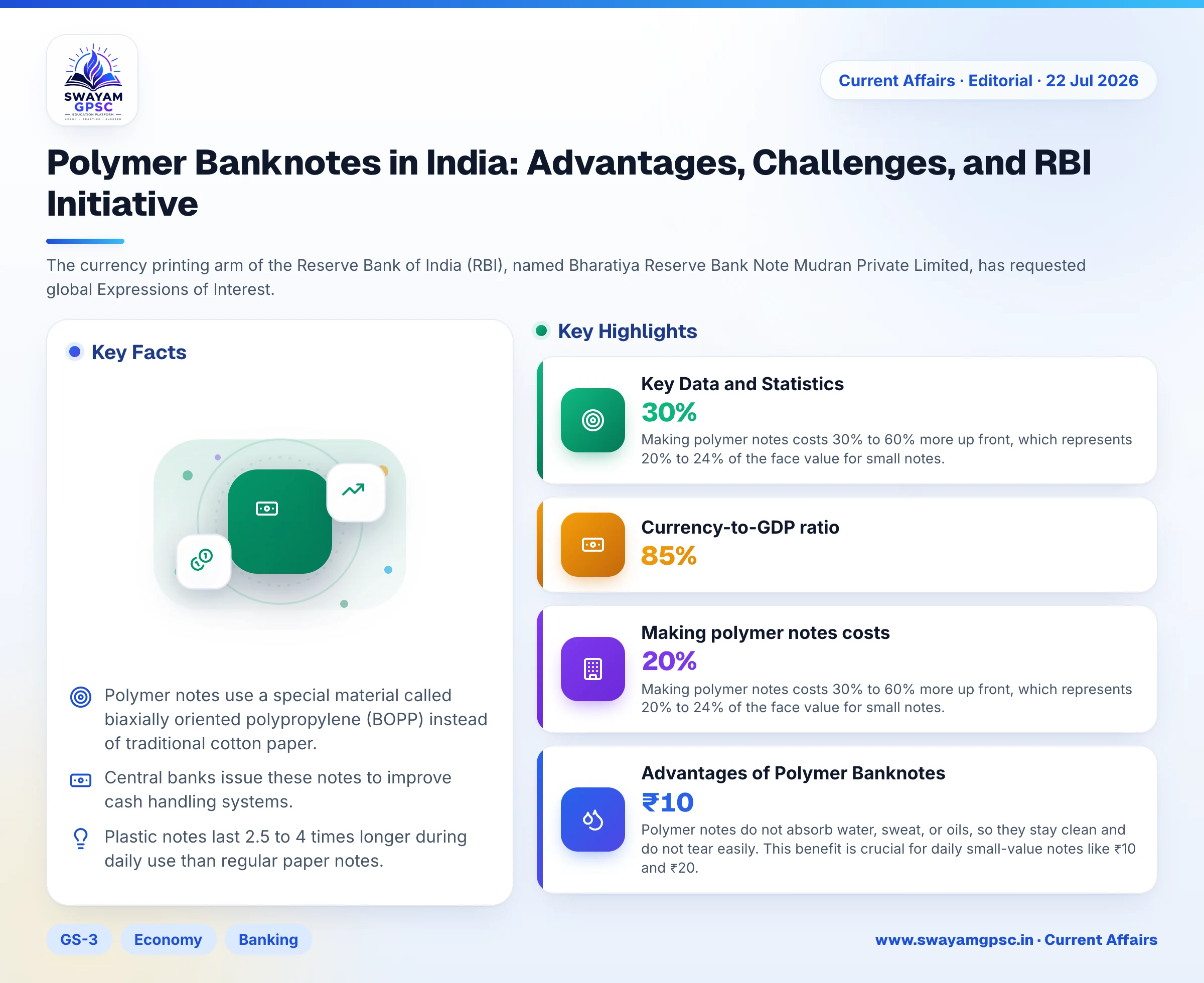
- Polymer notes use a special material called biaxially oriented polypropylene (BOPP) instead of traditional cotton paper. Today, more than 60 countries use plastic currency, with Australia leading the way after introducing a full series three decades ago.
- Central banks issue these notes to improve cash handling systems. They last much longer because they resist dirt and moisture while offering strong protection against counterfeiting.
Key Data and Statistics
- Plastic notes last 2.5 to 4 times longer during daily use than regular paper notes.
- Making polymer notes costs 30% to 60% more up front, which represents 20% to 24% of the face value for small notes.
- The Unified Payments Interface (UPI) handles over 24,000 crore transactions every year and covers 85% of retail digital payments, but India's Currency-to-GDP ratio still stays above 11%.
- India imports about 20% or one-fifth of the total polypropylene used within the country.
Advantages of Polymer Banknotes
- Polymer notes do not absorb water, sweat, or oils, so they stay clean and do not tear easily. This benefit is crucial for daily small-value notes like ₹10 and ₹20.
- Replacing notes less often saves money over time because the central bank prints, moves, and destroys fewer damaged notes.
- Plastic notes support advanced security details like transparent windows, color-changing inks, and detailed metallic patterns that protect against forgery.
- A research study by TERI showed that plastic currency reduces overall carbon emissions over its lifecycle because it requires fewer production runs and fewer transport shipments.
Challenges
- Producing plastic currency demands costly raw materials and high-end security features, which makes printing low-value notes almost as expensive as the note itself.
- Polymer notes rely on raw oil products, so their production expenses rise whenever global crude prices jump or oil supply stops in West Asia.
- Commercial banks must spend heavily to adjust their existing cash systems, including ATMs, cash counting devices, and vending machines.
- Spending huge funds on paper cash infrastructure creates a conflict because digital systems like UPI and the e-Rupee are already replacing physical notes.
Way Forward
- The RBI should test polymer notes only for ₹10 and ₹20 values first across regions with different weather patterns to check their actual savings.
- India needs to boost domestic refining of polypropylene through local companies to stop relying on imported plastic sheets.
- The authorities must set up dedicated recycling plants that melt old plastic notes into useful industrial plastic items to avoid waste.
- The government should balance cash printing with the growth of payment tools like UPI and the e-Rupee to keep total currency management affordable.
Conclusion
- The RBI step towards plastic notes is a practical decision to manage an economy with more than ₹41 lakh crore cash in circulation.
- High up-front production costs and oil import needs remain real problems, but the long-term savings on small notes provide clear financial benefits.
- Combining durable polymer notes with fast digital payment adoption will build a modern, secure, and smart money framework for India.