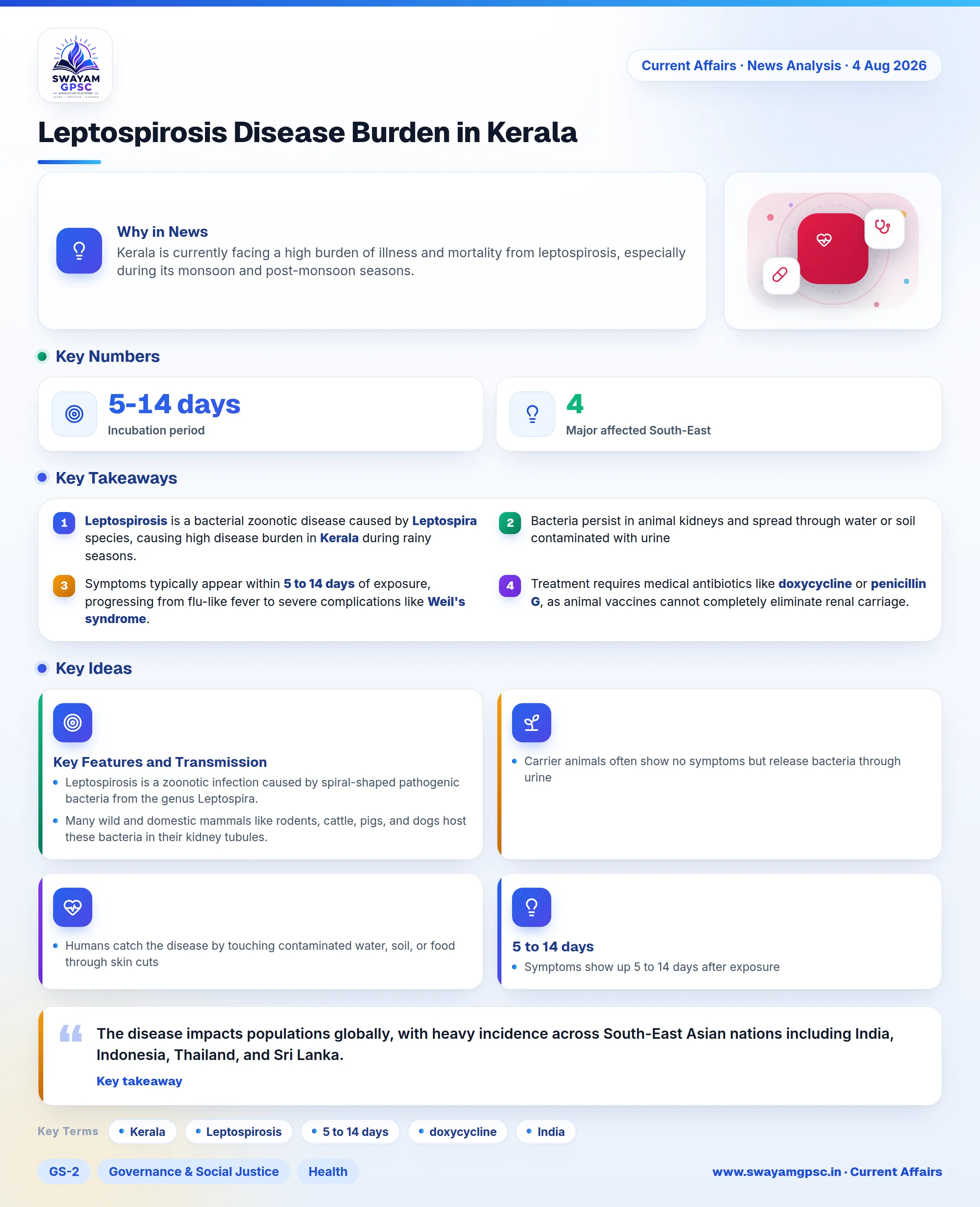
Leptospirosis Disease Burden in Kerala
#GS-2 #Governance & Social Justice #Health #GS-3 #Science & Technology #Biotechnology #Current Events #National #Zoonotic Diseases
Key takeaways
- Leptospirosis is a bacterial zoonotic disease caused by Leptospira species, causing high disease burden in Kerala during rainy seasons.
- Bacteria persist in animal kidneys and spread through water or soil contaminated with urine, entering human bodies via cuts or mucous membranes.
- Symptoms typically appear within 5 to 14 days of exposure, progressing from flu-like fever to severe complications like Weil's syndrome.
- Treatment requires medical antibiotics like doxycycline or penicillin G, as animal vaccines cannot completely eliminate renal carriage.
- The infection is widespread across South-East Asia, with major case counts reported in India, Indonesia, Thailand, and Sri Lanka.
Why in News
- Kerala is currently facing a high burden of illness and mortality from leptospirosis, especially during its monsoon and post-monsoon seasons.
Key Features and Transmission of Leptospirosis
- Leptospirosis is a zoonotic infection caused by spiral-shaped pathogenic bacteria from the genus Leptospira.
- Many wild and domestic mammals like rodents, cattle, pigs, and dogs host these bacteria in their kidney tubules.
- Carrier animals often show no symptoms but release bacteria through urine, making rodents the main cause of soil and water contamination.
- Humans catch the disease by touching contaminated water, soil, or food through skin cuts, while human-to-human transmission stays rare.
- Symptoms show up 5 to 14 days after exposure, starting with mild fever and sometimes advancing to severe Weil's syndrome or jaundice.
- Doctors frequently underdiagnose the condition because its initial signs closely resemble other common viral fevers.
- Healthcare providers treat patients using targeted antibiotics, including doxycycline, penicillin G, or ceftriaxone, based on disease severity.
- Preventive steps involve pest control, sanitation, and protective gear, although animal vaccines do not fully block kidney bacterial carriage.
- The disease impacts populations globally, with heavy incidence across South-East Asian nations including India, Indonesia, Thailand, and Sri Lanka.