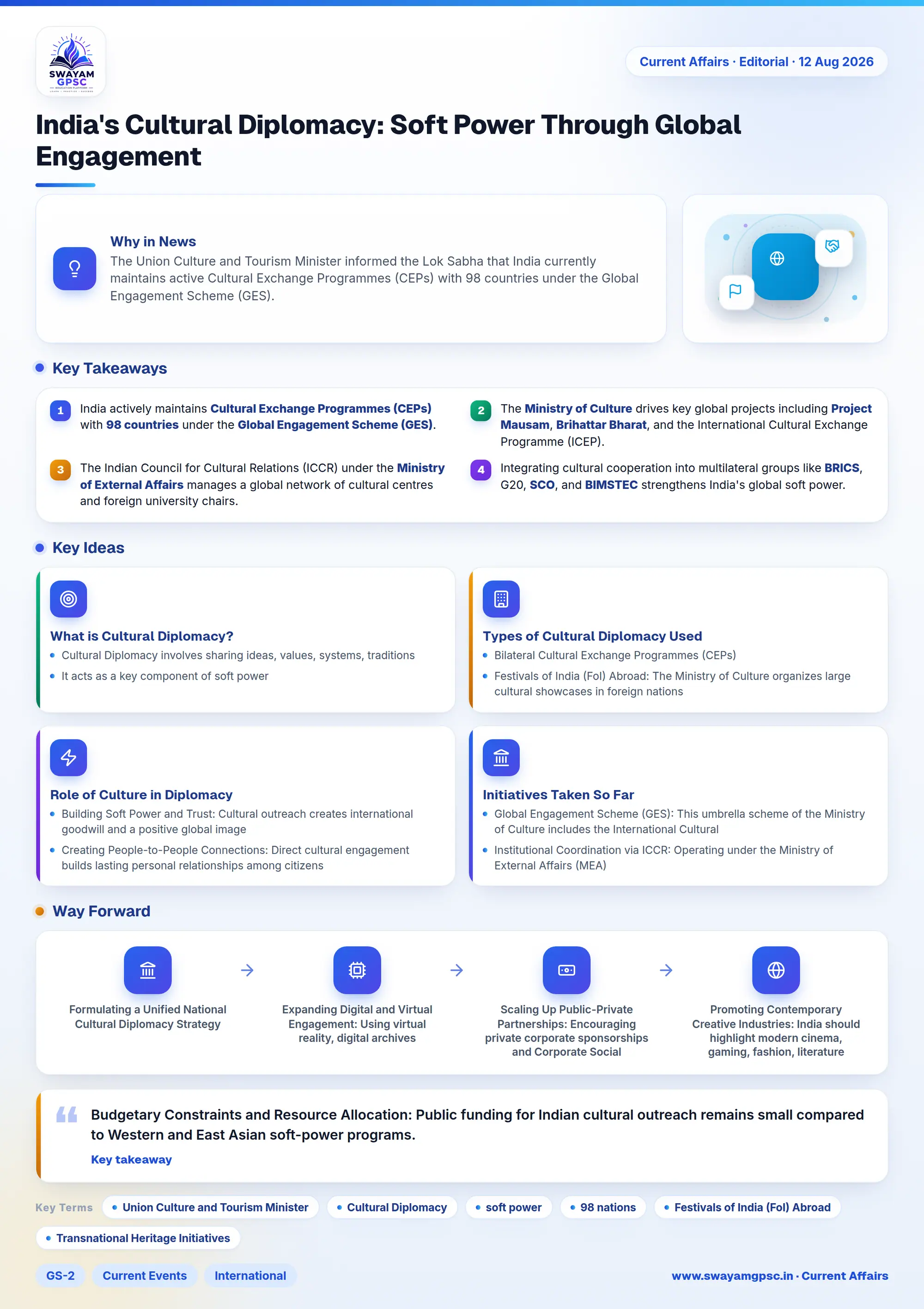
India's Cultural Diplomacy: Soft Power Through Global Engagement
#GS-2 #Current Events #International #Soft Power #Cultural Diplomacy #International Relations
Key takeaways
- India actively maintains Cultural Exchange Programmes (CEPs) with 98 countries under the Global Engagement Scheme (GES).
- The Ministry of Culture drives key global projects including Project Mausam, Brihattar Bharat, and the International Cultural Exchange Programme (ICEP).
- The Indian Council for Cultural Relations (ICCR) under the Ministry of External Affairs manages a global network of cultural centres and foreign university chairs.
- Integrating cultural cooperation into multilateral groups like BRICS, G20, SCO, and BIMSTEC strengthens India's global soft power.
Why in News
- The Union Culture and Tourism Minister informed the Lok Sabha that India currently maintains active Cultural Exchange Programmes (CEPs) with 98 countries under the Global Engagement Scheme (GES).
What is Cultural Diplomacy?
- Cultural Diplomacy involves sharing ideas, values, systems, traditions, and arts to foster mutual understanding and trust between nations.
- It acts as a key component of soft power, helping a nation build global influence through its civilisational heritage and creative arts rather than economic or military strength.
Types of Cultural Diplomacy Used by India
- Bilateral Cultural Exchange Programmes (CEPs): India executes formal agreements with 98 nations to support artistic exchanges, museum collaborations, and heritage conservation.
- Festivals of India (FoI) Abroad: The Ministry of Culture organizes large cultural showcases in foreign nations to present Indian classical dance, music, folk arts, and theater directly to global audiences.
- Transnational Heritage Initiatives: Projects such as Project Mausam and Brihattar Bharat reconnect historic trade and maritime links across the Indian Ocean rim and Southeast Asia.
- Wellness and Philosophical Outreach: India promotes traditional holistic health systems around the world through global events like the International Day of Yoga and Ayurveda awareness.
- Academic and Youth Engagement: The Indian Council for Cultural Relations (ICCR) sets up Chairs of Indian Studies at foreign universities and awards educational scholarships to international students.
Role of Culture in Diplomacy
- Building Soft Power and Trust: Cultural outreach creates international goodwill and a positive global image, making complex political talks easier.
- Creating People-to-People Connections: Direct cultural engagement builds lasting personal relationships among citizens, artists, and communities across borders.
- Mitigating Geopolitical Tensions: Shared cultural heritage serves as a steady bridge during political or economic strain, keeping communication open when diplomatic channels face friction.
- Promoting Inbound Tourism and Creative Economy: Highlighting cultural destinations, film locations, and spiritual wellness attracts international visitors and boosts economic growth.
Initiatives Taken So Far
- Global Engagement Scheme (GES): This umbrella scheme of the Ministry of Culture includes the International Cultural Exchange Programme (ICEP), Project Mausam, Brihattar Bharat, and intangible heritage protection.
- Institutional Coordination via ICCR: Operating under the Ministry of External Affairs (MEA), the ICCR manages a global network of cultural centres and organizes international art festivals in India.
- Integration into Multilateral Platforms: India embeds cultural cooperation into key multilateral groupings such as BRICS, G20, Shanghai Cooperation Organisation (SCO), and BIMSTEC.
Challenges
- Budgetary Constraints and Resource Allocation: Public funding for Indian cultural outreach remains small compared to Western and East Asian soft-power programs.
- Implementation and Coordination Bottlenecks: Multiple government bodies including the Ministry of Culture, MEA, ICCR, and state agencies face administrative overlapping and execution delays.
- Underutilized Maritime and Diaspora Links: Delays in completing long-term historical projects like Project Mausam limit India's ability to leverage its shared maritime history.
- Linguistic and Modern Narrative Gaps: Relying heavily on ancient heritage leads to a neglect of modern digital art, contemporary literature, and creative technology industries.
Way Forward
- Formulating a Unified National Cultural Diplomacy Strategy: Government bodies including the Ministry of Culture, MEA, and ICCR must sync their efforts under one clear roadmap.
- Expanding Digital and Virtual Engagement: Using virtual reality, digital archives, and online learning platforms can showcase Indian monuments and classical arts globally.
- Scaling Up Public-Private Partnerships: Encouraging private corporate sponsorships and Corporate Social Responsibility (CSR) funds will help finance international cultural festivals.
- Promoting Contemporary Creative Industries: India should highlight modern cinema, gaming, fashion, literature, and culinary arts alongside traditional heritage to engage global youth.
- Strengthening Regional Cultural Networks: Establishing joint conservation projects and maritime research hubs across South Asia and Southeast Asia will deepen regional ties.
Conclusion
- Structured funding through the Global Engagement Scheme and coordination by the ICCR project India's rich heritage and creative talent worldwide.
- Expanding digital technology, securing private investments, and engaging young international audiences will sustain India's growing soft power.