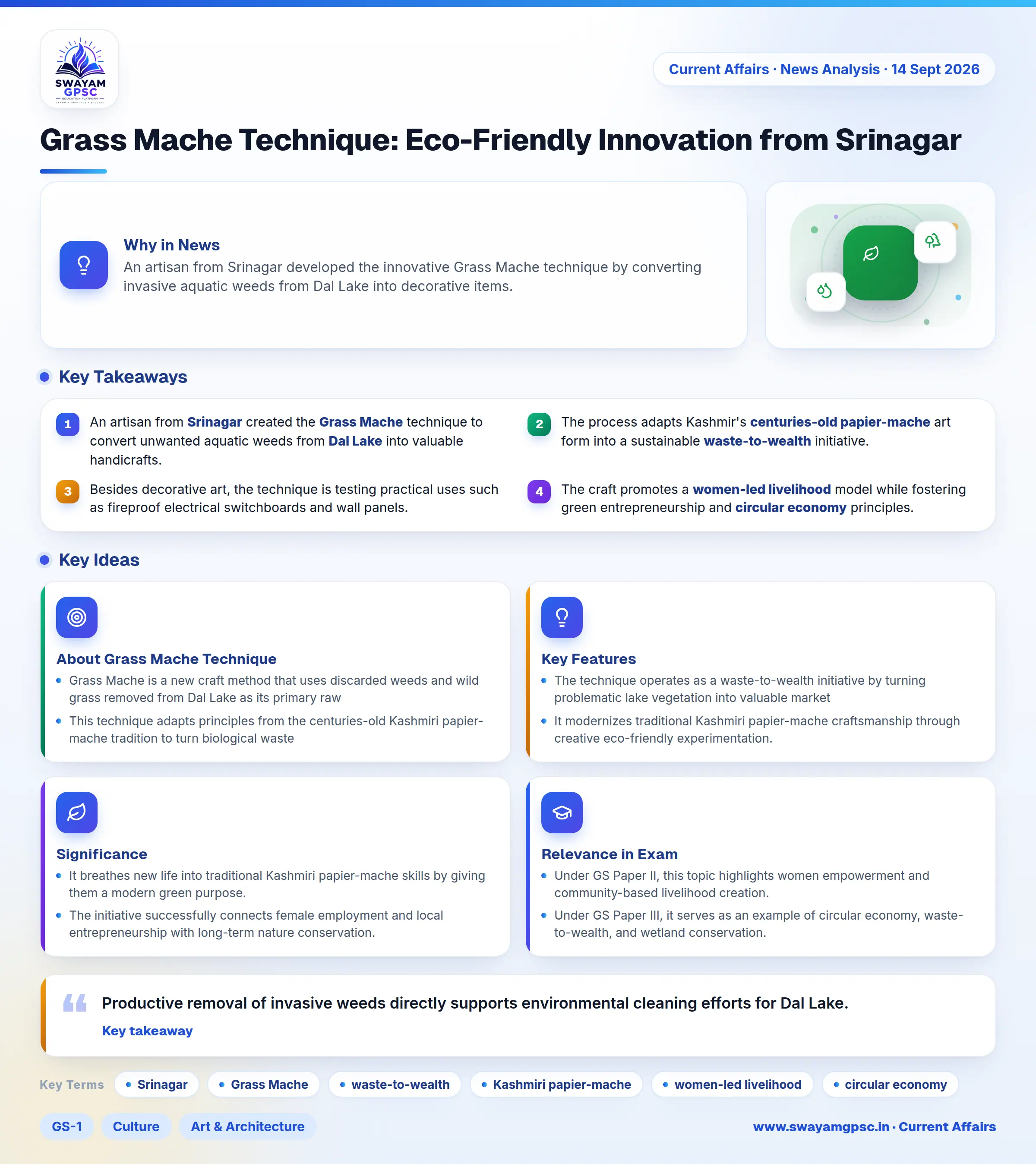
Grass Mache Technique: Eco-Friendly Innovation from Srinagar
#GS-1 #Culture #Art & Architecture #GS-2 #Social Justice #Women #GS-3 #Environment #Sustainable Development #Waste Management #GS-4 #Ethics #Case Study
Key takeaways
- An artisan from Srinagar created the Grass Mache technique to convert unwanted aquatic weeds from Dal Lake into valuable handicrafts.
- The process adapts Kashmir's centuries-old papier-mache art form into a sustainable waste-to-wealth initiative.
- Besides decorative art, the technique is testing practical uses such as fireproof electrical switchboards and wall panels.
- The craft promotes a women-led livelihood model while fostering green entrepreneurship and circular economy principles.
Why in News
- An artisan from Srinagar developed the innovative Grass Mache technique by converting invasive aquatic weeds from Dal Lake into decorative items.
About Grass Mache Technique
- Grass Mache is a new craft method that uses discarded weeds and wild grass removed from Dal Lake as its primary raw material.
- This technique adapts principles from the centuries-old Kashmiri papier-mache tradition to turn biological waste into sustainable goods.
- Artisans process dried lake weeds into a fibrous pulp, mix them with natural binders, and mold them into shapes with a stone-like finish.
Key Features
- The technique operates as a waste-to-wealth initiative by turning problematic lake vegetation into valuable market products.
- It modernizes traditional Kashmiri papier-mache craftsmanship through creative eco-friendly experimentation.
- Artisans create diverse items like flower vases and ornaments while testing fireproof wall paneling and switchboards.
- It establishes a women-led livelihood model that helps local women and young girls earn steady income.
- The model promotes a circular economy by reducing reliance on fresh timber through recycled paper and lake biomass.
Significance
- Productive removal of invasive weeds directly supports environmental cleaning efforts for Dal Lake.
- It breathes new life into traditional Kashmiri papier-mache skills by giving them a modern green purpose.
- The initiative successfully connects female employment and local entrepreneurship with long-term nature conservation.
Relevance in Exam
- Under GS Paper II, this topic highlights women empowerment and community-based livelihood creation.
- Under GS Paper III, it serves as an example of circular economy, waste-to-wealth, and wetland conservation.
- Under GS Paper IV, it offers a relevant case study for environmental ethics and social entrepreneurship.