Criminalisation of Politics in India: ADR Report Findings
#GS-2 #Indian Polity & Constitution #Governance & Social Justice #Good Governance #GS-4 #Ethics #Integrity #Accountability #Transparency #GS-3 #Current Events #National #Criminalisation of Politics #Electoral Reforms
Key takeaways
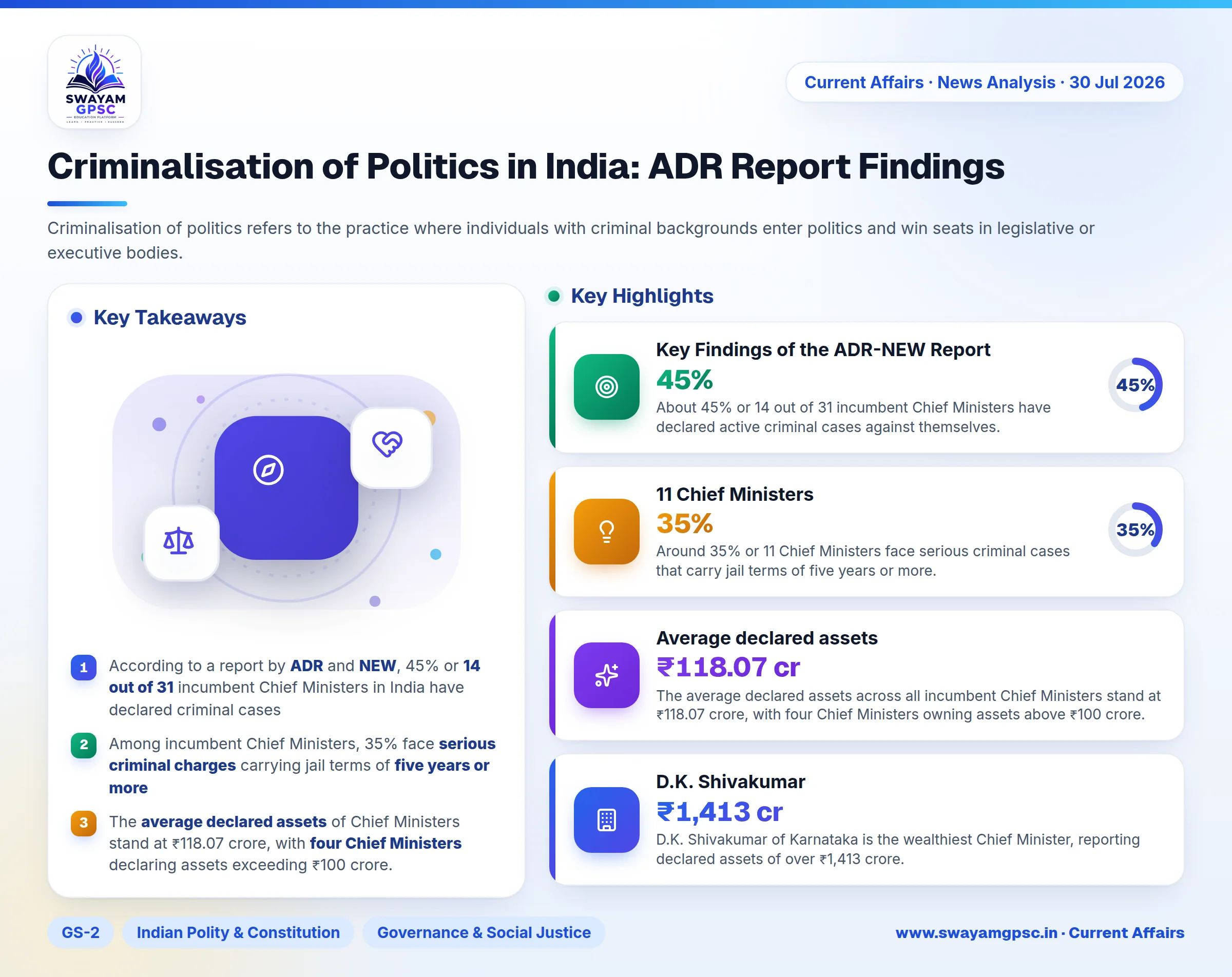
- According to a report by ADR and NEW, 45% or 14 out of 31 incumbent Chief Ministers in India have declared criminal cases against themselves.
- Among incumbent Chief Ministers, 35% face serious criminal charges carrying jail terms of five years or more, and two Chief Ministers face charges of attempt to murder.
- The average declared assets of Chief Ministers stand at ₹118.07 crore, with four Chief Ministers declaring assets exceeding ₹100 crore.
- D.K. Shivakumar of Karnataka is the wealthiest Chief Minister, holding declared assets worth over ₹1,413 crore.
Why in News
- The Association for Democratic Reforms (ADR) and National Election Watch (NEW) released a report analyzing the self-sworn election affidavits of all 31 incumbent Chief Ministers in India.
What is Criminalisation of Politics
- Criminalisation of politics refers to the practice where individuals with criminal backgrounds enter politics and win seats in legislative or executive bodies.
- This practice harms democratic governance because leaders facing serious criminal charges gain the power to make laws and manage public administration.
Key Findings of the ADR-NEW Report
- About 45% or 14 out of 31 incumbent Chief Ministers have declared active criminal cases against themselves.
- Around 35% or 11 Chief Ministers face serious criminal cases that carry jail terms of five years or more.
- Exactly two Chief Ministers have declared criminal cases related to charges of attempt to murder.
- The average declared assets across all incumbent Chief Ministers stand at ₹118.07 crore, with four Chief Ministers owning assets above ₹100 crore.
- D.K. Shivakumar of Karnataka is the wealthiest Chief Minister, reporting declared assets of over ₹1,413 crore.
- The analysis relies directly on the self-sworn affidavits filed by all 31 incumbent Chief Ministers before their most recent elections.
Implications and Challenges
- When elected representatives face serious criminal charges, public trust in democratic institutions collapses.
- Leaders with criminal backgrounds can negatively affect ethical decision-making, transparency, and accountability in government affairs.
- These findings emphasize the urgent need for electoral reforms, including fast-track trials for politicians and strict transparency standards.
Syllabus Relevance and Governance Significance
- This topic relates to GS Paper II regarding electoral reforms, criminalisation of politics, and strengthening democratic transparency.
- This topic also connects to GS Paper IV concerning ethical governance, public integrity, and building public trust in state institutions.