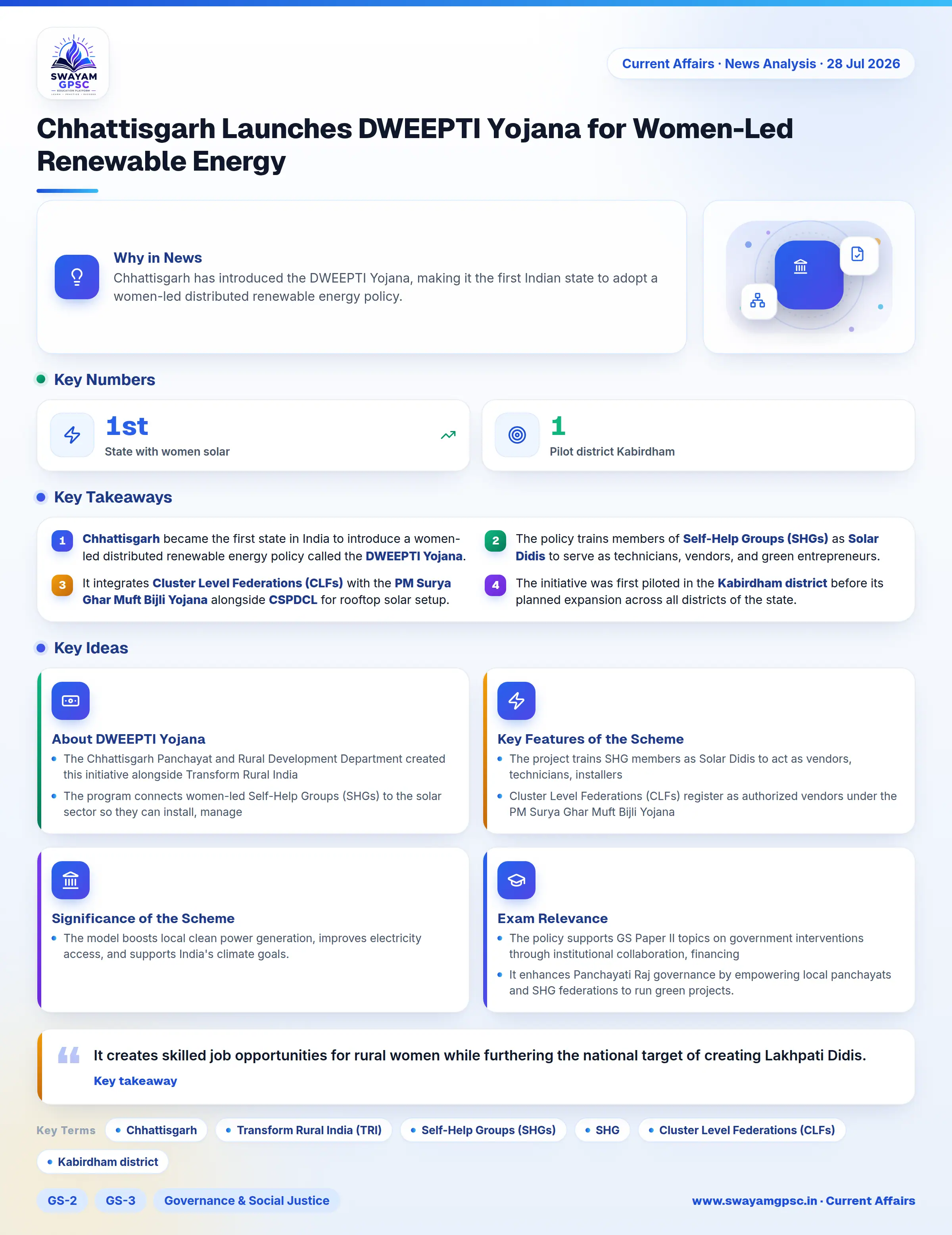
Chhattisgarh Launches DWEEPTI Yojana for Women-Led Renewable Energy
#GS-2 #GS-3 #Governance & Social Justice #Women #Local Government #Energy #Sustainable Development #Renewable Energy #DWEEPTI Yojana
Why in News
- **Chhattisgarh** has introduced the **DWEEPTI Yojana**, making it the first Indian state to adopt a women-led distributed renewable energy policy.
About DWEEPTI Yojana
- The **Chhattisgarh Panchayat and Rural Development Department** created this initiative alongside **Transform Rural India (TRI)** under the **Green Economy Transition Mission**.
- The program connects women-led **Self-Help Groups (SHGs)** to the solar sector so they can install, manage, and promote rooftop solar power.
- The primary goal is building women-led clean energy businesses, expanding local renewable power, and boosting rural self-reliance.
Key Features of the Scheme
- The project trains **SHG** members as **Solar Didis** to act as vendors, technicians, installers, and managers in the solar market.
- **Cluster Level Federations (CLFs)** register as authorized vendors under the **PM Surya Ghar Muft Bijli Yojana** in partnership with **CSPDCL**.
- The policy provides easy financing options to **SHG** members to buy rooftop solar units for home use and income creation.
- Following a successful pilot project in **Kabirdham district**, the government plans to launch this program across every district in the state.
Significance of the Scheme
- It creates skilled job opportunities for rural women while furthering the national target of creating **Lakhpati Didis**.
- The model boosts local clean power generation, improves electricity access, and supports India's climate goals.
Exam Relevance
- The policy supports **GS Paper II** topics on government interventions through institutional collaboration, financing, and policy frameworks.
- It enhances **Panchayati Raj** governance by empowering local panchayats and **SHG** federations to run green projects.
- For **GS Paper III**, it promotes rooftop solar energy and decentralized clean power to assist India's green energy shift.
- It furthers inclusive growth by offering sustainable green employment to rural women across the state.