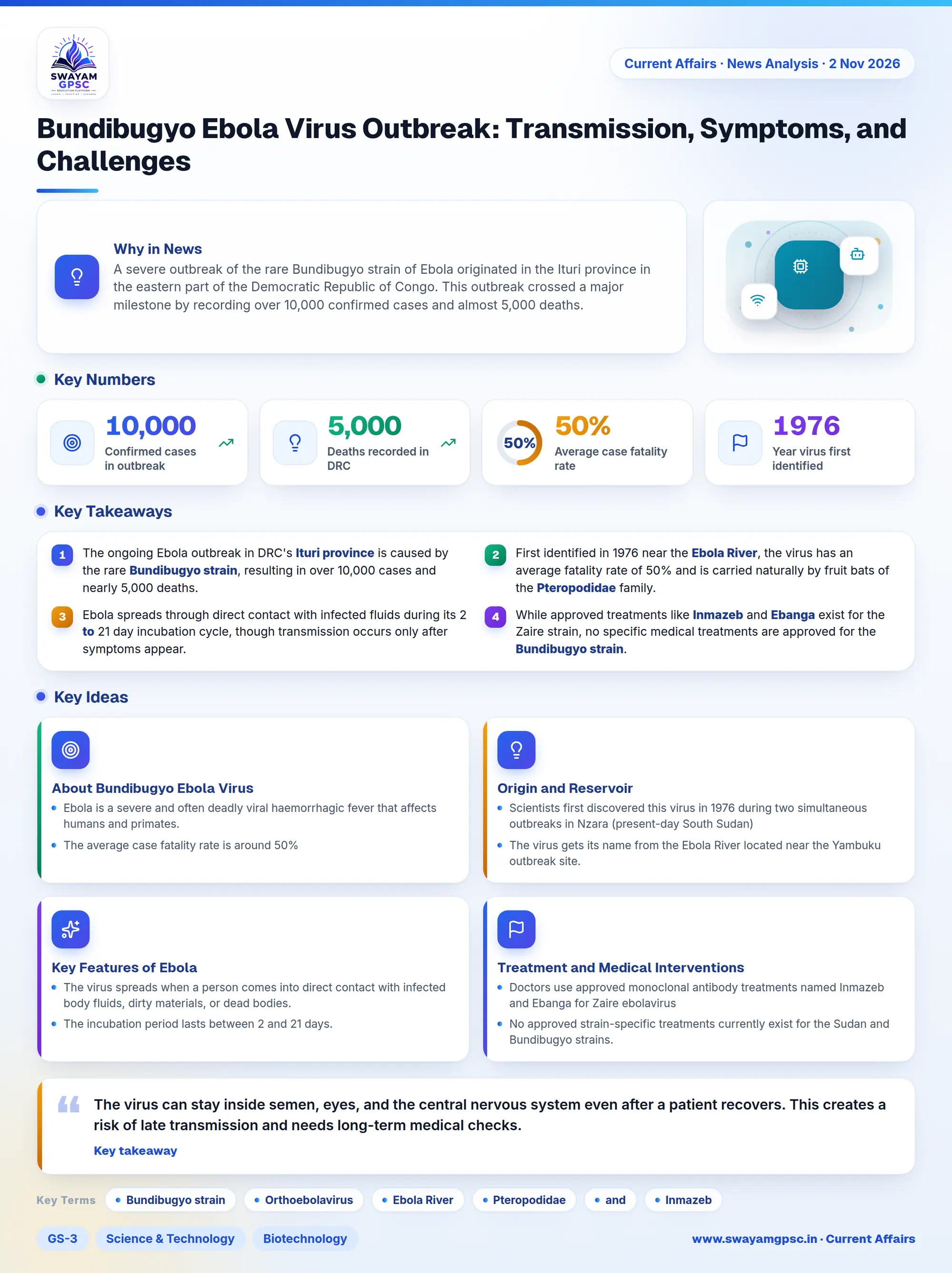
Bundibugyo Ebola Virus Outbreak: Transmission, Symptoms, and Challenges
#GS-3 #Science & Technology #Biotechnology #Current Events #International #Ebola Virus #Public Health
Key takeaways
- The ongoing Ebola outbreak in DRC's Ituri province is caused by the rare Bundibugyo strain, resulting in over 10,000 cases and nearly 5,000 deaths.
- First identified in 1976 near the Ebola River, the virus has an average fatality rate of 50% and is carried naturally by fruit bats of the Pteropodidae family.
- Ebola spreads through direct contact with infected fluids during its 2 to 21 day incubation cycle, though transmission occurs only after symptoms appear.
- While approved treatments like Inmazeb and Ebanga exist for the Zaire strain, no specific medical treatments are approved for the Bundibugyo strain.
Why in News
- A severe outbreak of the rare Bundibugyo strain of Ebola originated in the Ituri province in the eastern part of the Democratic Republic of Congo.
- This outbreak crossed a major milestone by recording over 10,000 confirmed cases and almost 5,000 deaths.
About Bundibugyo Ebola Virus
- Ebola is a severe and often deadly viral haemorrhagic fever that affects humans and primates. It belongs to the genus Orthoebolavirus and the family Filoviridae.
- The average case fatality rate is around 50%, but it has historically ranged between 25% and 90% based on the specific strain and public health response.
Origin and Reservoir
- Scientists first discovered this virus in 1976 during two simultaneous outbreaks in Nzara (present-day South Sudan) and Yambuku (Democratic Republic of Congo).
- The virus gets its name from the Ebola River located near the Yambuku outbreak site.
- Fruit bats from the Pteropodidae family serve as the natural host for this virus in nature.
Key Features of Ebola
- The virus spreads when a person comes into direct contact with infected body fluids, dirty materials, or dead bodies. It does not spread through normal air droplets.
- The incubation period lasts between 2 and 21 days. Patients cannot infect others during this period, as contagiousness starts only after symptoms appear and increases over time.
- Early symptoms include fever, tired feeling, muscle pain, and headache. Later stages bring vomiting, diarrhoea, poor organ function, internal bleeding, and multi-organ failure.
- Scientists divide the genus into six species: Zaire, Sudan, Bundibugyo, Taï Forest, Reston, and Bombali. Reston and Bombali do not cause disease in humans.
- The virus can stay inside semen, eyes, and the central nervous system even after a patient recovers. This creates a risk of late transmission and needs long-term medical checks.
Treatment and Medical Interventions
- Doctors use approved monoclonal antibody treatments named Inmazeb and Ebanga for Zaire ebolavirus, which lower death rates when given early.
- No approved strain-specific treatments currently exist for the Sudan and Bundibugyo strains. Doctors must rely on basic supportive care and experimental drugs.