Building a Self-Reliant Philanthropy Ecosystem in India
#GS-2 #GS-3 #Governance & Social Justice #NGOs & SHGs #Good Governance #Economy #Infrastructure #Current Events #National
Why in News
- Social sector leaders have called for creating an Atmanirbhar Philanthropy Ecosystem because local donations have now passed foreign funding as the main driver of social growth in India.
Understanding Atmanirbhar Philanthropy Ecosystem
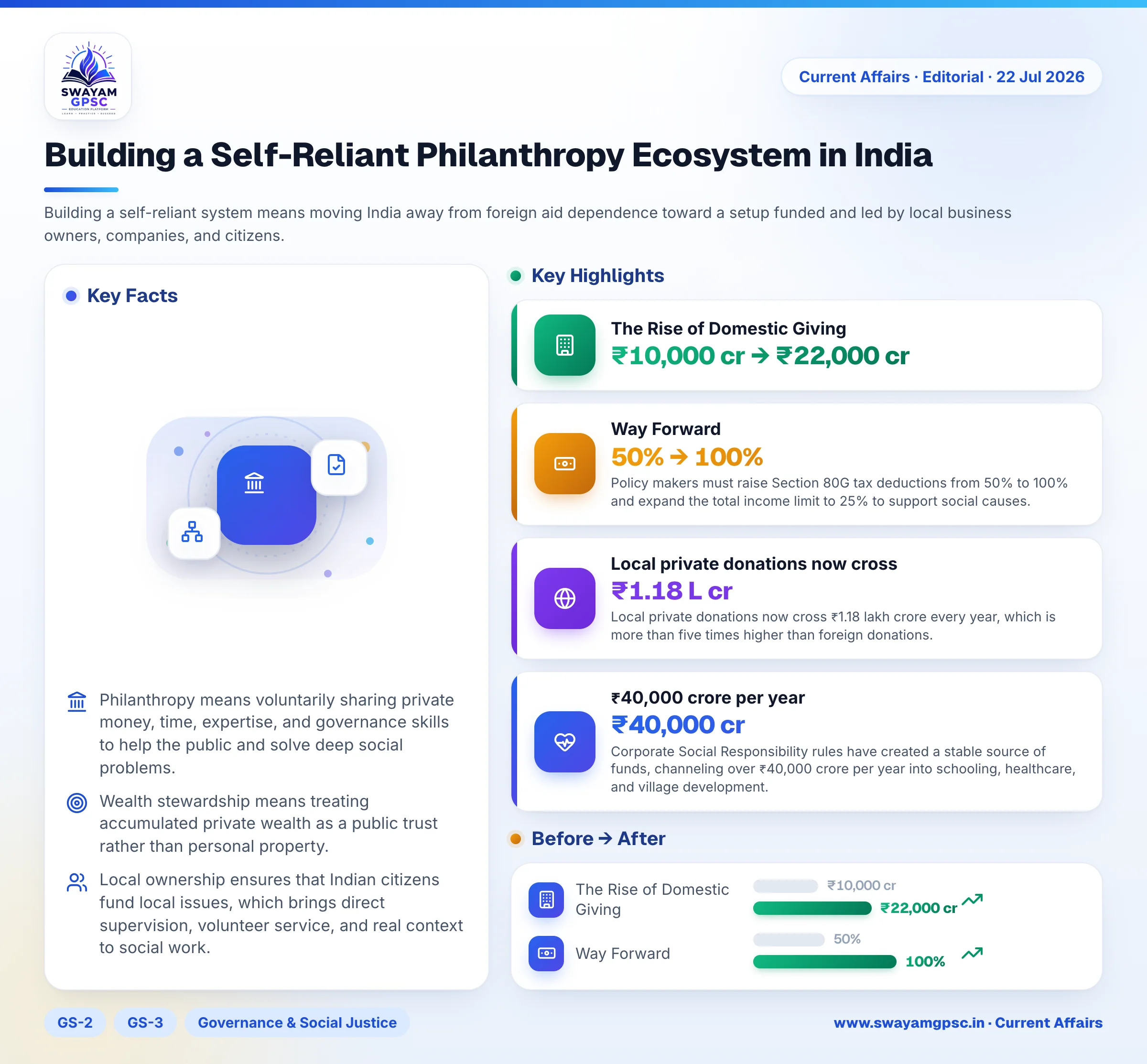
- Philanthropy means voluntarily sharing private money, time, expertise, and governance skills to help the public and solve deep social problems.
- Building a self-reliant system means moving India away from foreign aid dependence toward a setup funded and led by local business owners, companies, and citizens.
Key Features and Ethical Principles
- Wealth stewardship means treating accumulated private wealth as a public trust rather than personal property.
- Local ownership ensures that Indian citizens fund local issues, which brings direct supervision, volunteer service, and real context to social work.
- Strong transparency and good governance build public confidence, helping non-profit groups earn trust from both citizens and investors.
- Broadening donor participation allows everyday small givers to donate easily through modern digital payment systems alongside rich individuals.
- Long-term catalytic capital provides patient funding for research, new ideas, and strong institutions that can handle market ups and downs.
The Rise of Domestic Giving
- Local private donations now cross ₹1.18 lakh crore every year, which is more than five times higher than foreign donations.
- Family philanthropy is growing at double-digit rates as new business leaders link social service directly with their business goals.
- Corporate Social Responsibility rules have created a stable source of funds, channeling over ₹40,000 crore per year into schooling, healthcare, and village development.
- Digital options like 220 million demat accounts, SIPs, and UPI make it simple for the public to give small donations regularly.
- Active FCRA registrations stand at around 14,500 out of six lakh groups on the NITI Aayog NGO Darpan portal, while foreign funds doubled from ₹10,000 crore to ₹22,000 crore in a decade.
Challenges
- Complex compliance rules cause administrative delays in FCRA renewals and long approval processes, which harms rural healthcare and education projects.
- Many social organizations lack modern paperwork, clear accounting tools, or proper compliance setup, which brings unwanted legal scrutiny.
- Giving levels among high-net-worth individuals have not kept pace with their rapid wealth creation in recent years.
- Tax deduction limits under Section 80G are mostly set at 50% of donations and capped at 10% of total income, offering weak financial motives for donors.
- First-generation entrepreneurs store most wealth in business shares rather than cash, but legal rules for donating company equity remain unclear.
Way Forward
- The government should reform FCRA administration by giving warning notices, correction time, and appellate bodies to catch fraud without punishing small errors.
- Policy makers must raise Section 80G tax deductions from 50% to 100% and expand the total income limit to 25% to support social causes.
- Authorities need to create legal pathways that permit business founders to donate listed shares to social funds over a structured sale window.
- Regulators should operationalize the Social Stock Exchange as a national platform connecting trusted non-profits with retail donors using clear impact reports.
- Financial apps should use UPI and recurring payment setups to motivate millions of families to make small monthly contributions of ₹100 to ₹1,000.
Conclusion
- India has reached a major turning point where local private capital drives social growth, ensuring long-term welfare stays in Indian hands while regulatory ease turns private wealth into public good.