Analysis of India's Fiscal Outlook for FY 2026-27
#GS-3 #Economy #Budget #Taxation #Fiscal Policy #Fiscal Deficit
Key takeaways
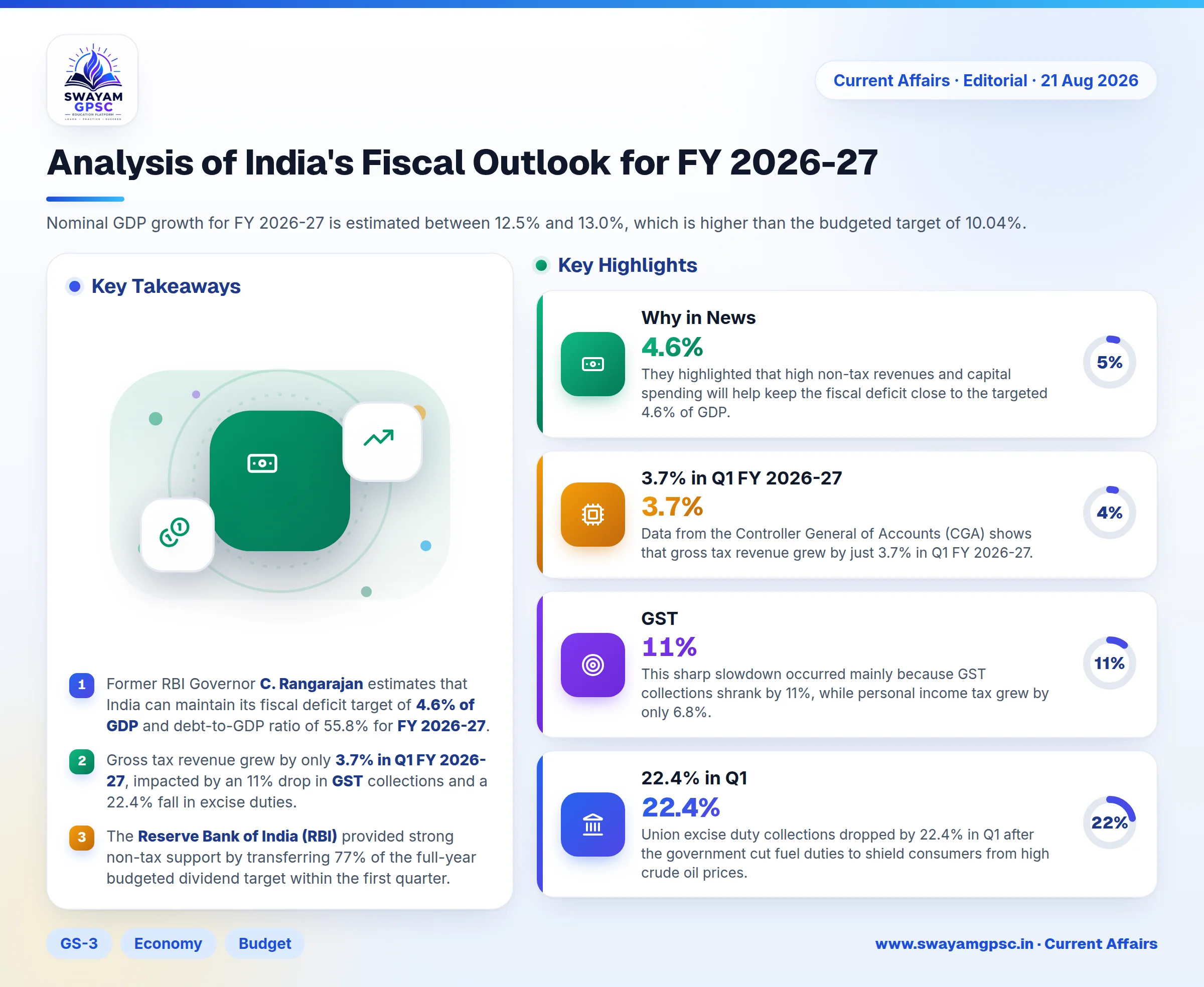
- Former RBI Governor C. Rangarajan estimates that India can maintain its fiscal deficit target of 4.6% of GDP and debt-to-GDP ratio of 55.8% for FY 2026-27.
- Gross tax revenue grew by only 3.7% in Q1 FY 2026-27, impacted by an 11% drop in GST collections and a 22.4% fall in excise duties.
- The Reserve Bank of India (RBI) provided strong non-tax support by transferring 77% of the full-year budgeted dividend target within the first quarter.
- Total subsidy expenditure surged by 37.4% in Q1 and is expected to exceed the annual budget target by approximately ₹50,000 crore.
- Central capital spending expanded by 23.7% in Q1 FY27, providing crucial economic support despite a 19.5% contraction in tax transfers to state governments.
Why in News
- Former RBI Governor C. Rangarajan and economist D.K. Srivastava recently reviewed the central government's financial position for FY 2026-27.
- They highlighted that high non-tax revenues and capital spending will help keep the fiscal deficit close to the targeted 4.6% of GDP.
- The fiscal outlook evaluates how the Union government balances its total tax collections, non-tax receipts, and spending commitments.
- It tests whether the government can cap the fiscal deficit at 4.6% of GDP and the debt-to-GDP ratio at 55.8% despite global economic shocks.
Key Data and Statistics
- Data from the Controller General of Accounts (CGA) shows that gross tax revenue grew by just 3.7% in Q1 FY 2026-27.
- This sharp slowdown occurred mainly because GST collections shrank by 11%, while personal income tax grew by only 6.8%.
- Union excise duty collections dropped by 22.4% in Q1 after the government cut fuel duties to shield consumers from high crude oil prices.
- Nominal GDP growth for FY 2026-27 is estimated between 12.5% and 13.0%, which is higher than the budgeted target of 10.04%.
- Major subsidy spending rose by 37.4% in Q1, and total subsidy expenses could exceed the budget by ₹50,000 crore due to volatile oil prices.
Challenges
- Earlier tax rate cuts in GST and personal income tax reduced initial tax revenue before new taxpayers joined the system.
- Ongoing conflict in West Asia drove up crude oil import costs, forcing the Centre to pay higher fuel and fertilizer subsidies.
- Tax devolution to state governments fell by 19.5% in Q1, while 16th Finance Commission grants are set to drop by ₹23,556 crore.
- The new Health Security and National Security (HSNS) Cess is not shared with states, which shrinks the divisible pool of central taxes.
- High volatility in the US dollar exchange rate has increased the rupee cost of paying back external debt.
Compensatory Measures and Stabilizing Factors
- The Reserve Bank of India (RBI) transferred its annual dividend in May 2026, fulfilling 77% of the year's budgeted non-tax dividend goal in three months.
- The government introduced the HSNS Cess on February 1, 2026, replacing the old GST Compensation Cess to fund health and defense needs.
- The Centre increased windfall taxes on fuel exports in August 2026 and raised import duties on gold and silver bullion.
- Central capital expenditure grew by 23.7% in Q1 FY27, reversing previous declines and boosting national industrial activity.
Way Forward
- The government should gradually raise fuel excise duties back to normal levels once global crude oil prices stabilize.
- Authorities must stop tax evasion and register new businesses to increase GST collections following recent rate cuts.
- Public spending on major infrastructure projects must continue to encourage private investment and boost consumer demand.
- The Centre should create non-Finance Commission grants to support state finances and offset the loss from non-shareable cesses.
- India should use financial hedging tools and settle more foreign trade in local currencies to protect its budget from global energy shocks.
Conclusion
- High non-tax income and early capital spending have kept India's fiscal strategy steady despite revenue losses and energy price spikes.
- Keeping the fiscal deficit near 4.6% of GDP requires expanding the tax base and streamlining central cesses over the long term.
- Sustaining national economic growth requires a balanced approach that protects central stability while keeping state finances healthy.