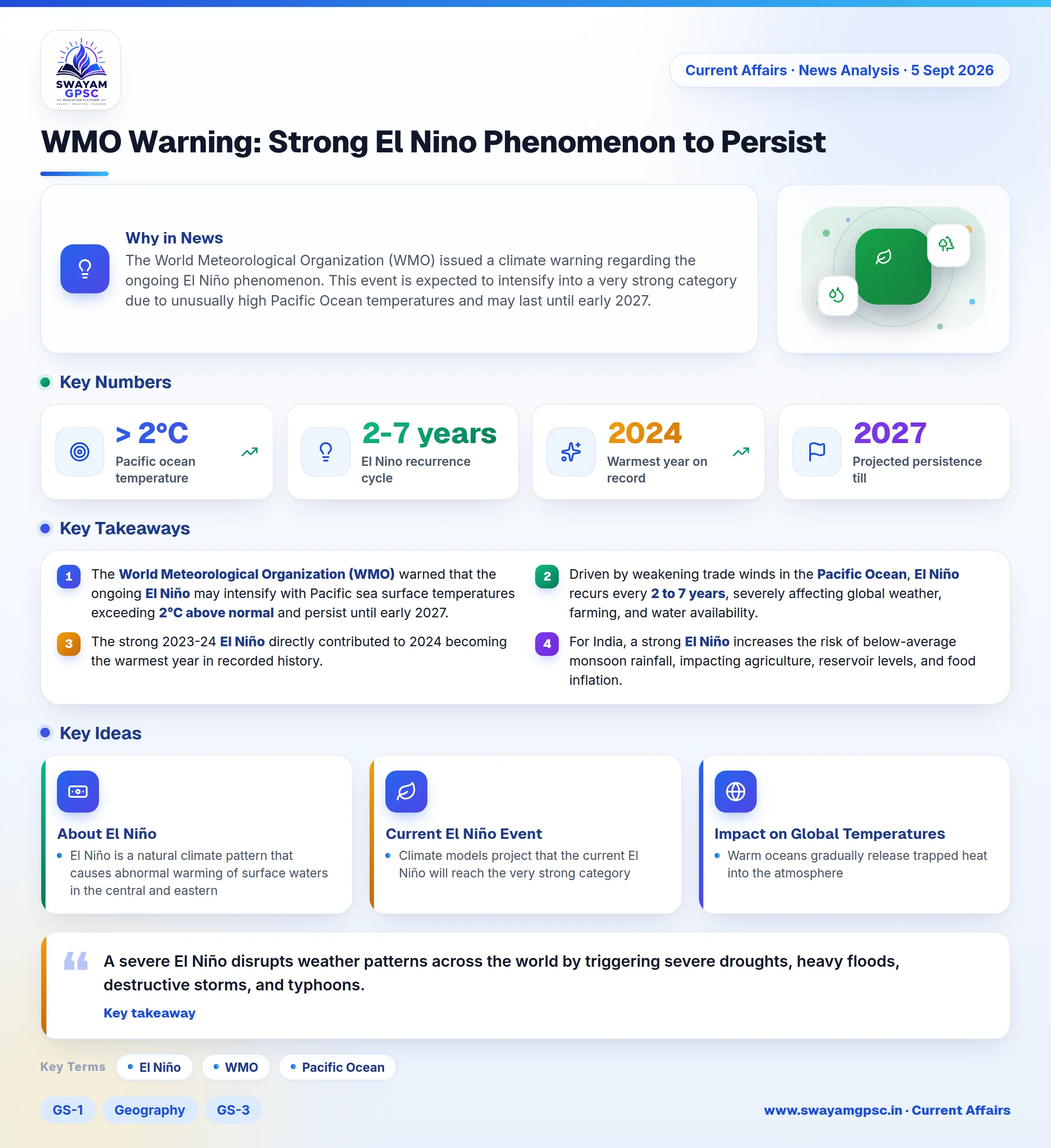
WMO Warning: Strong El Nino Phenomenon to Persist
#GS-1 #Geography #GS-3 #Environment #Climate Change #Disaster Management #Current Events #WMO #El Niño
Key takeaways
- The World Meteorological Organization (WMO) warned that the ongoing El Niño may intensify with Pacific sea surface temperatures exceeding 2°C above normal and persist until early 2027.
- Driven by weakening trade winds in the Pacific Ocean, El Niño recurs every 2 to 7 years, severely affecting global weather, farming, and water availability.
- The strong 2023-24 El Niño directly contributed to 2024 becoming the warmest year in recorded history.
- For India, a strong El Niño increases the risk of below-average monsoon rainfall, impacting agriculture, reservoir levels, and food inflation.
Why in News
- The World Meteorological Organization (WMO) issued a climate warning regarding the ongoing El Niño phenomenon. This event is expected to intensify into a very strong category due to unusually high Pacific Ocean temperatures and may last until early 2027.
About El Niño
- El Niño is a natural climate pattern that causes abnormal warming of surface waters in the central and eastern equatorial Pacific Ocean. It occurs every 2 to 7 years when trade winds weaken, which significantly alters global wind patterns, atmospheric pressure, and rainfall distribution.
Current El Niño Event
- Climate models project that the current El Niño will reach the very strong category, which is the highest classification used by the WMO. Sea surface temperatures in the equatorial Pacific Ocean have already risen more than 2°C above normal levels.
Global Impacts
- A severe El Niño disrupts weather patterns across the world by triggering severe droughts, heavy floods, destructive storms, and typhoons. Unpredictable rainfall also creates serious challenges for agriculture, food security, drinking water supplies, and energy systems.
Impact on Global Temperatures
- Warm oceans gradually release trapped heat into the atmosphere, causing global temperatures to spike in the year following an El Niño event. The strong 2023-24 event pushed 2024 to become the hottest year on record, and the WMO warns future global heat records could be broken again.
Implications for India
- Strong El Niño conditions often weaken the Indian summer monsoon, increasing the likelihood of below-normal rainfall across the country. Reduced rainfall impacts crop output, irrigation reservoirs, rural household income, and food prices, making climate-resilient farming and water efficiency essential.
Way Forward
- The WMO highlights the urgent need to strengthen early warning systems, weather forecasting tools, and community disaster response plans. Governments should promote drought-tolerant crops, enhance water storage systems, and supply real-time climate data to the agriculture, public health, and energy sectors.