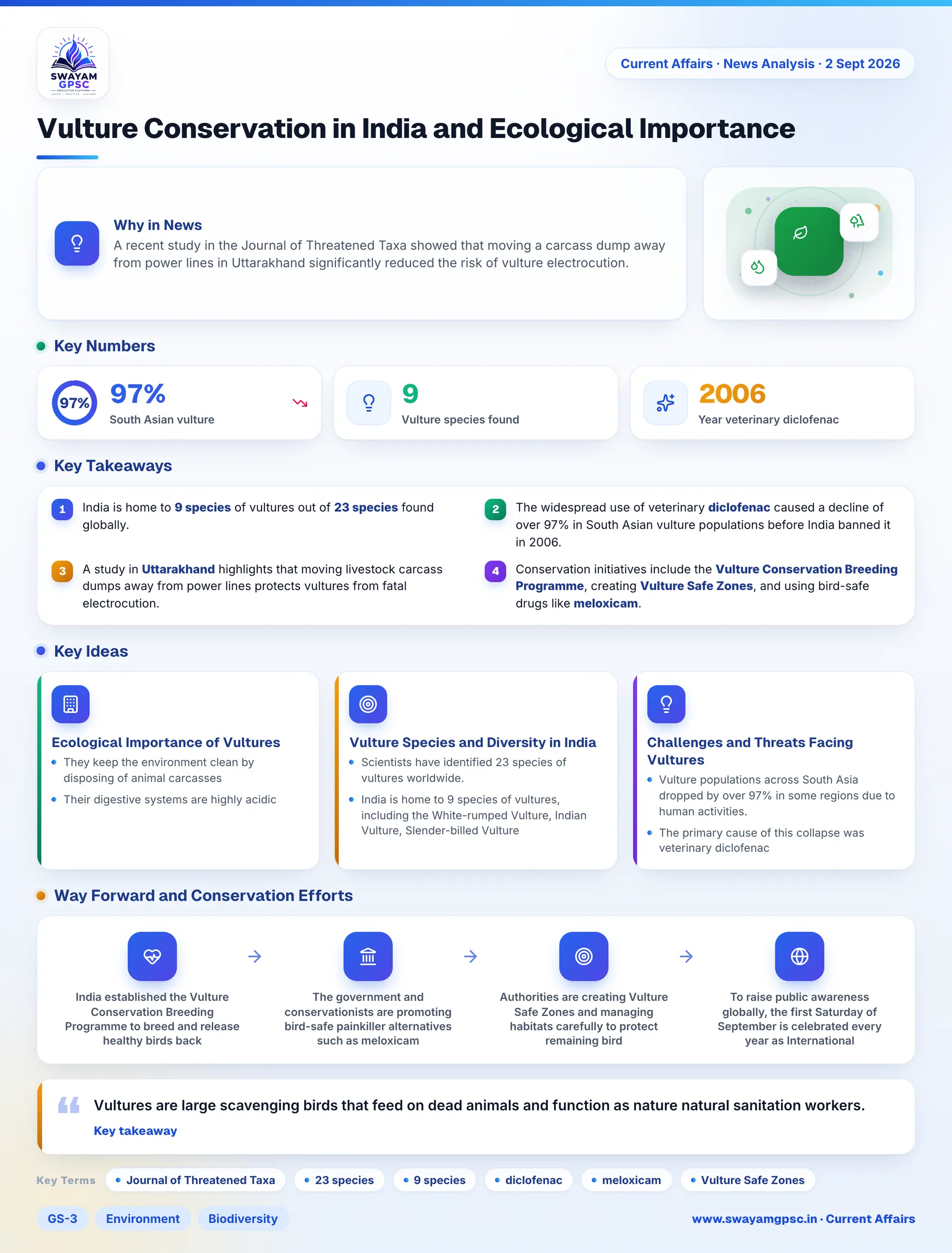
Vulture Conservation in India and Ecological Importance
#GS-3 #Environment #Biodiversity #Climate Change #Current Events #National
Key takeaways
- India is home to 9 species of vultures out of 23 species found globally.
- The widespread use of veterinary diclofenac caused a decline of over 97% in South Asian vulture populations before India banned it in 2006.
- A study in Uttarakhand highlights that moving livestock carcass dumps away from power lines protects vultures from fatal electrocution.
- Conservation initiatives include the Vulture Conservation Breeding Programme, creating Vulture Safe Zones, and using bird-safe drugs like meloxicam.
Why in News
- A recent study in the Journal of Threatened Taxa showed that moving a carcass dump away from power lines in Uttarakhand significantly reduced the risk of vulture electrocution.
Ecological Importance of Vultures
- Vultures are large scavenging birds that feed on dead animals and function as nature natural sanitation workers.
- They keep the environment clean by disposing of animal carcasses, which helps recycle nutrients and prevents the spread of dangerous diseases.
- Their digestive systems are highly acidic, which allows them to destroy deadly pathogens like anthrax and botulism found in decaying meat.
- Because vultures are sensitive to environmental shifts, scientists treat them as indicator species to measure overall ecosystem health.
Vulture Species and Diversity in India
- Scientists have identified 23 species of vultures worldwide.
- India is home to 9 species of vultures, including the White-rumped Vulture, Indian Vulture, Slender-billed Vulture, Himalayan Griffon, Eurasian Griffon, Egyptian Vulture, Red-headed Vulture, Cinereous Vulture, and Bearded Vulture.
Challenges and Threats Facing Vultures
- Vulture populations across South Asia dropped by over 97% in some regions due to human activities.
- The primary cause of this collapse was veterinary diclofenac, a painkiller given to cattle that causes kidney failure in vultures.
- Although India banned veterinary diclofenac in 2006, vultures still face dangers from other harmful livestock drugs.
- Additional ongoing threats include food shortages, loss of nesting trees, accidental poisoning, and electrocution from high-voltage power lines.
Way Forward and Conservation Efforts
- India established the Vulture Conservation Breeding Programme to breed and release healthy birds back into the wild.
- The government and conservationists are promoting bird-safe painkiller alternatives such as meloxicam for livestock treatment.
- Authorities are creating Vulture Safe Zones and managing habitats carefully to protect remaining bird populations.
- To raise public awareness globally, the first Saturday of September is celebrated every year as International Vulture Awareness Day.