US Proposes 12.5% Tariff on India Over Forced Labour Concerns
#GS-2 #GS-3 #Current Events #International #Economy #Infrastructure #Effect of Policies & Politics of Countries on India's Interests
Key takeaways
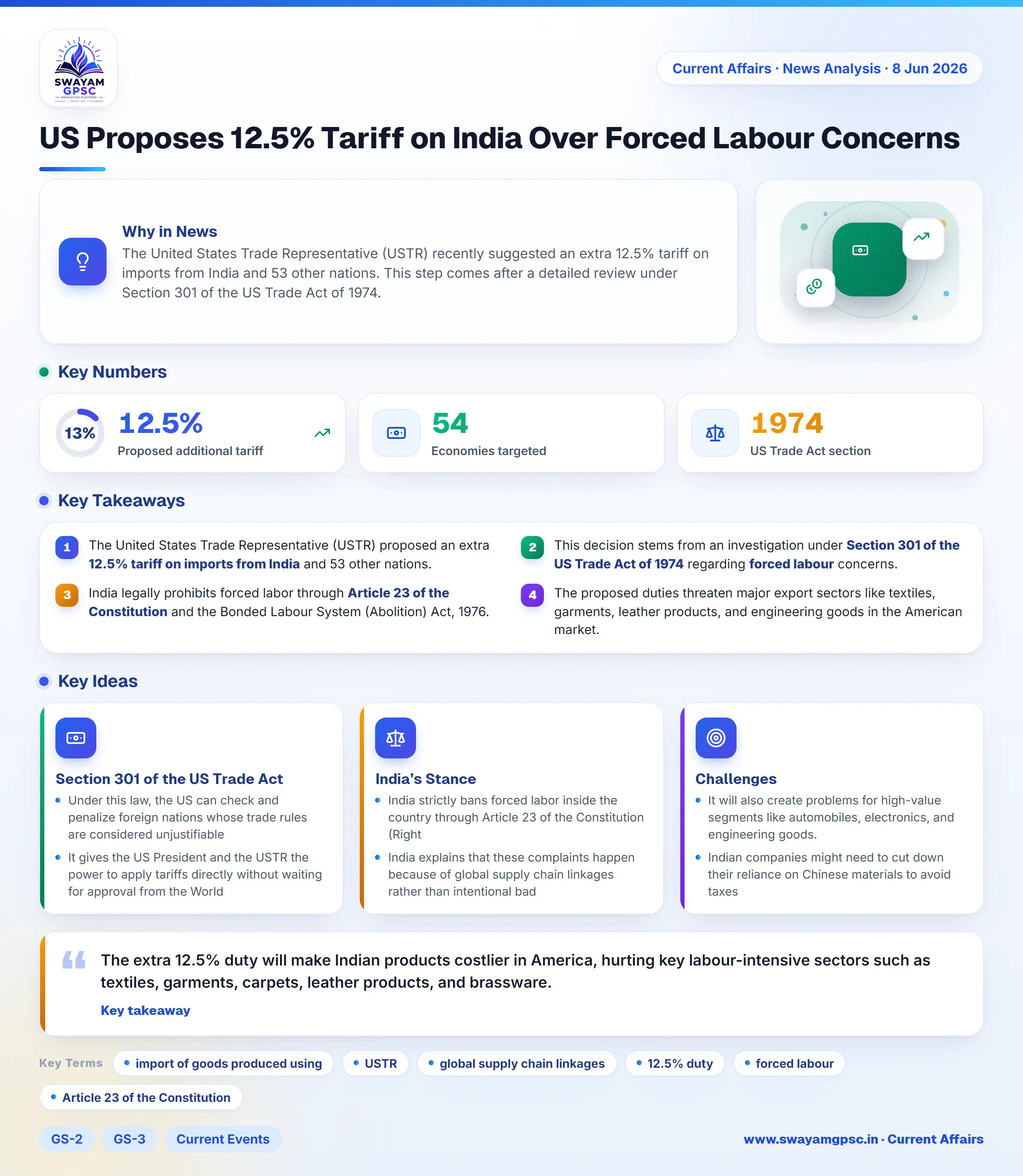
- The United States Trade Representative (USTR) proposed an extra 12.5% tariff on imports from India and 53 other nations.
- This decision stems from an investigation under Section 301 of the US Trade Act of 1974 regarding forced labour concerns.
- India legally prohibits forced labor through Article 23 of the Constitution and the Bonded Labour System (Abolition) Act, 1976.
- The proposed duties threaten major export sectors like textiles, garments, leather products, and engineering goods in the American market.
Why in News
- The United States Trade Representative (USTR) recently suggested an extra 12.5% tariff on imports from India and 53 other nations.
- This step comes after a detailed review under Section 301 of the US Trade Act of 1974.
- The investigation points out that these countries failed to properly stop the import of goods produced using 'forced labour.'
Section 301 of the US Trade Act of 1974
- Under this law, the US can check and penalize foreign nations whose trade rules are considered unjustifiable, unreasonable, or discriminatory against US business interests.
- It gives the US President and the USTR the power to apply tariffs directly without waiting for approval from the World Trade Organization (WTO).
India’s Stance
- India strictly bans forced labor inside the country through Article 23 of the Constitution (Right against Exploitation) and the Bonded Labour System (Abolition) Act, 1976.
- India explains that these complaints happen because of global supply chain linkages rather than intentional bad practices at home.
- India is currently talking with the US to sort out this issue, and these proposed tariffs are not final yet.
Challenges
- The extra 12.5% duty will make Indian products costlier in America, hurting key labour-intensive sectors such as textiles, garments, carpets, leather products, and brassware.
- It will also create problems for high-value segments like automobiles, electronics, and engineering goods.
- Indian companies might need to cut down their reliance on Chinese materials to avoid taxes, which will increase production costs in the short run.