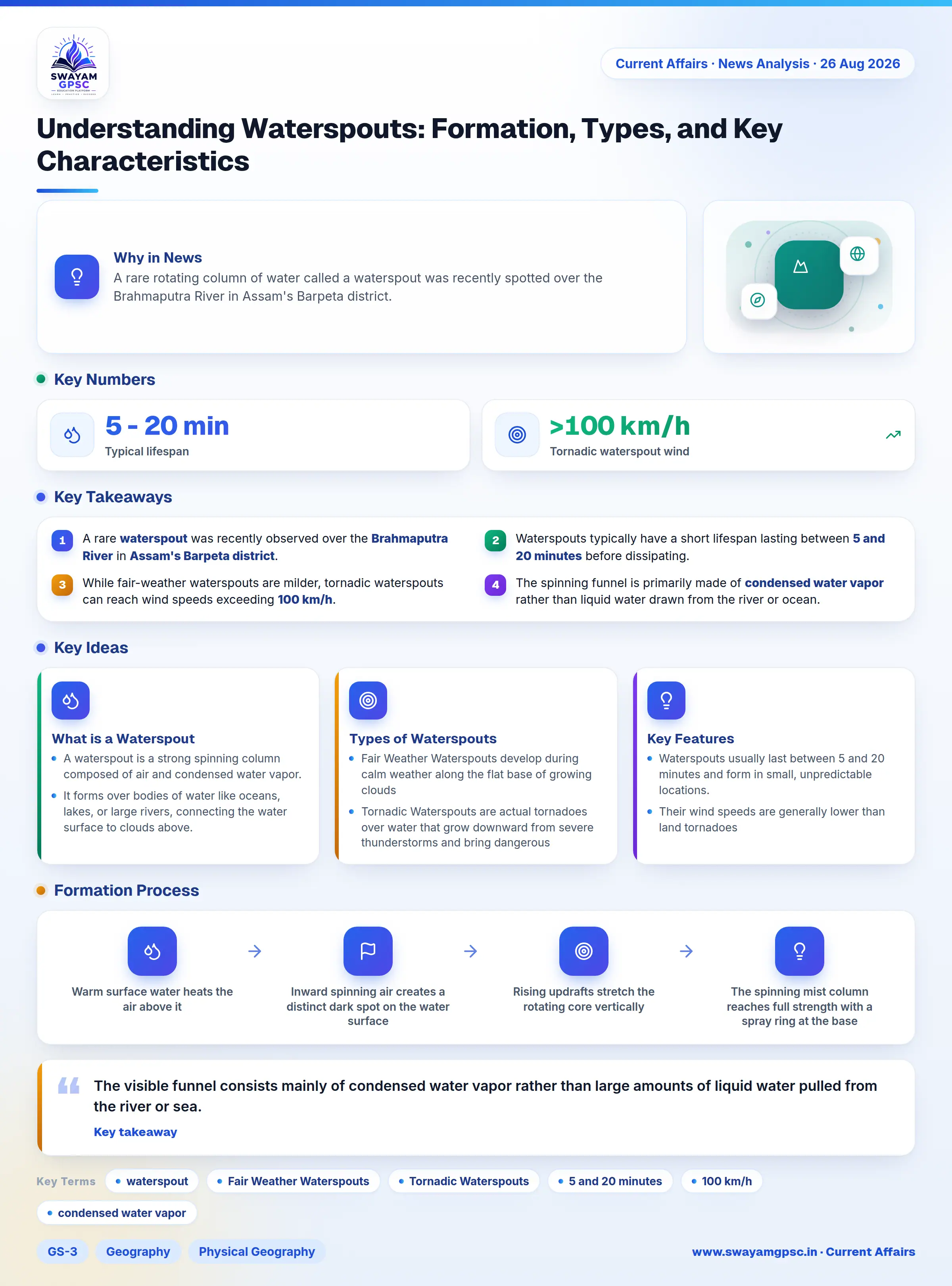
Understanding Waterspouts: Formation, Types, and Key Characteristics
#GS-3 #Geography #Physical Geography #Natural Phenomena #GS-2 #Current Events #National #Assam
Key takeaways
- A rare waterspout was recently observed over the Brahmaputra River in Assam's Barpeta district.
- Waterspouts typically have a short lifespan lasting between 5 and 20 minutes before dissipating.
- While fair-weather waterspouts are milder, tornadic waterspouts can reach wind speeds exceeding 100 km/h.
- The spinning funnel is primarily made of condensed water vapor rather than liquid water drawn from the river or ocean.
Why in News
- A rare rotating column of water called a waterspout was recently spotted over the Brahmaputra River in Assam's Barpeta district.
What is a Waterspout
- A waterspout is a strong spinning column composed of air and condensed water vapor.
- It forms over bodies of water like oceans, lakes, or large rivers, connecting the water surface to clouds above.
Types of Waterspouts
- Fair Weather Waterspouts develop during calm weather along the flat base of growing clouds, starting at the water surface and building upward without severe storms.
- Tornadic Waterspouts are actual tornadoes over water that grow downward from severe thunderstorms and bring dangerous winds, hail, and intense lightning.
Formation Process
- Warm surface water heats the air above it, generating a rising air column where shifting winds trigger a rotating vortex.
- Inward spinning air creates a distinct dark spot on the water surface, marking the start of a low pressure core.
- Rising updrafts stretch the rotating core vertically, dropping internal pressure and condensing moisture into a visible funnel cloud.
- The spinning mist column reaches full strength with a spray ring at the base, but ground friction and loss of warm moisture cause it to decay upon hitting land.
Key Features
- Waterspouts usually last between 5 and 20 minutes and form in small, unpredictable locations.
- Their wind speeds are generally lower than land tornadoes, but tornadic versions can exceed dangerous speeds of 100 km/h.
- The visible funnel consists mainly of condensed water vapor rather than large amounts of liquid water pulled from the river or sea.
- Fair weather waterspouts quickly weaken and collapse when moving onto land due to ground friction and loss of warm water moisture.