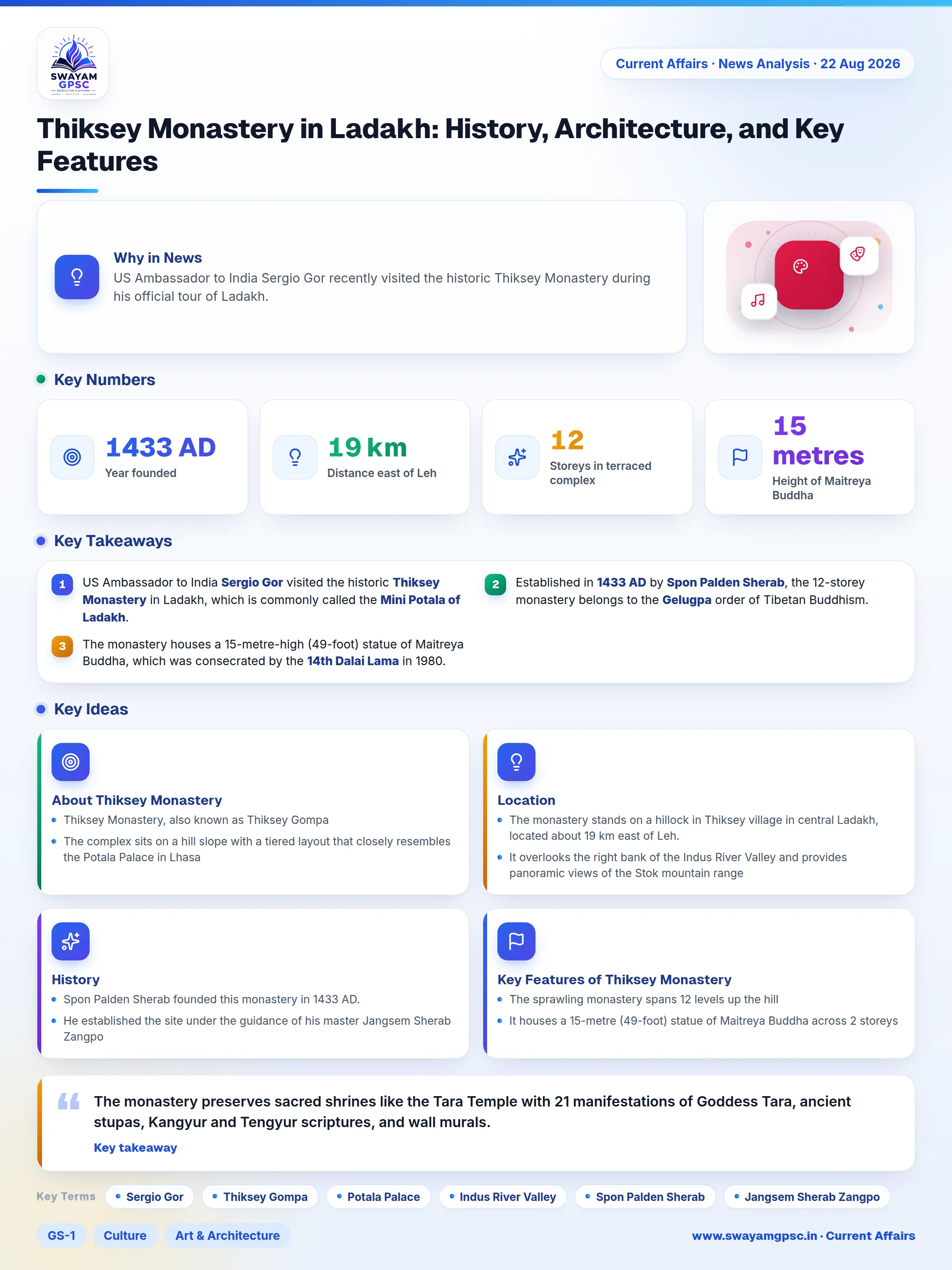
Thiksey Monastery in Ladakh: History, Architecture, and Key Features
#GS-1 #Culture #Art & Architecture #Heritage #GS-2 #Current Events #National #Thiksey Monastery #Ladakh
Key takeaways
- US Ambassador to India Sergio Gor visited the historic Thiksey Monastery in Ladakh, which is commonly called the Mini Potala of Ladakh.
- Established in 1433 AD by Spon Palden Sherab, the 12-storey monastery belongs to the Gelugpa order of Tibetan Buddhism.
- The monastery houses a 15-metre-high (49-foot) statue of Maitreya Buddha, which was consecrated by the 14th Dalai Lama in 1980.
Why in News
- US Ambassador to India Sergio Gor recently visited the historic Thiksey Monastery during his official tour of Ladakh.
About Thiksey Monastery
- Thiksey Monastery, also known as Thiksey Gompa, is a major Tibetan Buddhist monastery belonging to the Gelugpa or Yellow Hat order.
- The complex sits on a hill slope with a tiered layout that closely resembles the Potala Palace in Lhasa, earning it the title Mini Potala of Ladakh.
Location
- The monastery stands on a hillock in Thiksey village in central Ladakh, located about 19 km east of Leh.
- It overlooks the right bank of the Indus River Valley and provides panoramic views of the Stok mountain range and the Himalayas.
History
- Spon Palden Sherab founded this monastery in 1433 AD.
- He established the site under the guidance of his master Jangsem Sherab Zangpo, who was a principal disciple of Je Tsongkhapa, the founder of the Gelug school.
Key Features of Thiksey Monastery
- The sprawling monastery spans 12 levels up the hill, with white monk quarters at the base and red or yellow temples at the top.
- It houses a 15-metre (49-foot) statue of Maitreya Buddha across 2 storeys, which the 14th Dalai Lama consecrated in 1980 with gold plating.
- The monastery preserves sacred shrines like the Tara Temple with 21 manifestations of Goddess Tara, ancient stupas, Kangyur and Tengyur scriptures, and wall murals.
- Monks gather each morning for assembly prayers called Puja, chanting along with drums, cymbals, and traditional dungchen horns.
- The annual Thiksey Gustor Festival features masked dances called Cham that depict good defeating evil, ending with the burning of Torma effigies.