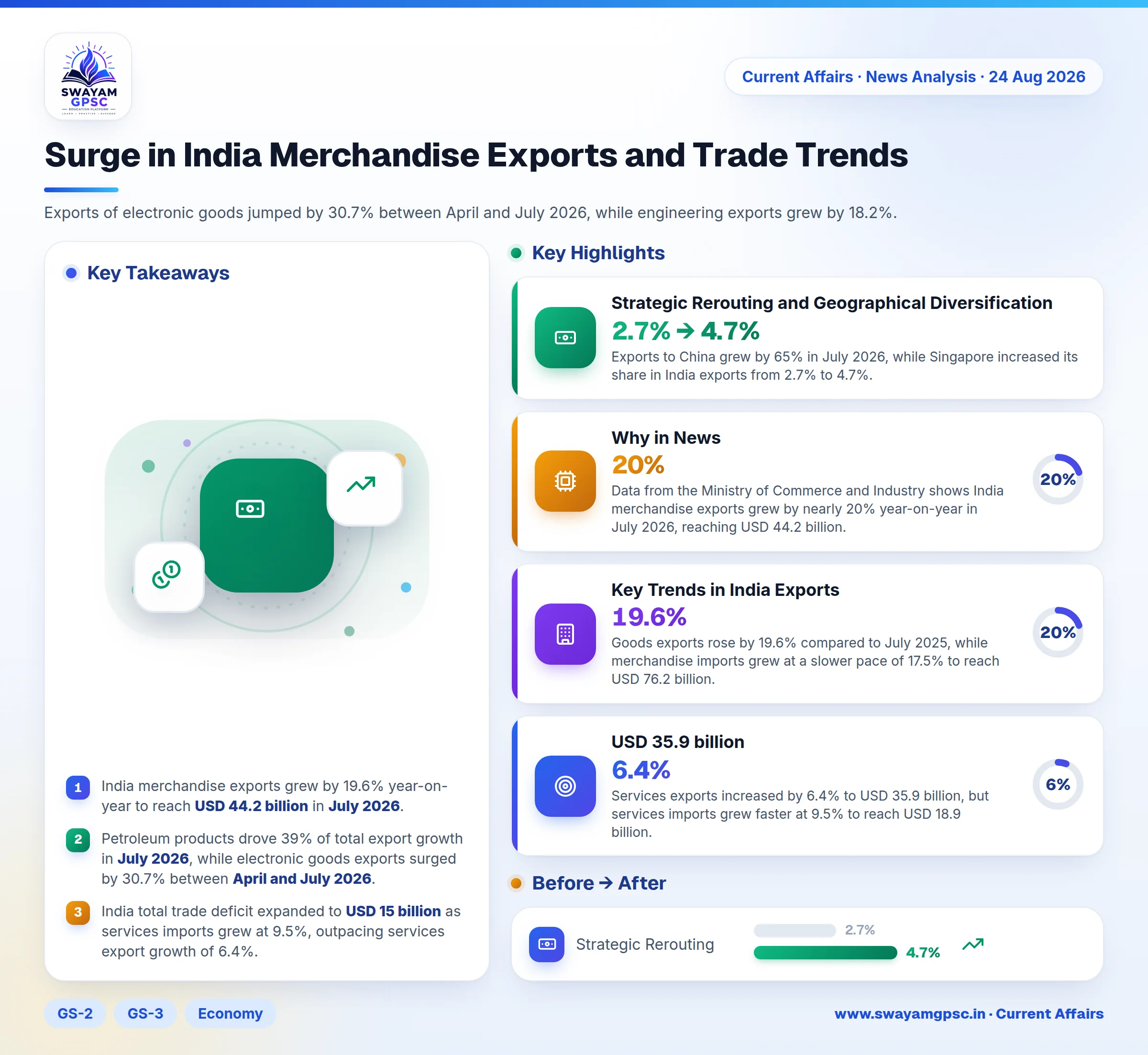
Surge in India Merchandise Exports and Trade Trends
#GS-2 #GS-3 #Economy #Growth #Infrastructure #Current Events #National #International #Liberalization #Employment #Government Policies & Interventions
Key takeaways
- India merchandise exports grew by 19.6% year-on-year to reach USD 44.2 billion in July 2026.
- Petroleum products drove 39% of total export growth in July 2026, while electronic goods exports surged by 30.7% between April and July 2026.
- India total trade deficit expanded to USD 15 billion as services imports grew at 9.5%, outpacing services export growth of 6.4%.
- Exporters bypassed conflict zones in West Asia by routing cargo through Oman and UAE ports, helping exports to China surge by 65%.
- India aims to lower logistics costs to 7-8% of GDP through the National Logistics Policy and the proposed LIFT scheme.
Why in News
- Data from the Ministry of Commerce and Industry shows India merchandise exports grew by nearly 20% year-on-year in July 2026, reaching USD 44.2 billion.
- Indian businesses achieved this growth despite ongoing geopolitical conflict in West Asia by finding new markets and changing maritime trade routes.
Key Trends in India Exports
- Goods exports rose by 19.6% compared to July 2025, while merchandise imports grew at a slower pace of 17.5% to reach USD 76.2 billion.
- Services exports increased by 6.4% to USD 35.9 billion, but services imports grew faster at 9.5% to reach USD 18.9 billion.
- The total trade deficit expanded to USD 15 billion from USD 11.4 billion in July 2025 because services imports grew faster than exports.
- Higher world oil prices helped petroleum exports, which drove about 39% of the total export growth in July 2026.
- Exports of electronic goods jumped by 30.7% between April and July 2026, while engineering exports grew by 18.2%.
- Exports of marine goods, meat, dairy, poultry, and traditional handicrafts also showed strong positive growth.
Strategic Rerouting and Geographical Diversification
- To avoid risks around the Strait of Hormuz, exporters shifted shipments from Jebel Ali Port to alternative ports in Oman, Fujairah, and Khor Fakkan.
- Exports to China grew by 65% in July 2026, while Singapore increased its share in India exports from 2.7% to 4.7%.
- Non-petroleum exports to Vietnam and Taiwan saw strong gains during this period.
- Shipments to Tanzania jumped by 130%, alongside steady growth in Kenya and the South African Customs Union region.
- The US remained India largest market for merchandise exports, buying about 20% of all exported goods.
Challenges
- India struggles to compete with low-cost nations like Bangladesh and Vietnam in basic goods, while falling behind China, South Korea, and Taiwan in high-tech products.
- India spends only 0.65% of its GDP on R&D, which limits local technological innovation and keeps factories focused on simple assembly work.
- Environmental rules like the European Union Carbon Border Adjustment Mechanism (CBAM) create new trade barriers for carbon-heavy exports like steel and cement.
- Investigations into forced labor and strict ESG requirements in the US increase compliance costs for Indian small businesses.
- Refined petroleum drives a large share of exports, making total export performance vulnerable to changes in global crude oil prices.
- Fighting in West Asia and the Red Sea disrupts sea routes, raises freight charges, and delays shipments.
- An inverted duty structure taxes raw materials higher than finished products, which hurts domestic manufacturing and global competitiveness.
- Key industries like pharmaceuticals and electronics depend heavily on raw materials and components imported from China.
- Exporters use only about 25% of India Free Trade Agreements due to complex Rules of Origin and low awareness.
Way Forward
- Policies should move beyond basic PLI assembly models to support deep manufacturing in semiconductors, clean energy, and precision tools.
- Budget plans like the Electronics Component Manufacturing Scheme (ECMS) and India Semiconductor Mission 2.0 will help build local high-tech industries.
- Similar local manufacturing support is necessary for active pharmaceutical ingredients (APIs) and telecom equipment.
- Government agencies should build carbon pricing systems and help small firms handle global green rules through the TRACE framework.
- Future Free Trade Agreements must open global markets for services while enforcing clear Rules of Origin to block cheap imports.
- Implementing the National Logistics Policy and the LIFT scheme will move freight to rail and waterways, cutting logistics costs to 7-8% of GDP.
- Fixing the inverted duty structure will ensure raw materials carry lower taxes than finished goods, boosting local processing.
- The government should expand affordable trade loans, insurance, and market guidance for small businesses through Niryat Protsahan and Niryat Disha.
Conclusion
- India needs to shift its focus from basic export promotion to long-term competitiveness in technology, logistics, and skilled workforce training.
- Building strong industrial capabilities will turn India into a global manufacturing hub and help reach its target of a $5 trillion economy.