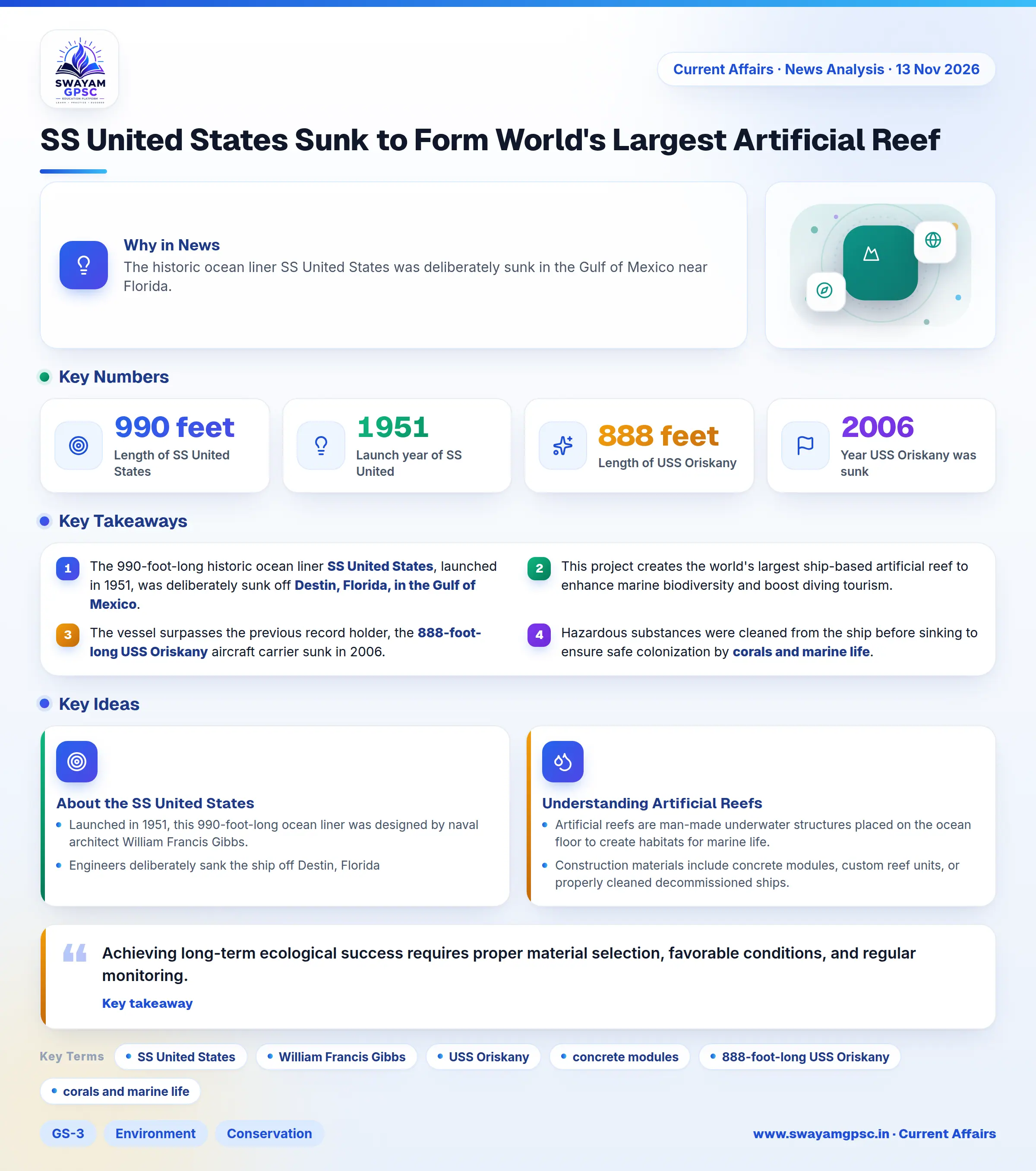
SS United States Sunk to Form World's Largest Artificial Reef
#GS-3 #Environment #Conservation #Geography #Physical Geography #World Geography #Rapid Fire CA #Quick Facts For Prelims
Key takeaways
- The 990-foot-long historic ocean liner SS United States, launched in 1951, was deliberately sunk off Destin, Florida, in the Gulf of Mexico.
- This project creates the world's largest ship-based artificial reef to enhance marine biodiversity and boost diving tourism.
- The vessel surpasses the previous record holder, the 888-foot-long USS Oriskany aircraft carrier sunk in 2006.
- Hazardous substances were cleaned from the ship before sinking to ensure safe colonization by corals and marine life.
Why in News
- The historic ocean liner SS United States was deliberately sunk in the Gulf of Mexico near Florida.
About the SS United States
- Launched in 1951, this 990-foot-long ocean liner was designed by naval architect William Francis Gibbs.
- Engineers deliberately sank the ship off Destin, Florida, in the Gulf of Mexico to build the world's largest ship-based artificial reef.
- Prior to the sinking, workers removed hazardous materials and pollutants to prevent environmental damage.
- The USS Oriskany, an 888-foot-long decommissioned US aircraft carrier sunk in 2006, previously held this record.
Understanding Artificial Reefs
- Artificial reefs are man-made underwater structures placed on the ocean floor to create habitats for marine life.
- Construction materials include concrete modules, custom reef units, or properly cleaned decommissioned ships.
- These structures provide hard surfaces where corals, algae, and marine organisms can grow and shelter fish.
- Achieving long-term ecological success requires proper material selection, favorable conditions, and regular monitoring.
- These reefs boost local economies by attracting diving tourism, recreational fishing, and related coastal industries.