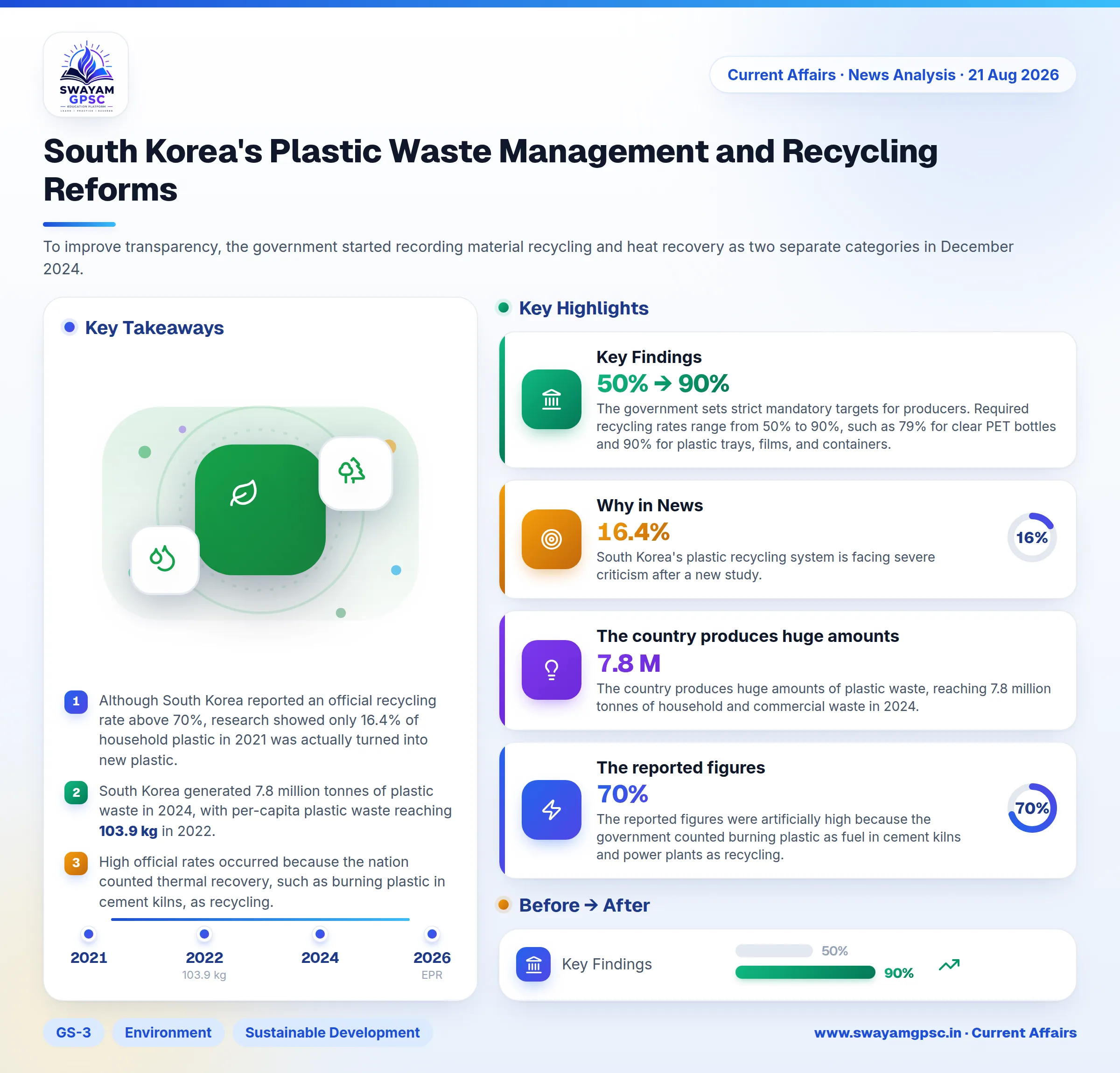
South Korea's Plastic Waste Management and Recycling Reforms
#GS-3 #Environment #Sustainable Development #Pollution #GS-2 #Governance & Social Justice #Good Governance #Current Events #International #Extended Producer Responsibility #Plastic Waste Management
Key takeaways
- Although South Korea reported an official recycling rate above 70%, research showed only 16.4% of household plastic in 2021 was actually turned into new plastic.
- South Korea generated 7.8 million tonnes of plastic waste in 2024, with per-capita plastic waste reaching 103.9 kg in 2022.
- High official rates occurred because the nation counted thermal recovery, such as burning plastic in cement kilns, as recycling.
- Under the Extended Producer Responsibility (EPR) framework, KORA distributes 80% to 90% of producer funds to municipalities and recyclers.
- In December 2024, South Korea began separating thermal recovery from material recycling statistics to improve transparency.
Why in News
- South Korea's plastic recycling system is facing severe criticism after a new study. The study revealed that only 16.4% of collected household plastic in 2021 was actually recycled into new plastic products, even though official government figures claimed a 73% recycling rate.
Extended Producer Responsibility System
- South Korea manages plastic waste through an Extended Producer Responsibility (EPR) system. Under this framework, companies that make or import products must pay for collecting and recycling the packaging waste they bring into the market.
Key Findings
- The country produces huge amounts of plastic waste, reaching 7.8 million tonnes of household and commercial waste in 2024. In 2022, each person generated 103.9 kg of plastic waste, which was the second highest among OECD nations.
- Actual recycling of materials remains very low. Most sorted household plastic in 2021 was burned or dumped into landfills rather than turned into new products.
- The reported figures were artificially high because the government counted burning plastic as fuel in cement kilns and power plants as recycling. This thermal recovery pushed official statistics above 70%.
- The government sets strict mandatory targets for producers. Required recycling rates range from 50% to 90%, such as 79% for clear PET bottles and 90% for plastic trays, films, and containers.
- The Korea Resource Circulation Service Agency (KORA) manages producer funds effectively. It transfers 80% to 90% of these funds to local municipalities, collectors, sorting centers, and recycling units.
Way Forward
- To improve transparency, the government started recording material recycling and heat recovery as two separate categories in December 2024.
- Officials are reviewing national definitions to stop counting plastic incineration as recycling. This change will ensure that official statistics show real physical recycling.
- The government launched a formal review of the EPR system in May 2026. This effort focuses on items that have consistently low recycling performance.
- The system relies on a strict producer-pays approach. Companies face specific financial targets for each material type and must pay fines if they miss their goals.