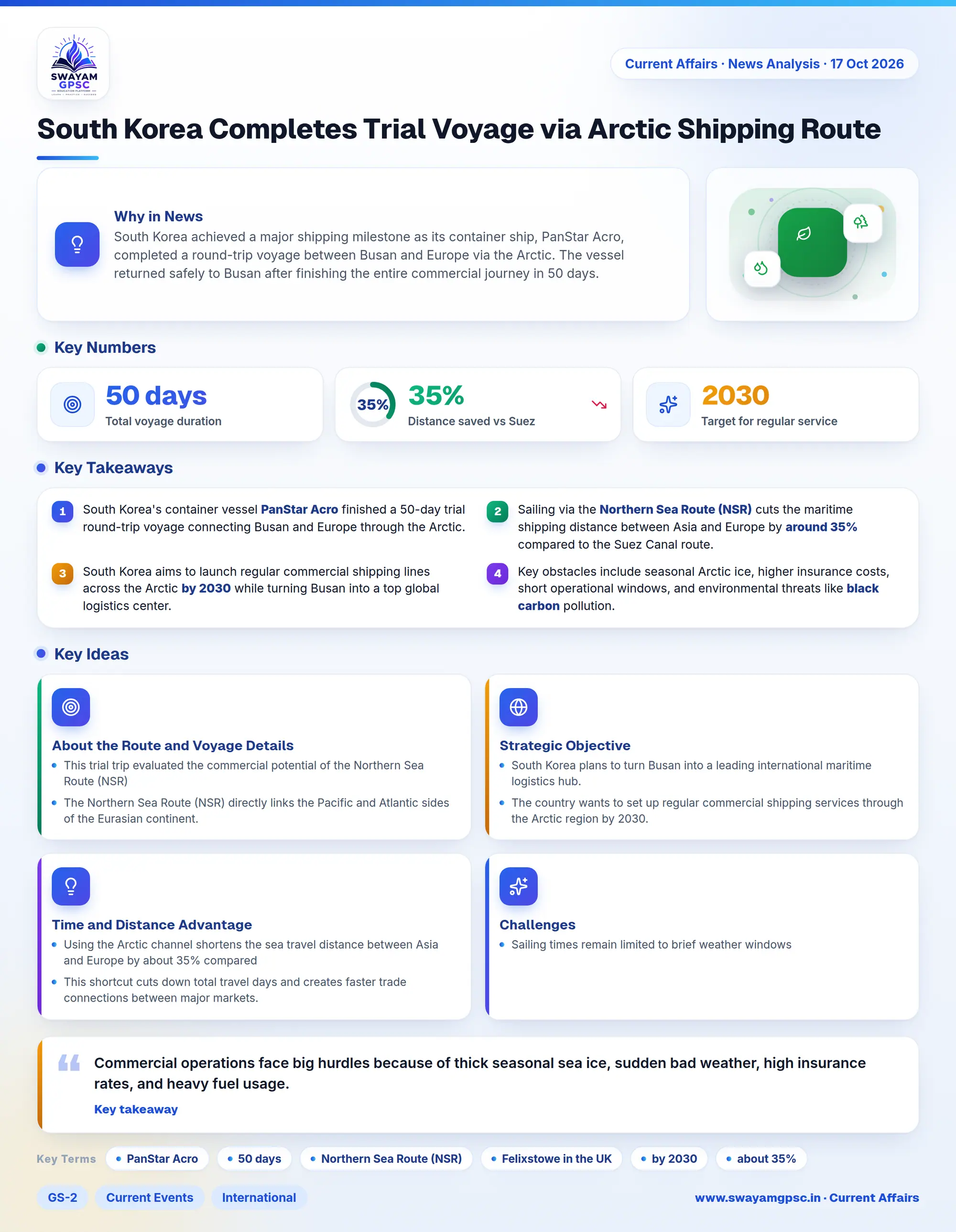
South Korea Completes Trial Voyage via Arctic Shipping Route
#GS-2 #Current Events #International #GS-3 #Infrastructure #Environment #Climate Change #Effect of Policies & Politics of Countries on India's Interests #Rapid Fire CA #Quick Facts For Prelims
Key takeaways
- South Korea's container vessel PanStar Acro finished a 50-day trial round-trip voyage connecting Busan and Europe through the Arctic.
- Sailing via the Northern Sea Route (NSR) cuts the maritime shipping distance between Asia and Europe by around 35% compared to the Suez Canal route.
- South Korea aims to launch regular commercial shipping lines across the Arctic by 2030 while turning Busan into a top global logistics center.
- Key obstacles include seasonal Arctic ice, higher insurance costs, short operational windows, and environmental threats like black carbon pollution.
Why in News
- South Korea achieved a major shipping milestone as its container ship, PanStar Acro, completed a round-trip voyage between Busan and Europe via the Arctic.
- The vessel returned safely to Busan after finishing the entire commercial journey in 50 days.
About the Route and Voyage Details
- This trial trip evaluated the commercial potential of the Northern Sea Route (NSR), an Arctic shipping channel running along the northern coastline of Russia.
- The Northern Sea Route (NSR) directly links the Pacific and Atlantic sides of the Eurasian continent.
- The PanStar Acro started its journey from Busan, South Korea, on 22 August 2026 with commercial cargo on board.
- The ship made scheduled stops at key European ports, including Felixstowe in the UK, Rotterdam in the Netherlands, and Gdańsk in Poland, before sailing back to Busan.
Strategic Objective
- South Korea plans to turn Busan into a leading international maritime logistics hub.
- The country wants to set up regular commercial shipping services through the Arctic region by 2030.
Time and Distance Advantage
- Using the Arctic channel shortens the sea travel distance between Asia and Europe by about 35% compared to the traditional path through the Suez Canal.
- This shortcut cuts down total travel days and creates faster trade connections between major markets.
Challenges
- Commercial operations face big hurdles because of thick seasonal sea ice, sudden bad weather, high insurance rates, and heavy fuel usage.
- Sailing times remain limited to brief weather windows, and operating along the Russian Arctic shoreline brings major political and security risks.
Environmental Concerns
- Higher ship traffic through the Arctic creates environmental threats, including harmful black carbon pollution and potential oil spills.
- These activities risk causing lasting harm to the fragile Arctic ecosystem.
Strategic Significance
- Opening the Northern Sea Route (NSR) offers a fresh alternative for world trade routes and strengthens international supply chain safety.
- This path helps nations reduce their heavy reliance on traditional sea passages and narrow maritime chokepoints.