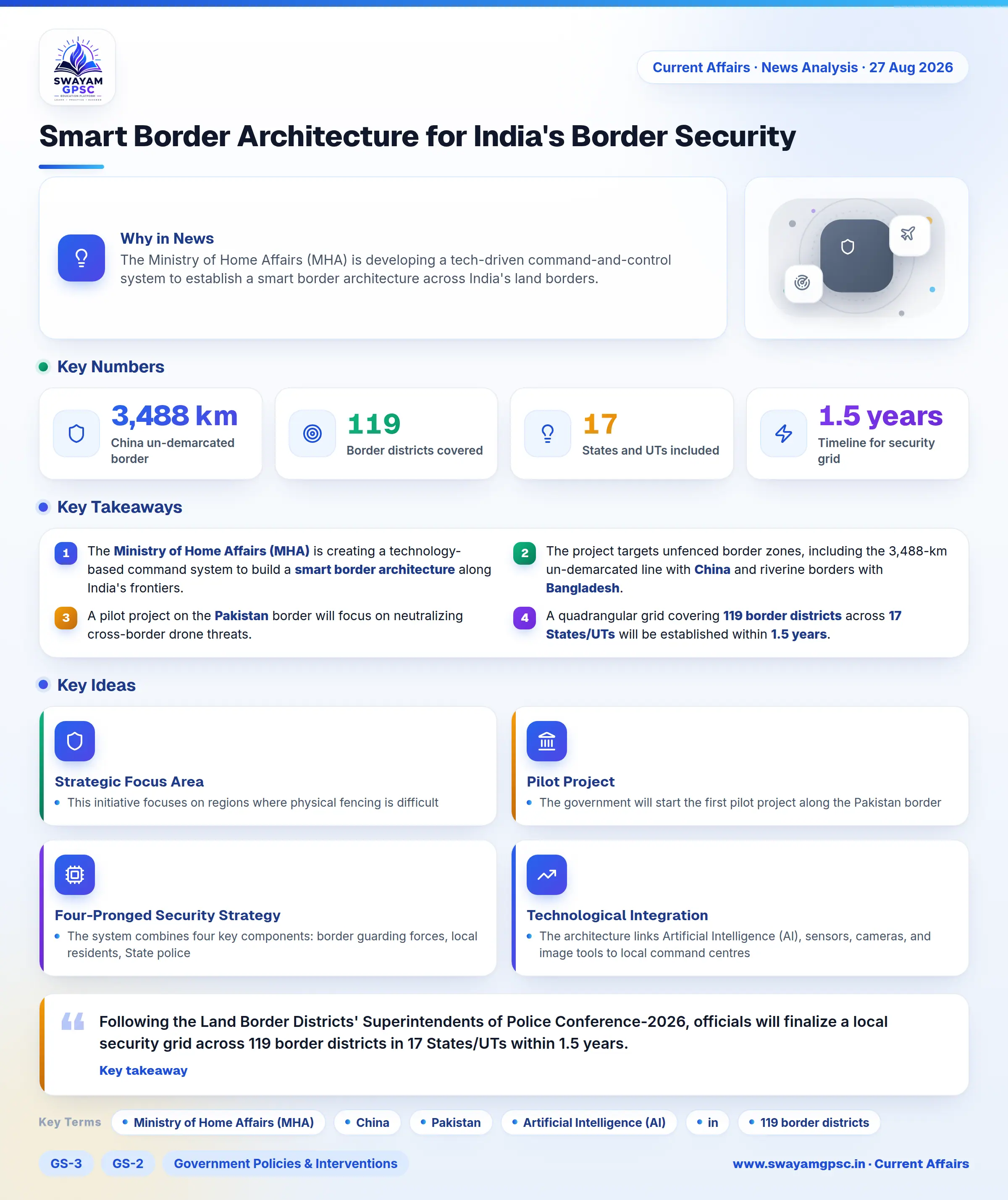
Smart Border Architecture for India's Border Security
#GS-3 #Security Challenges & their Management in Border Areas #GS-2 #Government Policies & Interventions #National #Defence
Key takeaways
- The Ministry of Home Affairs (MHA) is creating a technology-based command system to build a smart border architecture along India's frontiers.
- The project targets unfenced border zones, including the 3,488-km un-demarcated line with China and riverine borders with Bangladesh.
- A pilot project on the Pakistan border will focus on neutralizing cross-border drone threats.
- A quadrangular grid covering 119 border districts across 17 States/UTs will be established within 1.5 years.
Why in News
- The Ministry of Home Affairs (MHA) is developing a tech-driven command-and-control system to establish a smart border architecture across India's land borders.
Strategic Focus Area
- This initiative focuses on regions where physical fencing is difficult, including the 3,488-km un-demarcated border with China and riverine areas along the Bangladesh border.
Pilot Project
- The government will start the first pilot project along the Pakistan border, focusing primarily on countering cross-border drones used for smuggling and spying.
Four-Pronged Security Strategy
- The system combines four key components: border guarding forces, local residents, State police, and modern technology to strengthen overall monitoring capabilities.
Technological Integration
- The architecture links Artificial Intelligence (AI), sensors, cameras, and image tools to local command centres, which stream real-time data to field officers and New Delhi headquarters.
Customised Border Solutions
- Because terrain varies across regions, the plan uses specific technology solutions for deserts, mountains, and forests, reducing the need for continuous physical patrols.
Quadrangular Security Grid
- Following the Land Border Districts' Superintendents of Police Conference-2026, officials will finalize a local security grid across 119 border districts in 17 States/UTs within 1.5 years.