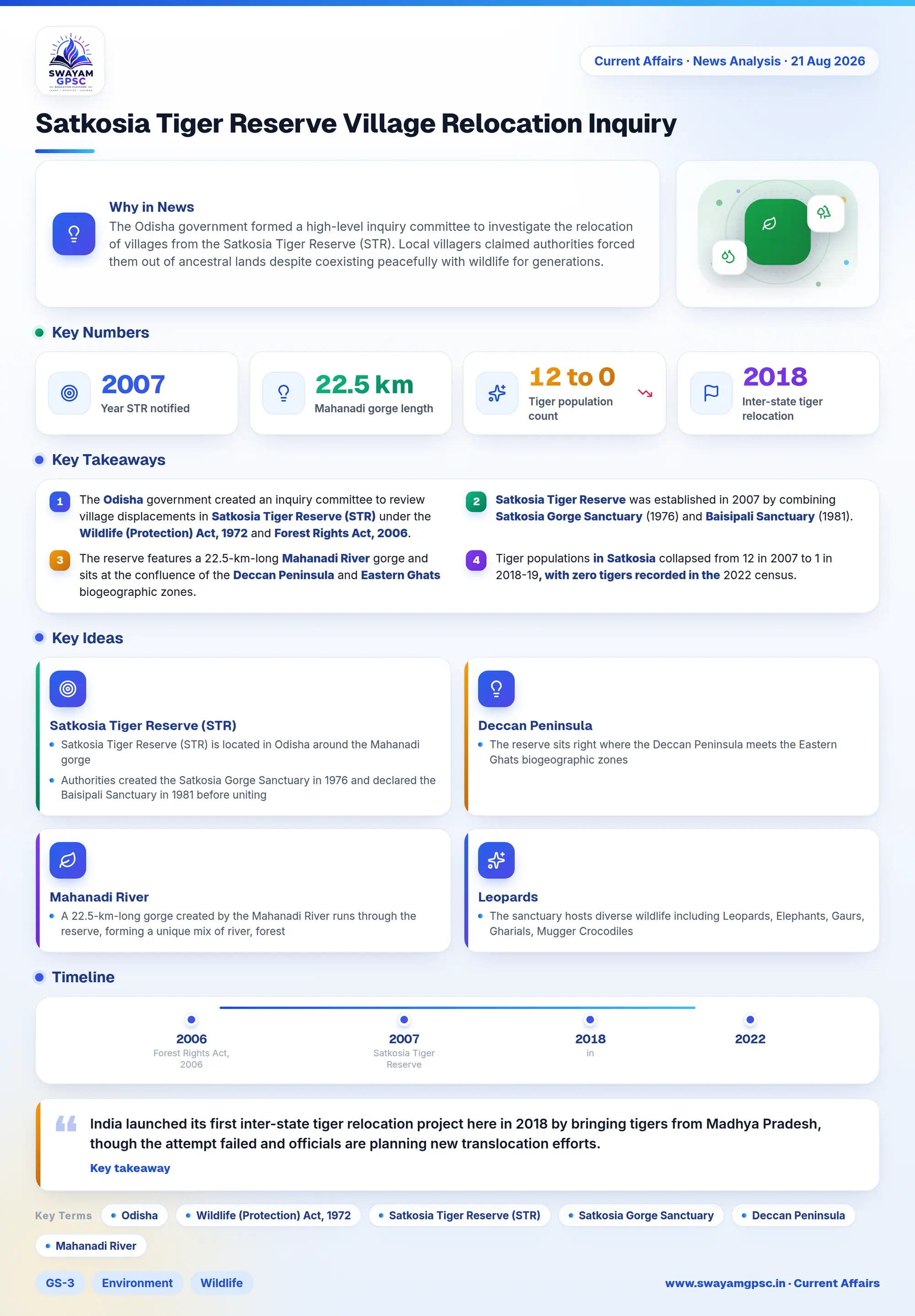
Satkosia Tiger Reserve Village Relocation Inquiry
#GS-3 #Environment #Wildlife #Biodiversity #GS-1 #Geography #Physical Geography #Social Justice #Current Events #National
Key takeaways
- The Odisha government created an inquiry committee to review village displacements in Satkosia Tiger Reserve (STR) under the Wildlife (Protection) Act, 1972 and Forest Rights Act, 2006.
- Satkosia Tiger Reserve was established in 2007 by combining Satkosia Gorge Sanctuary (1976) and Baisipali Sanctuary (1981).
- The reserve features a 22.5-km-long Mahanadi River gorge and sits at the confluence of the Deccan Peninsula and Eastern Ghats biogeographic zones.
- Tiger populations in Satkosia collapsed from 12 in 2007 to 1 in 2018-19, with zero tigers recorded in the 2022 census.
- In 2018, Satkosia hosted India's first inter-state tiger relocation attempt with tigers transferred from Madhya Pradesh.
Why in News
- The Odisha government formed a high-level inquiry committee to investigate the relocation of villages from the Satkosia Tiger Reserve (STR). Local villagers claimed authorities forced them out of ancestral lands despite coexisting peacefully with wildlife for generations.
- This committee will check if officials followed the Wildlife (Protection) Act, 1972, the Forest Rights Act, 2006, and National Tiger Conservation Authority (NTCA) guidelines during village relocations.
Satkosia Tiger Reserve (STR)
- Satkosia Tiger Reserve (STR) is located in Odisha around the Mahanadi gorge, and officials designated it as a tiger reserve in 2007 by merging Satkosia Gorge Sanctuary with Baisipali Sanctuary.
- Authorities created the Satkosia Gorge Sanctuary in 1976 and declared the Baisipali Sanctuary in 1981 before uniting both into a single reserve.
- The reserve sits right where the Deccan Peninsula meets the Eastern Ghats biogeographic zones, creating rich ecological variety.
- A 22.5-km-long gorge created by the Mahanadi River runs through the reserve, forming a unique mix of river, forest, and wetland ecosystems.
- The sanctuary hosts diverse wildlife including Leopards, Elephants, Gaurs, Gharials, Mugger Crocodiles, and various bird and fish species.
- Mixed deciduous trees and riverine forests cover the reserve, with Sal (Shorea robusta) serving as a primary tree species.
- The area forms an integral part of the Mahanadi Elephant Reserve, which plays a key role in protecting elephants and connecting their movement corridors.
- Tiger numbers dropped sharply from 12 in 2007 to just 1 in 2018-19, and the 2022 census counted zero tigers in the reserve.
- India launched its first inter-state tiger relocation project here in 2018 by bringing tigers from Madhya Pradesh, though the attempt failed and officials are planning new translocation efforts.
- Human settlements inside the reserve, displacement conflicts, and the need for undisturbed habitats create major wildlife management challenges.