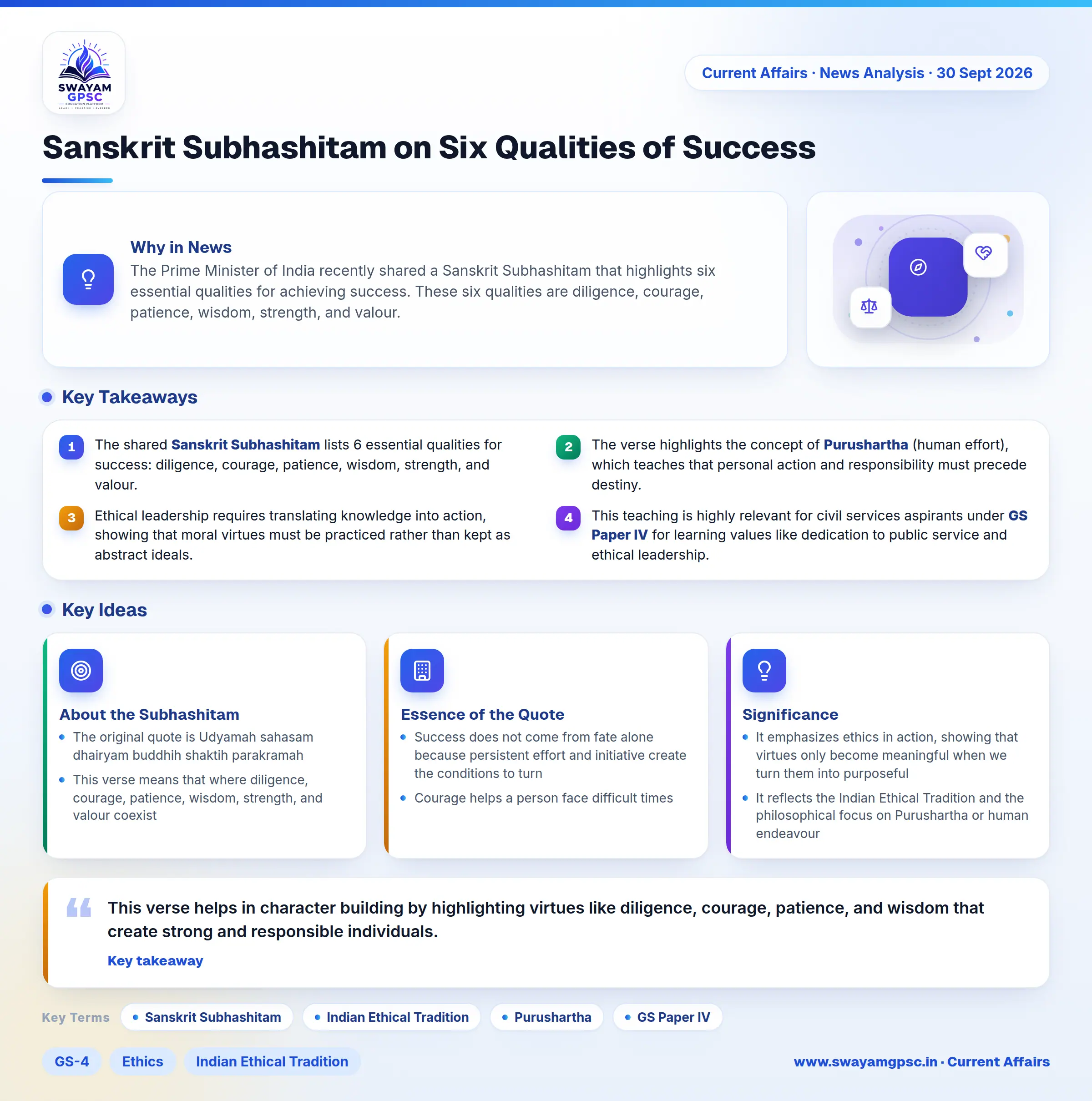
Sanskrit Subhashitam on Six Qualities of Success
#GS-4 #Ethics #Indian Ethical Tradition #Current Events #National
Key takeaways
- The shared Sanskrit Subhashitam lists 6 essential qualities for success: diligence, courage, patience, wisdom, strength, and valour.
- The verse highlights the concept of Purushartha (human effort), which teaches that personal action and responsibility must precede destiny.
- Ethical leadership requires translating knowledge into action, showing that moral virtues must be practiced rather than kept as abstract ideals.
- This teaching is highly relevant for civil services aspirants under GS Paper IV for learning values like dedication to public service and ethical leadership.
Why in News
- The Prime Minister of India recently shared a Sanskrit Subhashitam that highlights six essential qualities for achieving success.
- These six qualities are diligence, courage, patience, wisdom, strength, and valour.
About the Subhashitam
- The original quote is Udyamah sahasam dhairyam buddhih shaktih parakramah, Shadete yatra vartante tatra daivam sahayakrit.
- This verse means that where diligence, courage, patience, wisdom, strength, and valour coexist, even destiny or divine assistance supports the individual's efforts.
Essence of the Quote
- Success does not come from fate alone because persistent effort and initiative create the conditions to turn opportunities into achievements.
- Courage helps a person face difficult times, while patience and perseverance stop temporary setbacks from weakening long-term commitment.
- Strength and courage become useful only when guided by knowledge, prudence, and sound judgement, which prevents impulsive or reckless actions.
- Good intentions are not enough on their own because ethical and effective leadership requires the ability and determination to translate knowledge into action.
- This verse balances human actions with faith, suggesting that good circumstances naturally help those who first build the necessary qualities for action.
Significance
- This verse helps in character building by highlighting virtues like diligence, courage, patience, and wisdom that create strong and responsible individuals.
- It emphasizes ethics in action, showing that virtues only become meaningful when we turn them into purposeful and responsible conduct rather than keeping them as abstract ideas.
- It reflects the Indian Ethical Tradition and the philosophical focus on Purushartha or human endeavour, which combines personal responsibility with humility toward circumstances beyond our control.