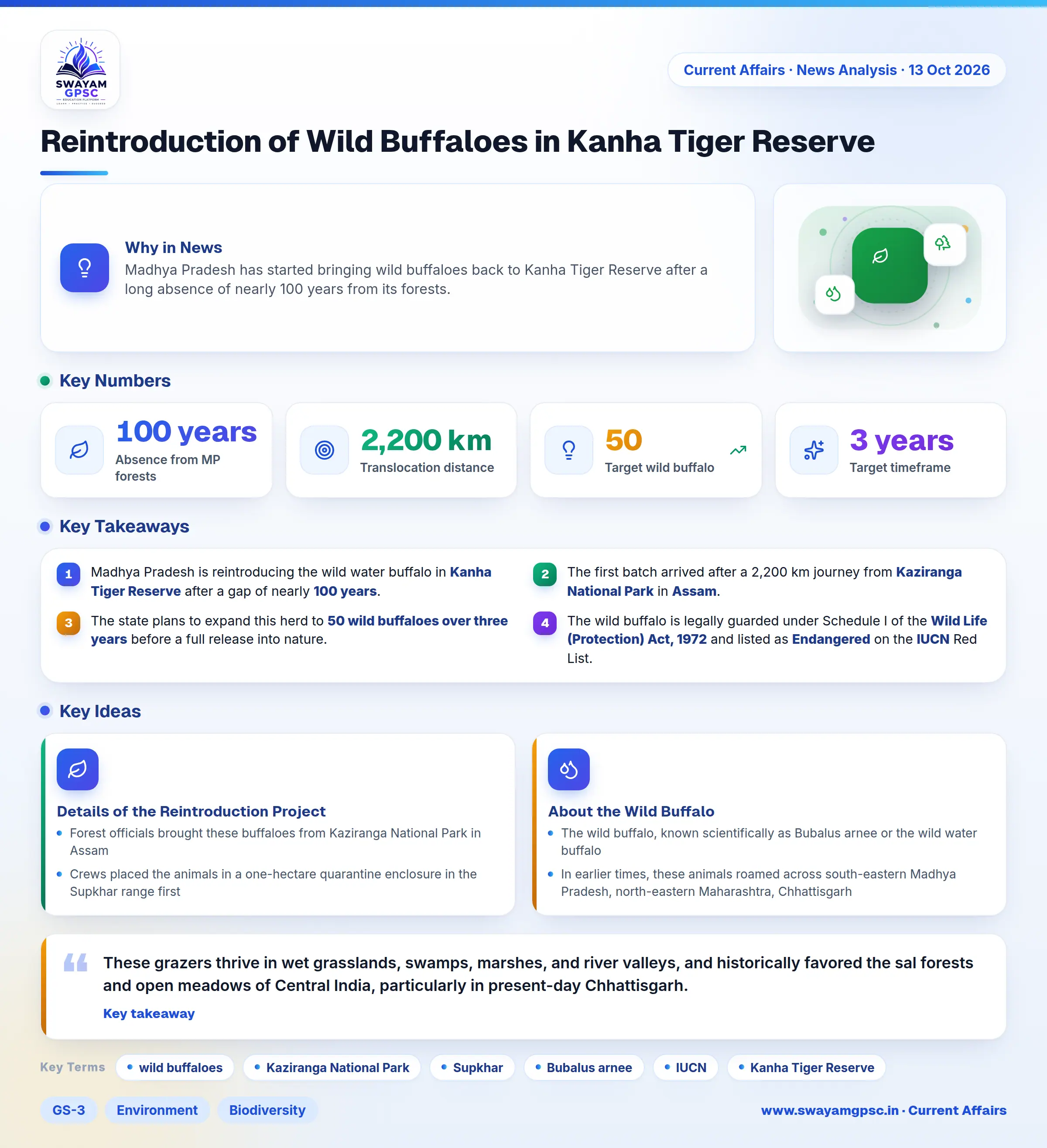
Reintroduction of Wild Buffaloes in Kanha Tiger Reserve
#GS-3 #Environment #Biodiversity #Wildlife #Current Events #National
Key takeaways
- Madhya Pradesh is reintroducing the wild water buffalo in Kanha Tiger Reserve after a gap of nearly 100 years.
- The first batch arrived after a 2,200 km journey from Kaziranga National Park in Assam.
- The state plans to expand this herd to 50 wild buffaloes over three years before a full release into nature.
- The wild buffalo is legally guarded under Schedule I of the Wild Life (Protection) Act, 1972 and listed as Endangered on the IUCN Red List.
Why in News
- Madhya Pradesh has started bringing wild buffaloes back to Kanha Tiger Reserve after a long absence of nearly 100 years from its forests.
Details of the Reintroduction Project
- Forest officials brought these buffaloes from Kaziranga National Park in Assam, covering an overland journey of around 2,200 km.
- Crews placed the animals in a one-hectare quarantine enclosure in the Supkhar range first, moving them later to a 17-hectare area to help them adapt before releasing them into the open wild.
- Madhya Pradesh aims to build a healthy population of 50 wild buffaloes over three years before letting them roam freely in their natural habitat.
- Authorities selected Supkhar for this release because historical records confirm that wild buffaloes lived in this landscape earlier.
About the Wild Buffalo
- The wild buffalo, known scientifically as Bubalus arnee or the wild water buffalo, mainly lives in the lush grasslands of Northeast India, especially in Assam.
- In earlier times, these animals roamed across south-eastern Madhya Pradesh, north-eastern Maharashtra, Chhattisgarh, Odisha, northern Telangana, northern Andhra Pradesh, and pockets of Jharkhand.
- These grazers thrive in wet grasslands, swamps, marshes, and river valleys, and historically favored the sal forests and open meadows of Central India, particularly in present-day Chhattisgarh.
- The IUCN Red List classifies the species as Endangered.
- The species enjoys the highest legal protection under Schedule I of the Wild Life (Protection) Act, 1972.