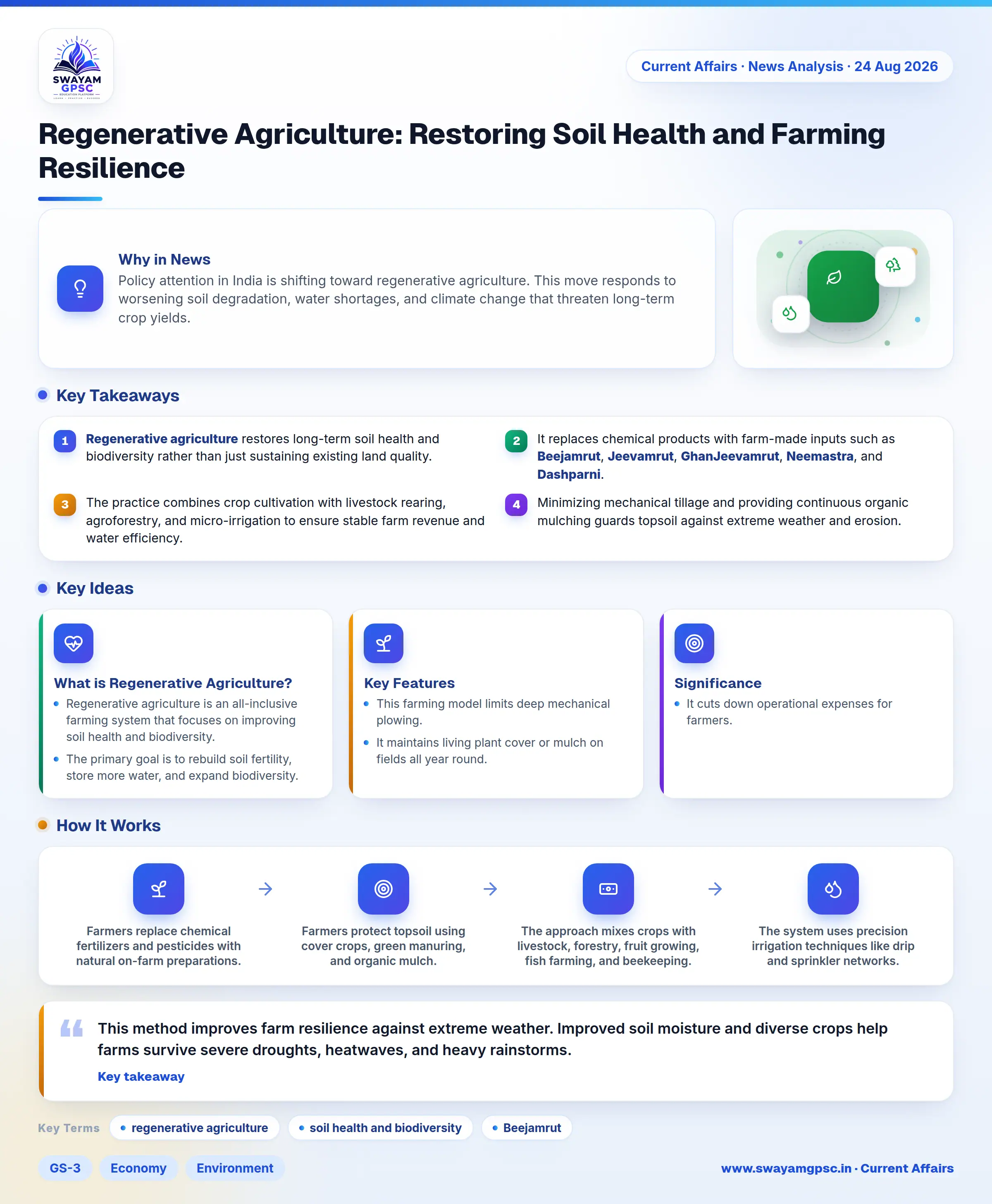
Regenerative Agriculture: Restoring Soil Health and Farming Resilience
#GS-3 #Economy #Environment #Agriculture #Sustainable Development #Climate Change
Key takeaways
- Regenerative agriculture restores long-term soil health and biodiversity rather than just sustaining existing land quality.
- It replaces chemical products with farm-made inputs such as Beejamrut, Jeevamrut, GhanJeevamrut, Neemastra, and Dashparni.
- The practice combines crop cultivation with livestock rearing, agroforestry, and micro-irrigation to ensure stable farm revenue and water efficiency.
- Minimizing mechanical tillage and providing continuous organic mulching guards topsoil against extreme weather and erosion.
Why in News
- Policy attention in India is shifting toward regenerative agriculture. This move responds to worsening soil degradation, water shortages, and climate change that threaten long-term crop yields.
What is Regenerative Agriculture?
- Regenerative agriculture is an all-inclusive farming system that focuses on improving soil health and biodiversity. Traditional sustainable farming only tries to keep current conditions stable. In contrast, regenerative farming actively restores and improves land health over time.
- The primary goal is to rebuild soil fertility, store more water, and expand biodiversity. This makes farms stronger against severe weather events while securing steady income for farmers.
How It Works
- Farmers replace chemical fertilizers and pesticides with natural on-farm preparations. They use organic bio-inputs like Beejamrut, Jeevamrut, GhanJeevamrut, Neemastra, and Dashparni to restore beneficial soil microorganisms.
- Farmers protect topsoil using cover crops, green manuring, and organic mulch. This layer prevents soil erosion, retains moisture, builds organic content, and recycles soil nutrients.
- The approach mixes crops with livestock, forestry, fruit growing, fish farming, and beekeeping. Having multiple income sources shields farmers from complete financial loss if one crop fails.
- The system uses precision irrigation techniques like drip and sprinkler networks. Delivering water directly to plant roots increases water efficiency and prevents plant nutrients from washing away.
Key Features
- This farming model limits deep mechanical plowing. Leaving soil undisturbed preserves natural soil structure and keeps plant root networks healthy.
- It maintains living plant cover or mulch on fields all year round. Constant ground cover stops erosion and keeps soil moist.
- It combines animal husbandry directly with crop cultivation. Farmers use livestock manure and urine as primary inputs to feed the soil naturally.
- It minimizes or completely stops the use of synthetic farm chemicals. Farmers rely on natural pest control methods and plant extracts to protect crop pollinators and useful insects.
Significance
- This method improves farm resilience against extreme weather. Improved soil moisture and diverse crops help farms survive severe droughts, heatwaves, and heavy rainstorms.
- It cuts down operational expenses for farmers. Buying fewer chemical fertilizers, pesticides, and irrigation supplies raises overall farm profits.