Raichur Miyawaki Forest: Turning Waste Dumps into Urban Woods
#GS-2 #GS-3 #Governance & Social Justice #Local Government #Good Governance #Environment #Sustainable Development #Pollution #Biodiversity #Climate Change #Current Events #National #Miyawaki Forest #Waste Remediation
Key takeaways
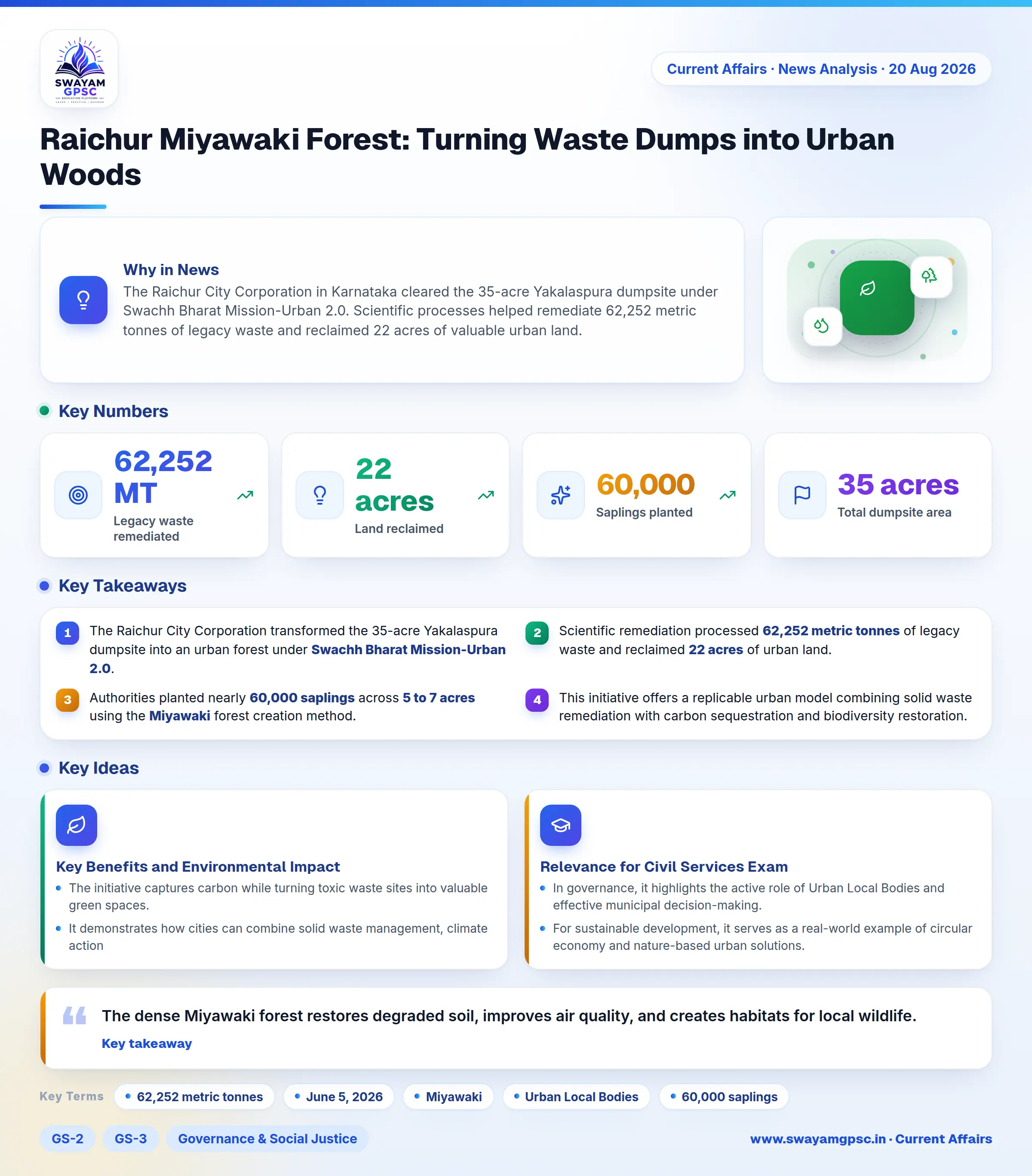
- The Raichur City Corporation transformed the 35-acre Yakalaspura dumpsite into an urban forest under Swachh Bharat Mission-Urban 2.0.
- Scientific remediation processed 62,252 metric tonnes of legacy waste and reclaimed 22 acres of urban land.
- Authorities planted nearly 60,000 saplings across 5 to 7 acres using the Miyawaki forest creation method.
- This initiative offers a replicable urban model combining solid waste remediation with carbon sequestration and biodiversity restoration.
Why in News
- The Raichur City Corporation in Karnataka cleared the 35-acre Yakalaspura dumpsite under Swachh Bharat Mission-Urban 2.0.
- Scientific processes helped remediate 62,252 metric tonnes of legacy waste and reclaimed 22 acres of valuable urban land.
- On June 5, 2026, officials began planting 60,000 saplings of native species across 5 to 7 acres using the Miyawaki method.
Key Benefits and Environmental Impact
- The dense Miyawaki forest restores degraded soil, improves air quality, and creates habitats for local wildlife.
- The initiative captures carbon while turning toxic waste sites into valuable green spaces.
- It demonstrates how cities can combine solid waste management, climate action, and urban regeneration into one working plan.
- This successful transformation offers a practical model for building cleaner and garbage-free cities across India.
Relevance for Civil Services Exam
- In governance, it highlights the active role of Urban Local Bodies and effective municipal decision-making.
- For sustainable development, it serves as a real-world example of circular economy and nature-based urban solutions.
- In environmental studies, it covers legacy waste management, afforestation, carbon sequestration, and biodiversity protection.
- For ethics and essay papers, it demonstrates administrative innovation, public responsibility, and turning urban problems into green solutions.