NMCG Amends 2016 Ganga River Order on Floodplain Construction Rules
#GS-3 #Environment #Pollution #GS-2 #Governance & Social Justice #Regulatory Bodies #Current Events #National #National Mission for Clean Ganga #Environment Protection Act 1986
Key takeaways
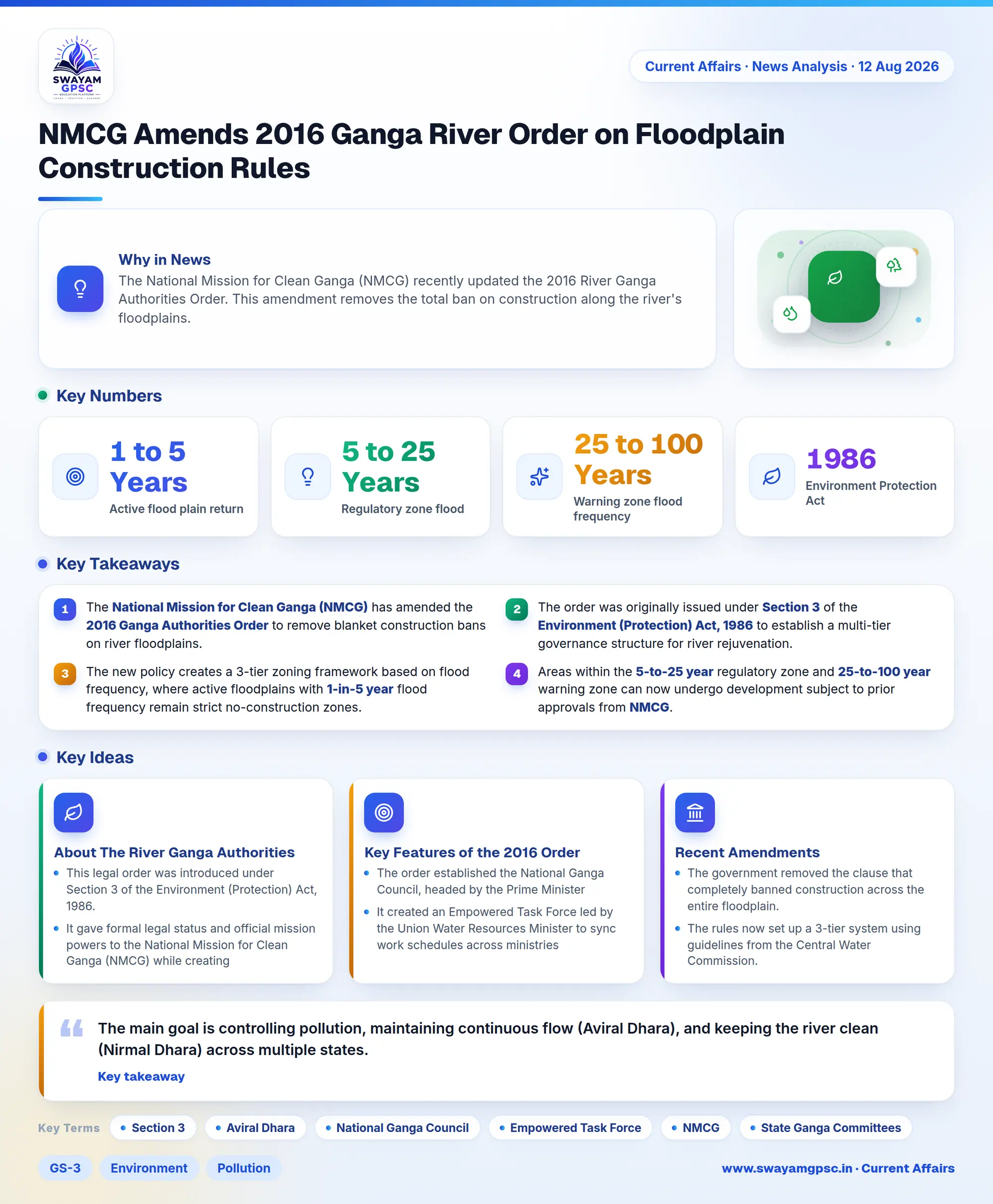
- The National Mission for Clean Ganga (NMCG) has amended the 2016 Ganga Authorities Order to remove blanket construction bans on river floodplains.
- The order was originally issued under Section 3 of the Environment (Protection) Act, 1986 to establish a multi-tier governance structure for river rejuvenation.
- The new policy creates a 3-tier zoning framework based on flood frequency, where active floodplains with 1-in-5 year flood frequency remain strict no-construction zones.
- Areas within the 5-to-25 year regulatory zone and 25-to-100 year warning zone can now undergo development subject to prior approvals from NMCG.
Why in News
- The National Mission for Clean Ganga (NMCG) recently updated the 2016 River Ganga Authorities Order. This amendment removes the total ban on construction along the river's floodplains.
About The River Ganga Authorities Order, 2016
- This legal order was introduced under Section 3 of the Environment (Protection) Act, 1986.
- It gave formal legal status and official mission powers to the National Mission for Clean Ganga (NMCG) while creating a multi-layered body to clean the river.
- The main goal is controlling pollution, maintaining continuous flow (Aviral Dhara), and keeping the river clean (Nirmal Dhara) across multiple states.
Key Features of the 2016 Order
- The order established the National Ganga Council, headed by the Prime Minister, to supervise all cleanup decisions instead of the old body.
- It created an Empowered Task Force led by the Union Water Resources Minister to sync work schedules across ministries and states.
- It made NMCG a statutory authority that can issue binding rules under the Environment (Protection) Act, 1986.
- It set up local bodies like State Ganga Committees and District Ganga Protection Committees to catch pollution problems at the root level.
- It mandated maintaining minimum water flows throughout the river so that the Ganga can naturally clean itself.
- Originally, it banned all construction on floodplains that faced flooding risks within a 100-year timeline.
Recent Amendments
- The government removed the clause that completely banned construction across the entire floodplain.
- The rules now set up a 3-tier system using guidelines from the Central Water Commission.
- The Active Flood Plain covers areas flooded once every 1 to 5 years, where construction remains banned except for temporary event structures.
- The Regulatory Zone covers areas with flood frequency between 5 to 25 years, where development is allowed after getting government clearances.
- The Warning Zone covers outer areas with flood frequency between 25 to 100 years, where building projects require standard regulatory approvals.
- Instead of a complete ban, developers must now obtain formal approval from NMCG and state authorities before building outside the active zone.