NITI Aayog Report on Unlocking Growth in India's Tourism and Hospitality Sector
#GS-3 #Economy #Infrastructure #Employment #Tourism #Hospitality #NITI Aayog #National
Why in News
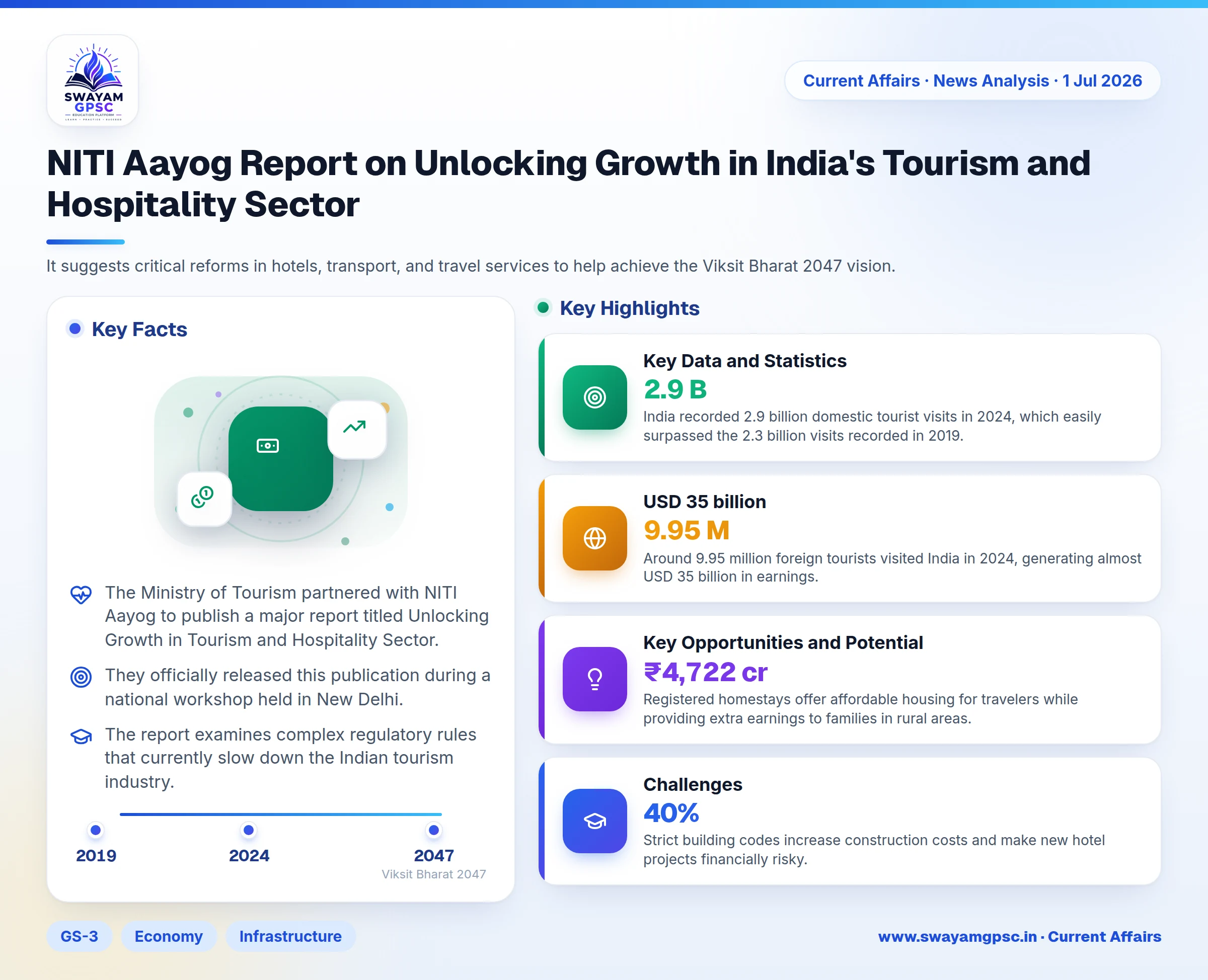
- The Ministry of Tourism partnered with NITI Aayog to publish a major report titled Unlocking Growth in Tourism and Hospitality Sector.
- They officially released this publication during a national workshop held in New Delhi.
- The report examines complex regulatory rules that currently slow down the Indian tourism industry.
- It suggests critical reforms in hotels, transport, and travel services to help achieve the Viksit Bharat 2047 vision.
Key Data and Statistics
- India recorded 2.9 billion domestic tourist visits in 2024, which easily surpassed the 2.3 billion visits recorded in 2019.
- Around 9.95 million foreign tourists visited India in 2024, generating almost USD 35 billion in earnings.
- India ranks 6th in natural resources and 9th in cultural resources globally, yet its overall rank is only 39th on the Travel and Tourism Development Index (TTDI).
- Building a new hotel in India currently requires nearly 60 approvals and takes between 36 to 48 months to complete.
Key Opportunities and Potential
- Tourism creates jobs for people with all skill levels, making it one of the most labor intensive service sectors in India. For example, hotel staff, tour guides, and airline employees all find work in this sector.
- Tourism helps spread economic growth across rural, coastal, and historical locations rather than keeping it in big cities. For instance, the backwaters in Kerala and heritage sites in Rajasthan bring direct income to local people.
- Foreign tourists spend money directly inside India, bringing in foreign exchange without exporting physical goods. For example, international visitors spend money on hotel rooms, food, local shopping, and cultural shows.
- India can earn more revenue by shifting focus toward high spending tourists who stay for longer periods. For example, wellness programs, Ayurveda centers, and luxury heritage hotels attract visitors who spend more money.
- Registered homestays offer affordable housing for travelers while providing extra earnings to families in rural areas. In fact, registered homestays earned nearly ₹4,722 crore in revenue during 2024.
Challenges
- Strict building codes increase construction costs and make new hotel projects financially risky. For example, Rajasthan sets a ground coverage limit of 40%, which forces developers to build costlier structures.
- Hotel owners must obtain separate approvals from multiple agencies for the same building, causing repeated work and delays. For example, hotels in Mumbai need individual licenses for their laundry rooms, salons, and banquet halls.
- Businesses must renew operational permits frequently, which increases paperwork and administrative costs. For example, bar licenses in Uttar Pradesh expire every year on 31 March.
- Different tax systems and permit rules between states make interstate tourist travel expensive and complicated. For example, Kerala collects extra vehicle taxes even if a tourist vehicle holds a valid All India Tourist Permit (AITP).
- Long application forms and technical payment errors on visa portals discourage foreign tourists from visiting India. For example, the e-Visa portal requires travelers to complete over 70 data fields.
Key Recommendations of NITI Aayog
- Authorities should relax floor area ratio rules and ground coverage limits to bring down hotel construction costs.
- Governments should combine multiple hotel licenses into a single approval system to speed up business setup.
- Regulators should raise the maximum room limit for homestays and remove unnecessary clearance certificates to support rural business owners.
- The government should extend the validity of the All India Tourist Permit (AITP) and remove overlapping state taxes.
- Officials should introduce Visa-on-Arrival (VoA) for more countries and simplify payment methods on the online visa portal.
Way Forward
- The NITI Aayog roadmap focuses on cutting red tape, upgrading infrastructure, and improving the experience for every visitor.
- Carrying out these reforms will speed up private investment and turn tourism into a primary engine for inclusive economic growth.