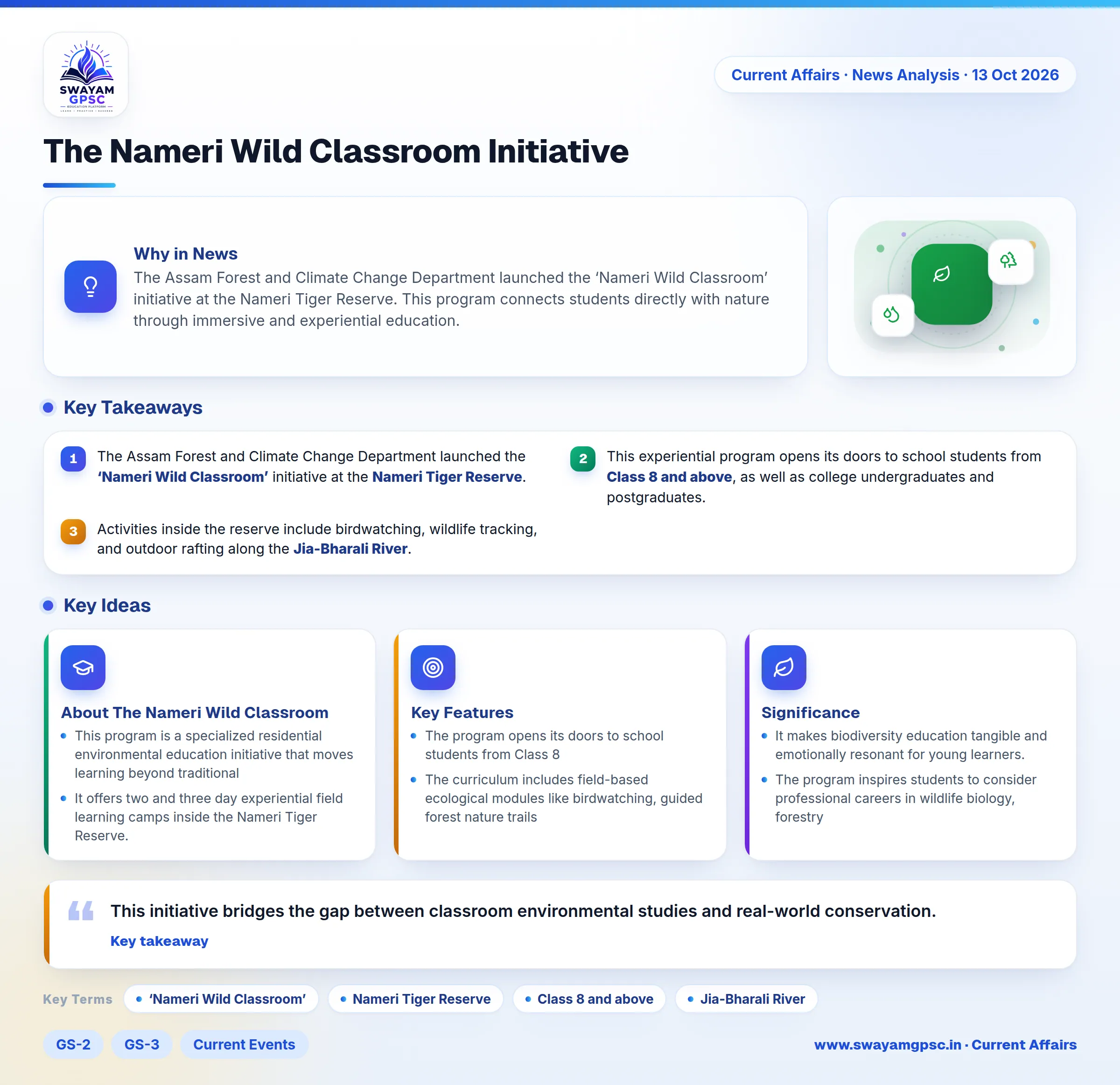
The Nameri Wild Classroom Initiative
#GS-2 #GS-3 #Current Events #Environment #National #Biodiversity #Sustainable Development #Wildlife
Key takeaways
- The Assam Forest and Climate Change Department launched the ‘Nameri Wild Classroom’ initiative at the Nameri Tiger Reserve.
- This experiential program opens its doors to school students from Class 8 and above, as well as college undergraduates and postgraduates.
- Activities inside the reserve include birdwatching, wildlife tracking, and outdoor rafting along the Jia-Bharali River.
Why in News
- The Assam Forest and Climate Change Department launched the ‘Nameri Wild Classroom’ initiative at the Nameri Tiger Reserve.
- This program connects students directly with nature through immersive and experiential education.
About The Nameri Wild Classroom Initiative
- This program is a specialized residential environmental education initiative that moves learning beyond traditional textbooks into living natural habitats.
- It offers two and three day experiential field learning camps inside the Nameri Tiger Reserve.
- The Department of Environment and Forest of the Government of Assam launched and administers this program.
- Administrators run the initiative in close coordination with field directors and frontline staff of the Nameri Tiger Reserve.
- The main aim is to nurture curiosity, scientific temperament, and environmental responsibility among youth.
- It provides direct exposure to forest and river ecosystems to cultivate future stewards and researchers for wildlife conservation.
Key Features
- The program opens its doors to school students from Class 8 and above, as well as undergraduate and postgraduate college students.
- The curriculum includes field-based ecological modules like birdwatching, guided forest nature trails, and wildlife tracking techniques.
- Special modules focus closely on riparian and riverine ecology.
- Students take part in an outdoor rafting experience along the Jia-Bharali River to study freshwater biodiversity and aquatic habitat dynamics firsthand.
- Participants learn about traditional ecological knowledge, customs, and conservation practices of local forest-dwelling communities surrounding the reserve.
- Professional naturalists and forest personnel mentor the students directly.
- Students maintain systematic field observation journals and receive formal completion certificates at the end.
Significance
- This initiative bridges the gap between classroom environmental studies and real-world conservation.
- It makes biodiversity education tangible and emotionally resonant for young learners.
- The program inspires students to consider professional careers in wildlife biology, forestry, and environmental policy.
- It successfully instills lasting conservation ethics in the minds of the younger generation.