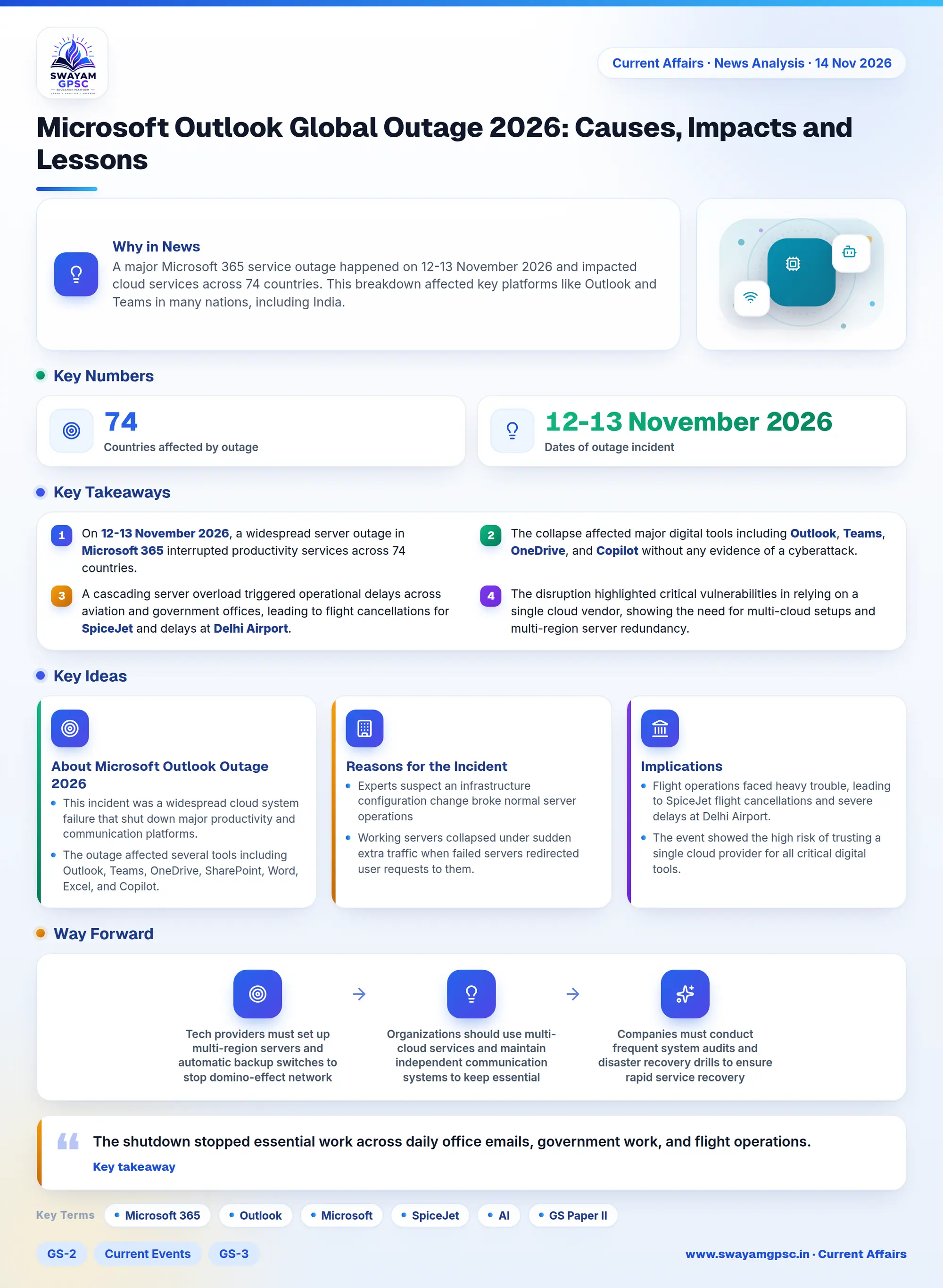
Microsoft Outlook Global Outage 2026: Causes, Impacts and Lessons
#GS-2 #Current Events #GS-3 #Science & Technology #ICT #Cyber Security #Cloud Infrastructure Outage #Microsoft 365
Key takeaways
- On 12-13 November 2026, a widespread server outage in Microsoft 365 interrupted productivity services across 74 countries.
- The collapse affected major digital tools including Outlook, Teams, OneDrive, and Copilot without any evidence of a cyberattack.
- A cascading server overload triggered operational delays across aviation and government offices, leading to flight cancellations for SpiceJet and delays at Delhi Airport.
- The disruption highlighted critical vulnerabilities in relying on a single cloud vendor, showing the need for multi-cloud setups and multi-region server redundancy.
Why in News
- A major Microsoft 365 service outage happened on 12-13 November 2026 and impacted cloud services across 74 countries.
- This breakdown affected key platforms like Outlook and Teams in many nations, including India.
- The disturbance slowed down everyday work in private businesses, government offices, and airline operations.
About Microsoft Outlook Outage 2026
- This incident was a widespread cloud system failure that shut down major productivity and communication platforms.
- The outage affected several tools including Outlook, Teams, OneDrive, SharePoint, Word, Excel, and Copilot.
- This failure highlighted clear vulnerabilities in modern interconnected digital networks.
Reasons for the Incident
- Experts suspect an infrastructure configuration change broke normal server operations, which created heavy connectivity failures across Microsoft 365 services.
- Working servers collapsed under sudden extra traffic when failed servers redirected user requests to them.
- Restoring the system became difficult because newly brought-up servers froze again as soon as normal user traffic returned.
- Microsoft stated that there was no evidence of a cyberattack behind this issue, though the final cause is still under study.
Implications
- The shutdown stopped essential work across daily office emails, government work, and flight operations.
- Flight operations faced heavy trouble, leading to SpiceJet flight cancellations and severe delays at Delhi Airport.
- The event showed the high risk of trusting a single cloud provider for all critical digital tools.
- The collapse affected linked third-party applications and AI tools, proving how fast failures can spread in connected digital systems.
Way Forward
- Tech providers must set up multi-region servers and automatic backup switches to stop domino-effect network failures.
- Organizations should use multi-cloud services and maintain independent communication systems to keep essential services running during outages.
- Companies must conduct frequent system audits and disaster recovery drills to ensure rapid service recovery during emergencies.
Relevance in UPSC Examination Syllabus
- Under GS Paper II, this topic connects to digital governance, e-governance systems, and uninterrupted delivery of public services.
- Under GS Paper III, it relates to science and technology developments, cybersecurity needs, critical digital infrastructure safety, and disaster management.
- Under GS Paper IV, it links to corporate accountability, technological ethics, and responsible management of digital services.