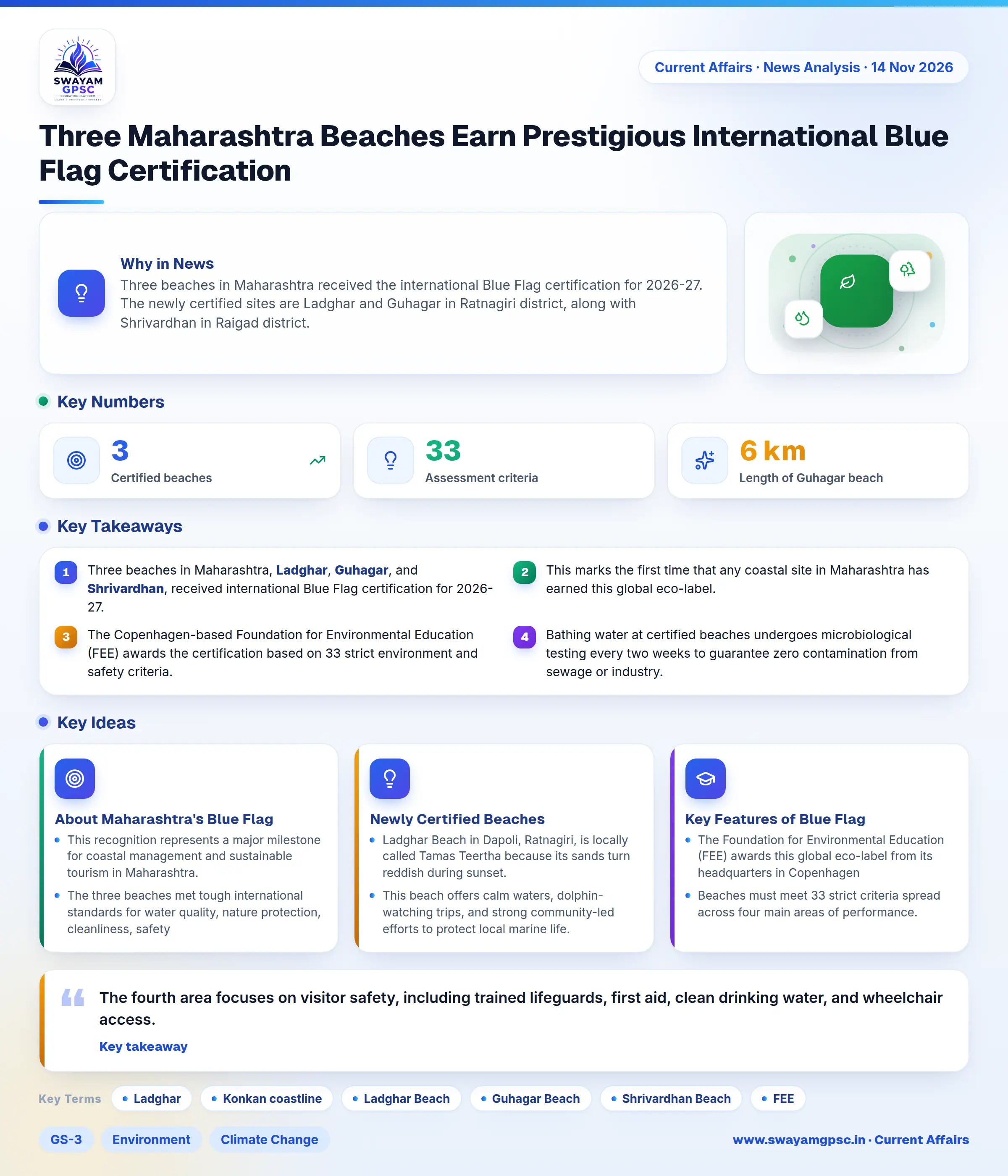
Three Maharashtra Beaches Earn Prestigious International Blue Flag Certification
#GS-3 #Environment #Climate Change #Biodiversity #Sustainable Development #Tourism #Mapping
Key takeaways
- Three beaches in Maharashtra, Ladghar, Guhagar, and Shrivardhan, received international Blue Flag certification for 2026-27.
- This marks the first time that any coastal site in Maharashtra has earned this global eco-label.
- The Copenhagen-based Foundation for Environmental Education (FEE) awards the certification based on 33 strict environment and safety criteria.
- Bathing water at certified beaches undergoes microbiological testing every two weeks to guarantee zero contamination from sewage or industry.
Why in News
- Three beaches in Maharashtra received the international Blue Flag certification for 2026-27.
- The newly certified sites are Ladghar and Guhagar in Ratnagiri district, along with Shrivardhan in Raigad district.
- This achievement marks the first time any beach from Maharashtra has joined this global eco-label list.
About Maharashtra's Blue Flag Certification
- This recognition represents a major milestone for coastal management and sustainable tourism in Maharashtra.
- The three beaches met tough international standards for water quality, nature protection, cleanliness, safety, and local community care.
- All three beaches sit along Maharashtra's Konkan coastline next to the Arabian Sea inside Ratnagiri and Raigad districts.
Newly Certified Beaches
- Ladghar Beach in Dapoli, Ratnagiri, is locally called Tamas Teertha because its sands turn reddish during sunset.
- This beach offers calm waters, dolphin-watching trips, and strong community-led efforts to protect local marine life.
- Guhagar Beach in Ratnagiri features a 6-km long white sand shoreline covered with dense casuarina trees.
- It provides clean swimming waters alongside eco-friendly tourism facilities that minimize harm to nature.
- Shrivardhan Beach in Raigad features a calm crescent shape with a flat, safe slope for swimmers.
- The local Gram Panchayat manages effective waste sorting systems here, close to the historic Maratha Peshwa town.
Key Features of Blue Flag Certification
- The Foundation for Environmental Education (FEE) awards this global eco-label from its headquarters in Copenhagen, Denmark.
- Beaches must meet 33 strict criteria spread across four main areas of performance.
- The first area covers environmental education and public information.
- The second area requires clean bathing water tested every two weeks for bacteria, sewage, or chemical waste.
- The third area demands strong waste recycling, proper trash sorting, and full adherence to Coastal Regulation Zone rules.
- The fourth area focuses on visitor safety, including trained lifeguards, first aid, clean drinking water, and wheelchair access.
- The certification lasts for only one season and requires constant monitoring by national teams and an international jury.
- If a beach fails to maintain these high standards, officials will suspend or cancel its eco-label immediately.
- This certification boosts local economic growth by attracting international tourists and creating green jobs.
- It also helps protect fragile coastal habitats like sand dunes, mangrove forests, and turtle nesting areas.