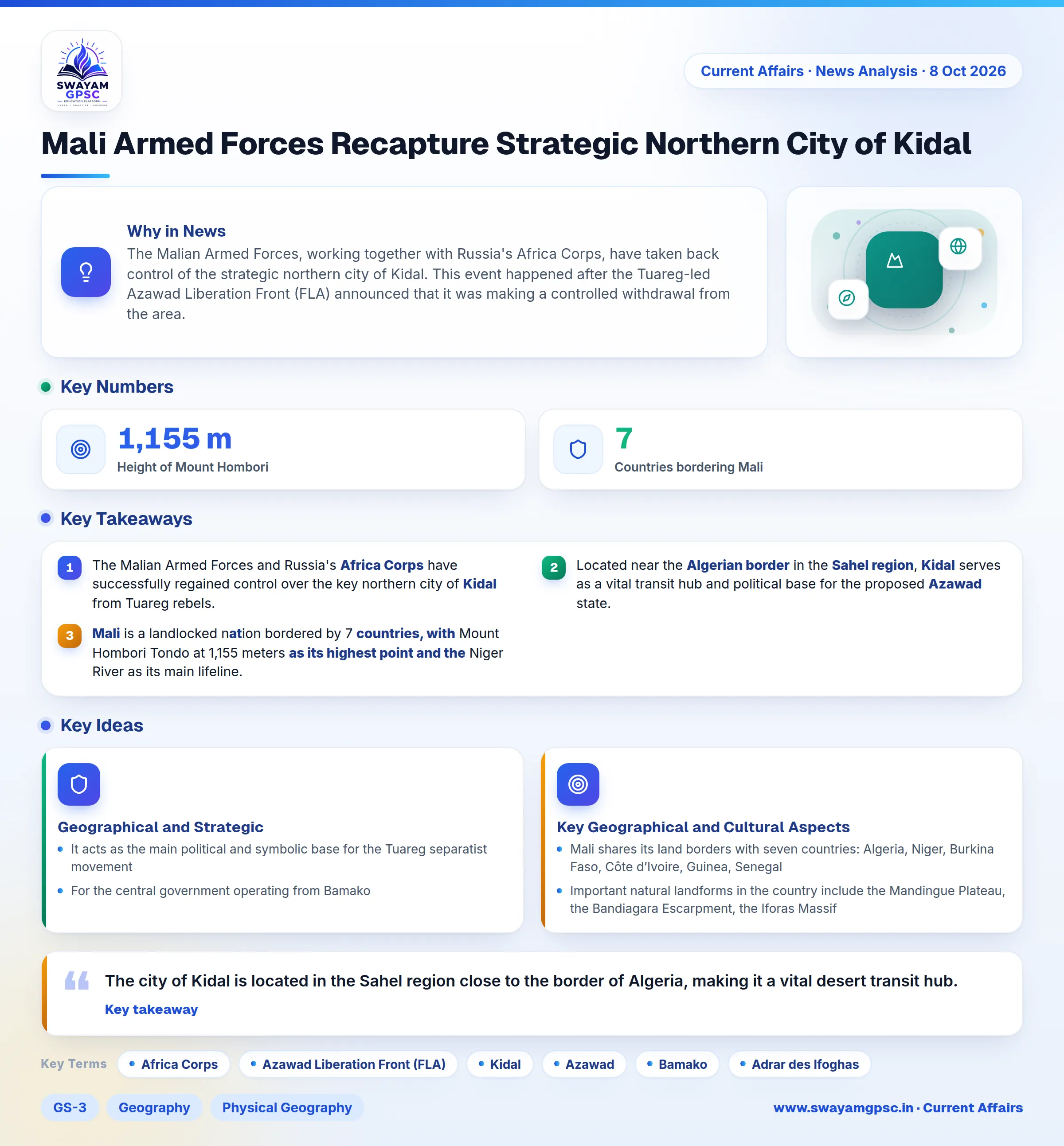
Mali Armed Forces Recapture Strategic Northern City of Kidal
#GS-3 #Geography #Physical Geography #GS-2 #Current Events #International #Rapid Fire CA #Quick Facts For Prelims
Key takeaways
- The Malian Armed Forces and Russia's Africa Corps have successfully regained control over the key northern city of Kidal from Tuareg rebels.
- Located near the Algerian border in the Sahel region, Kidal serves as a vital transit hub and political base for the proposed Azawad state.
- Mali is a landlocked nation bordered by 7 countries, with Mount Hombori Tondo at 1,155 meters as its highest point and the Niger River as its main lifeline.
Why in News
- The Malian Armed Forces, working together with Russia's Africa Corps, have taken back control of the strategic northern city of Kidal.
- This event happened after the Tuareg-led Azawad Liberation Front (FLA) announced that it was making a controlled withdrawal from the area.
- Taking back the city gives a strong symbolic boost to the military government of Mali, but it does not completely end the ongoing conflict in the region.
Geographical and Strategic Significance of Kidal
- The city of Kidal is located in the Sahel region close to the border of Algeria, making it a vital desert transit hub.
- It acts as the main political and symbolic base for the Tuareg separatist movement, which wants to create an independent state called Azawad in northern Mali.
- For the central government operating from Bamako, reclaiming Kidal brings back a key symbol of national unity and authority over its northern borders.
- The nearby Adrar des Ifoghas mountain range has long offered cover to rebels and gives control over regional trade and smuggling routes.
Key Geographical and Cultural Aspects of Mali
- Mali shares its land borders with seven countries: Algeria, Niger, Burkina Faso, Côte d’Ivoire, Guinea, Senegal, and Mauritania.
- Important natural landforms in the country include the Mandingue Plateau, the Bandiagara Escarpment, the Iforas Massif, and Mount Hombori Tondo, which stands as the highest peak at 1,155 meters.
- The Niger River flows across Mali and serves as the main economic lifeblood for its population.
- Historically, the country was home to the ancient Ghana, Mali, and Songhai empires, featuring famous cultural sites like Timbuktu and Djenné.
- The main ethnic groups living in the country are the Bambara, Fulani, Dogon, and Tuareg.
- Key natural reserves in the nation include Boucle du Baoulé National Park, Ansongo-Ménaka Animal Reserve, and Gourma Elephant Reserve.