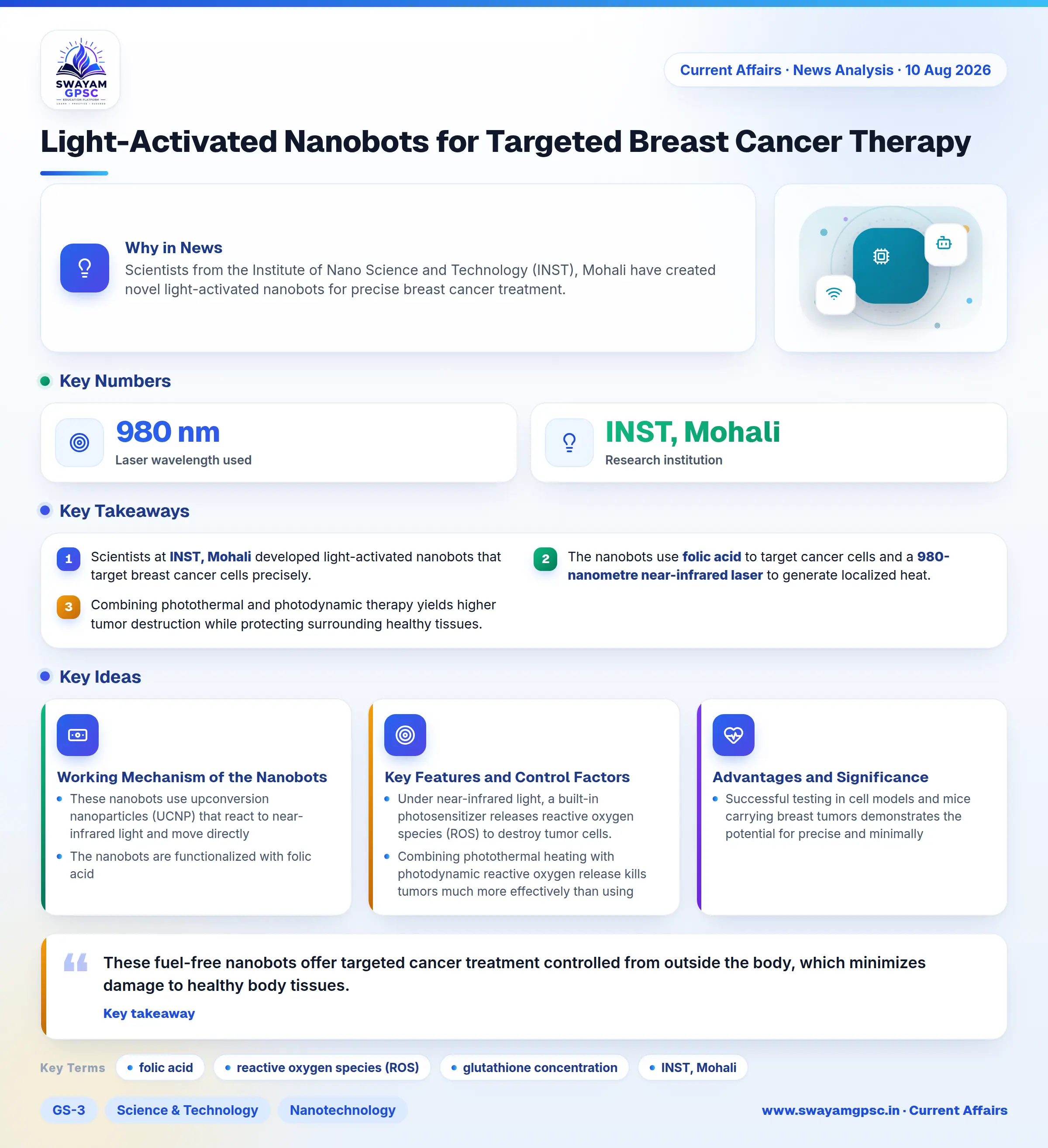
Light-Activated Nanobots for Targeted Breast Cancer Therapy
#GS-3 #Science & Technology #Nanotechnology #Biotechnology #Current Events #National
Key takeaways
- Scientists at INST, Mohali developed light-activated nanobots that target breast cancer cells precisely.
- The nanobots use folic acid to target cancer cells and a 980-nanometre near-infrared laser to generate localized heat.
- Combining photothermal and photodynamic therapy yields higher tumor destruction while protecting surrounding healthy tissues.
Why in News
- Scientists from the Institute of Nano Science and Technology (INST), Mohali have created novel light-activated nanobots for precise breast cancer treatment.
Working Mechanism of the Nanobots
- These nanobots use upconversion nanoparticles (UCNP) that react to near-infrared light and move directly toward the light source through phototaxis.
- The nanobots are functionalized with folic acid, which helps them identify and attach specifically to breast cancer cells that have excess folate receptors.
- When exposed to a 980-nanometre near-infrared laser, the nanobots produce localized heat that selectively kills cancer cells.
Key Features and Control Factors
- Under near-infrared light, a built-in photosensitizer releases reactive oxygen species (ROS) to destroy tumor cells.
- Combining photothermal heating with photodynamic reactive oxygen release kills tumors much more effectively than using either method alone.
- Doctors can control the therapeutic activity of the nanobots by adjusting laser intensity, surrounding pH levels, and glutathione concentration.
Advantages and Significance
- These fuel-free nanobots offer targeted cancer treatment controlled from outside the body, which minimizes damage to healthy body tissues.
- Successful testing in cell models and mice carrying breast tumors demonstrates the potential for precise and minimally invasive cancer therapy.