IoT-Based Waste Management Plan in Haryana
#GS-2 #Governance & Social Justice #Good Governance #E-Governance #GS-3 #Environment #Pollution #Sustainable Development #Science & Technology #Current Events #National #Solid Waste Management #Internet of Things #Urban Governance
Key takeaways
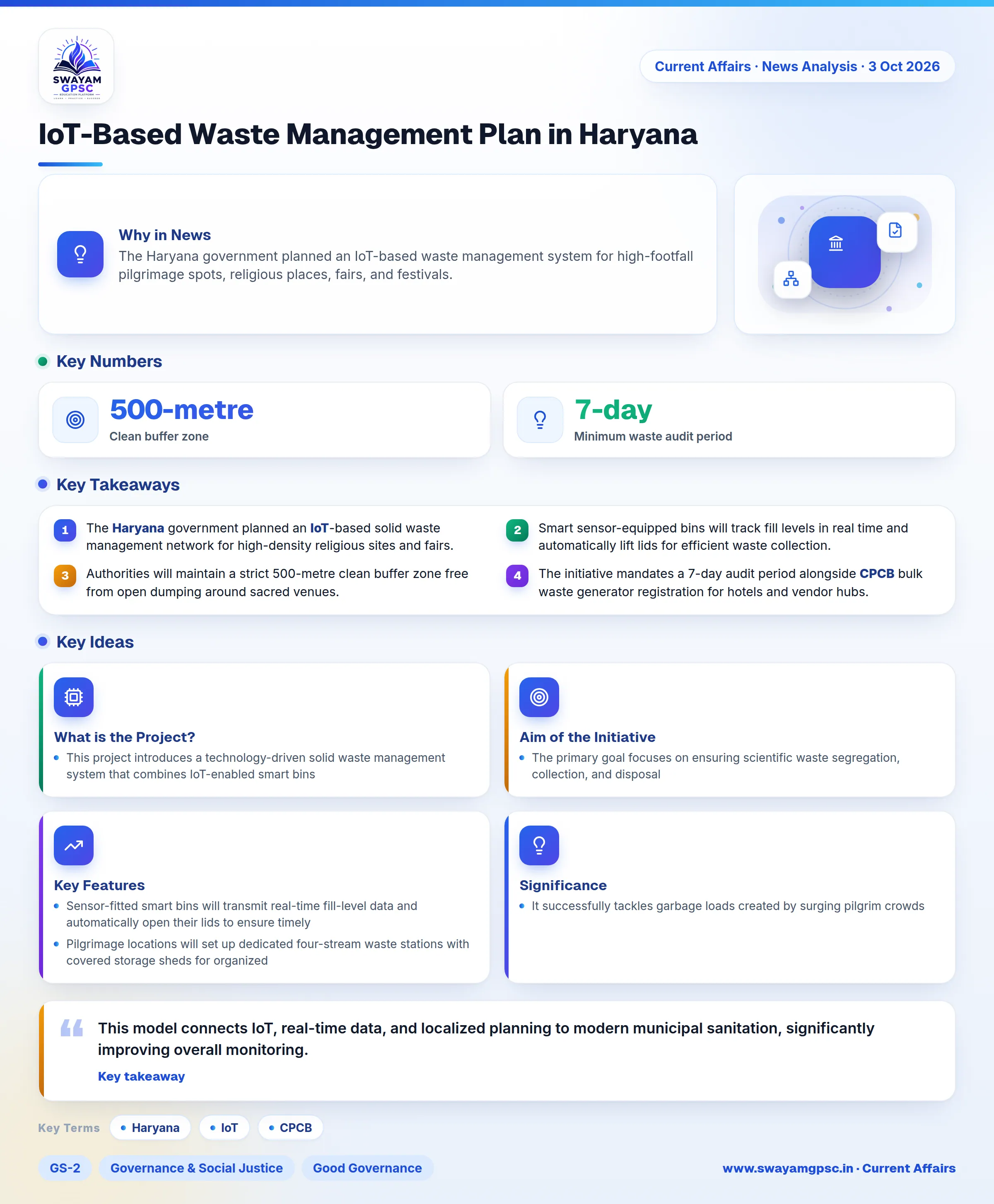
- The Haryana government planned an IoT-based solid waste management network for high-density religious sites and fairs.
- Smart sensor-equipped bins will track fill levels in real time and automatically lift lids for efficient waste collection.
- Authorities will maintain a strict 500-metre clean buffer zone free from open dumping around sacred venues.
- The initiative mandates a 7-day audit period alongside CPCB bulk waste generator registration for hotels and vendor hubs.
Why in News
- The Haryana government planned an IoT-based waste management system for high-footfall pilgrimage spots, religious places, fairs, and festivals.
What is the Project?
- This project introduces a technology-driven solid waste management system that combines IoT-enabled smart bins, four-stream waste segregation, geo-tagging, and real-time monitoring to handle waste at busy religious centers.
Aim of the Initiative
- The primary goal focuses on ensuring scientific waste segregation, collection, and disposal, while preventing littering and improving cleanliness at holy sites during peak footfall periods.
Key Features
- Sensor-fitted smart bins will transmit real-time fill-level data and automatically open their lids to ensure timely clearance.
- Pilgrimage locations will set up dedicated four-stream waste stations with covered storage sheds for organized handling and separation.
- Authorities will enforce a 500-metre clean buffer zone around sites, banning open waste collection points along access roads, parking grounds, and vendor stalls.
- Teams will conduct a minimum 7-day waste audit to track garbage levels, alongside geo-tagging persistent littering hotspots for targeted action.
- Hotels, community kitchens, inns, and flower shops within the buffer zone must register as bulk waste generators under the CPCB framework.
Significance
- This model connects IoT, real-time data, and localized planning to modern municipal sanitation, significantly improving overall monitoring.
- It successfully tackles garbage loads created by surging pilgrim crowds, thereby protecting surrounding ecosystems from degradation.