GOBARdhan Scheme: Transforming Organic Waste into Clean Energy
#GS-3 #Environment #Sustainable Development #Economy #Infrastructure #Agriculture #SBM-G #GOBARdhan #Compressed Biogas
Key takeaways
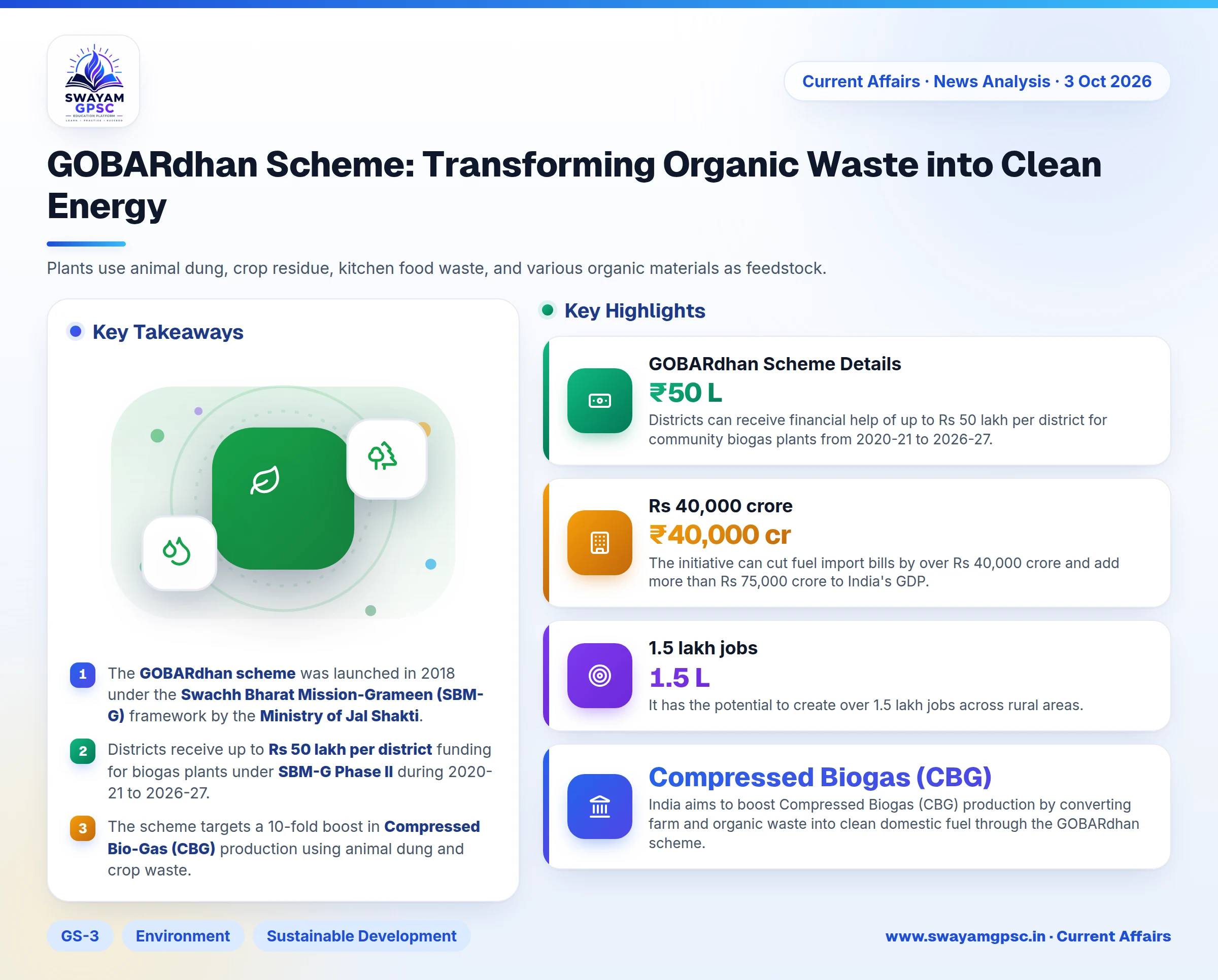
- The GOBARdhan scheme was launched in 2018 under the Swachh Bharat Mission-Grameen (SBM-G) framework by the Ministry of Jal Shakti.
- Districts receive up to Rs 50 lakh per district funding for biogas plants under SBM-G Phase II during 2020-21 to 2026-27.
- The scheme targets a 10-fold boost in Compressed Bio-Gas (CBG) production using animal dung and crop waste.
- Successful implementation will save Rs 40,000 crore in fuel imports and add Rs 75,000 crore to GDP.
- The program expects to create 1.5 lakh jobs and support farmers in becoming Urjadatas.
Why in News
- India aims to boost Compressed Biogas (CBG) production by converting farm and organic waste into clean domestic fuel through the GOBARdhan scheme.
GOBARdhan Scheme Details
- The government launched this initiative in 2018 under the Swachh Bharat Mission-Grameen (SBM-G) framework.
- The Department of Drinking Water and Sanitation (DDWS) under the Ministry of Jal Shakti serves as the main nodal agency for the SBM-G part.
- The core objective is to process cattle dung and biodegradable waste into biogas, Compressed Bio-Gas (CBG), and organic manure.
- Plants use animal dung, crop residue, kitchen food waste, and various organic materials as feedstock.
- Under SBM-G Phase II, the scheme acts as a major solid waste management component to help villages handle biodegradable waste.
- Districts can receive financial help of up to Rs 50 lakh per district for community biogas plants from 2020-21 to 2026-27.
- The program encourages Gram Panchayats and local bodies to set up decentralized waste-to-energy units.
- This effort aims to increase CBG production by 10-fold while replacing imported fuel with home-grown energy.
- The initiative can cut fuel import bills by over Rs 40,000 crore and add more than Rs 75,000 crore to India's GDP.
- It has the potential to create over 1.5 lakh jobs across rural areas.
- Farmers get new earning sources by turning waste into fuel and fertilizer, helping them turn from Annadatas to Urjadatas.