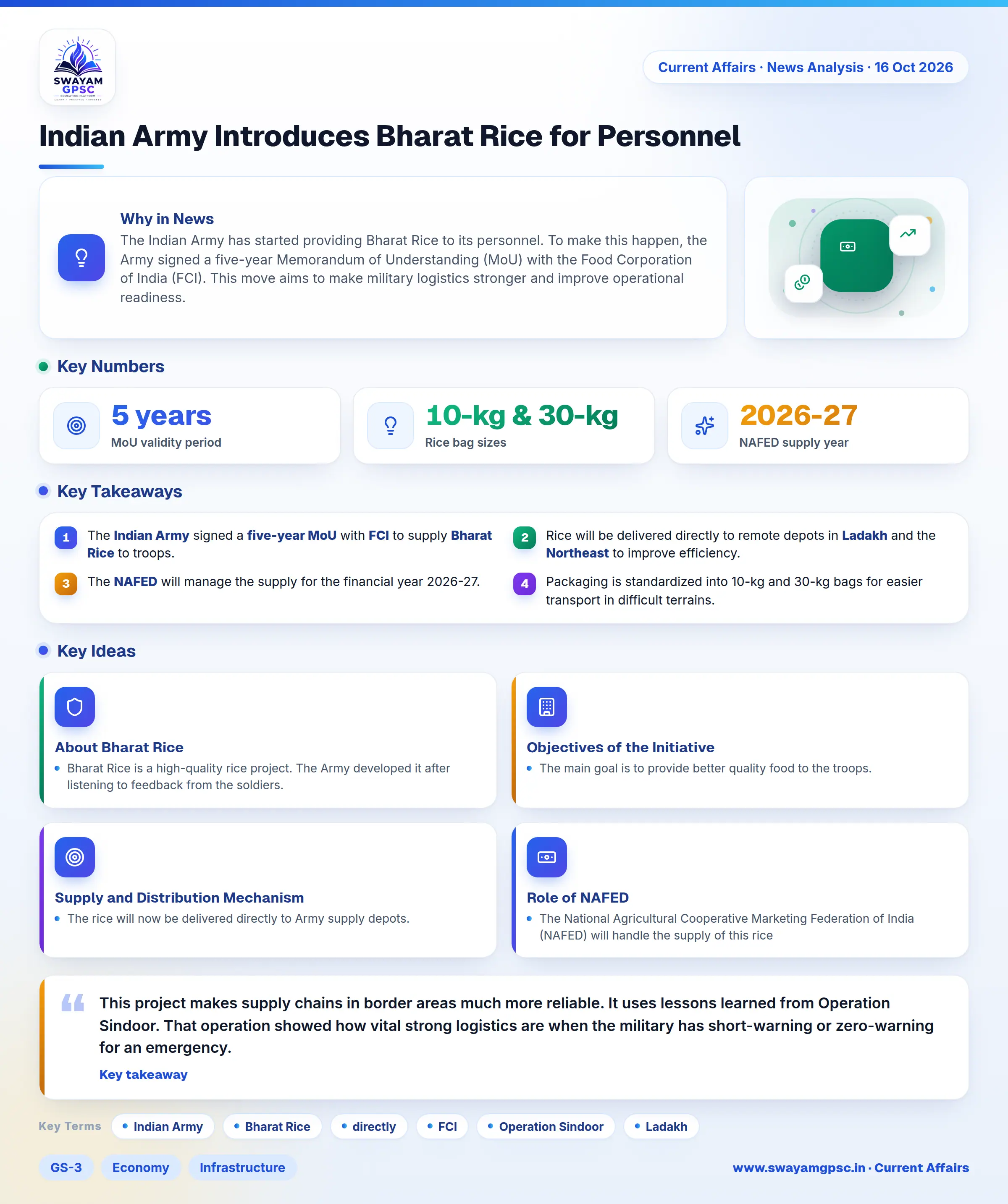
Indian Army Introduces Bharat Rice for Personnel
#GS-3 #Economy #Infrastructure #Various Security Forces & Agencies & Their Mandate #National
Key takeaways
- The Indian Army signed a five-year MoU with FCI to supply Bharat Rice to troops.
- Rice will be delivered directly to remote depots in Ladakh and the Northeast to improve efficiency.
- The NAFED will manage the supply for the financial year 2026-27.
- Packaging is standardized into 10-kg and 30-kg bags for easier transport in difficult terrains.
- The strategy incorporates lessons from Operation Sindoor to handle zero-warning military contingencies.
Why in News
- The Indian Army has started providing Bharat Rice to its personnel. To make this happen, the Army signed a five-year Memorandum of Understanding (MoU) with the Food Corporation of India (FCI). This move aims to make military logistics stronger and improve operational readiness.
About Bharat Rice
- Bharat Rice is a high-quality rice project. The Army developed it after listening to feedback from the soldiers. The rice follows specific defence specifications to ensure better ration quality and a more efficient supply chain.
Objectives of the Initiative
- The main goal is to provide better quality food to the troops. It also ensures that food supplies are refilled on time. This is very important for military readiness, especially during sudden emergencies or when troops need to move quickly.
Supply and Distribution Mechanism
- The rice will now be delivered directly to Army supply depots. This includes depots in hard-to-reach places like Ladakh and the Northeast. Previously, depots had to collect supplies from local FCI facilities, but this new system removes that hassle.
Role of NAFED
- The National Agricultural Cooperative Marketing Federation of India (NAFED) will handle the supply of this rice for the 2026-27 financial year.
Packaging and Quality Control
- Every batch of rice will go through strict quality checks. It will be packed in 10-kg and 30-kg bags. The packaging is designed to be easy to carry and move in difficult mountain terrains.
Key Highlights of the MoU
- The agreement allows the Army to use FCI warehouses, modern silos, and trained staff. It also gives them access to material-handling equipment during military emergencies. This agreement lasts for five years, and both sides can agree to extend it later.
Strategic Significance
- This project makes supply chains in border areas much more reliable. It uses lessons learned from Operation Sindoor. That operation showed how vital strong logistics are when the military has short-warning or zero-warning for an emergency.