India’s First Geological Museum in Madhya Pradesh
#GS-1 #Geography #Indian Heritage Sites #Rapid Fire CA #Quick Facts For Prelims #Tourism
Key takeaways
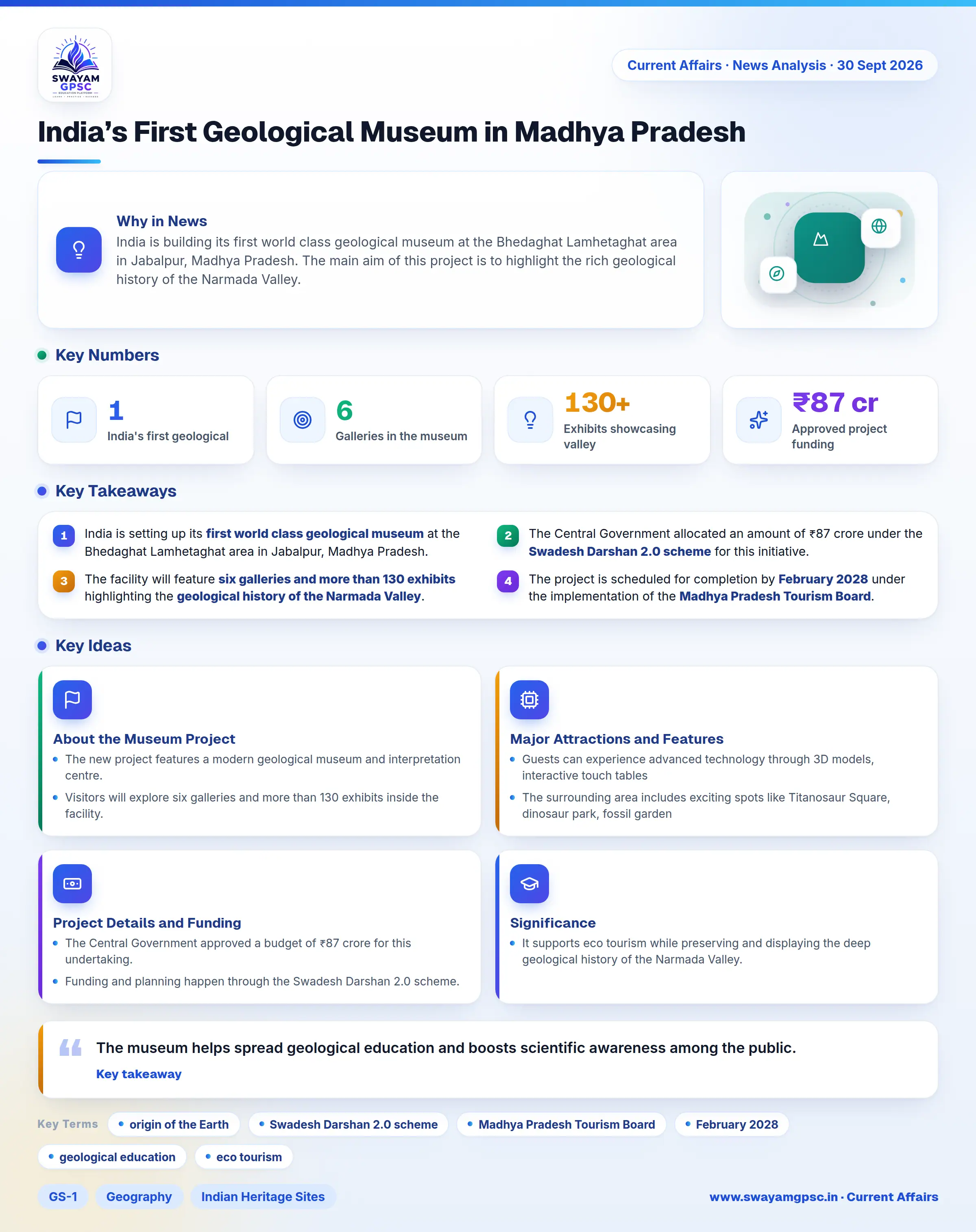
- India is setting up its first world class geological museum at the Bhedaghat Lamhetaghat area in Jabalpur, Madhya Pradesh.
- The Central Government allocated an amount of ₹87 crore under the Swadesh Darshan 2.0 scheme for this initiative.
- The facility will feature six galleries and more than 130 exhibits highlighting the geological history of the Narmada Valley.
- The project is scheduled for completion by February 2028 under the implementation of the Madhya Pradesh Tourism Board.
Why in News
- India is building its first world class geological museum at the Bhedaghat Lamhetaghat area in Jabalpur, Madhya Pradesh.
- The main aim of this project is to highlight the rich geological history of the Narmada Valley.
About the Museum Project
- The new project features a modern geological museum and interpretation centre.
- Visitors will explore six galleries and more than 130 exhibits inside the facility.
- The displays use interactive methods to teach people about the origin of the Earth and how the geological evolution of the Narmada Valley took place.
Major Attractions and Features
- Guests can experience advanced technology through 3D models, interactive touch tables, digital panels and an immersive theatre.
- The surrounding area includes exciting spots like Titanosaur Square, dinosaur park, fossil garden, geological maze and rock garden.
- Other outdoor additions feature a tree top walkway, glass floor, nature trails and viewing decks for visitors.
Project Details and Funding
- The Central Government approved a budget of ₹87 crore for this undertaking.
- Funding and planning happen through the Swadesh Darshan 2.0 scheme.
- The Madhya Pradesh Tourism Board takes charge of building the site.
- Officials have set a deadline for completion by February 2028.
Significance
- The museum helps spread geological education and boosts scientific awareness among the public.
- It supports eco tourism while preserving and displaying the deep geological history of the Narmada Valley.