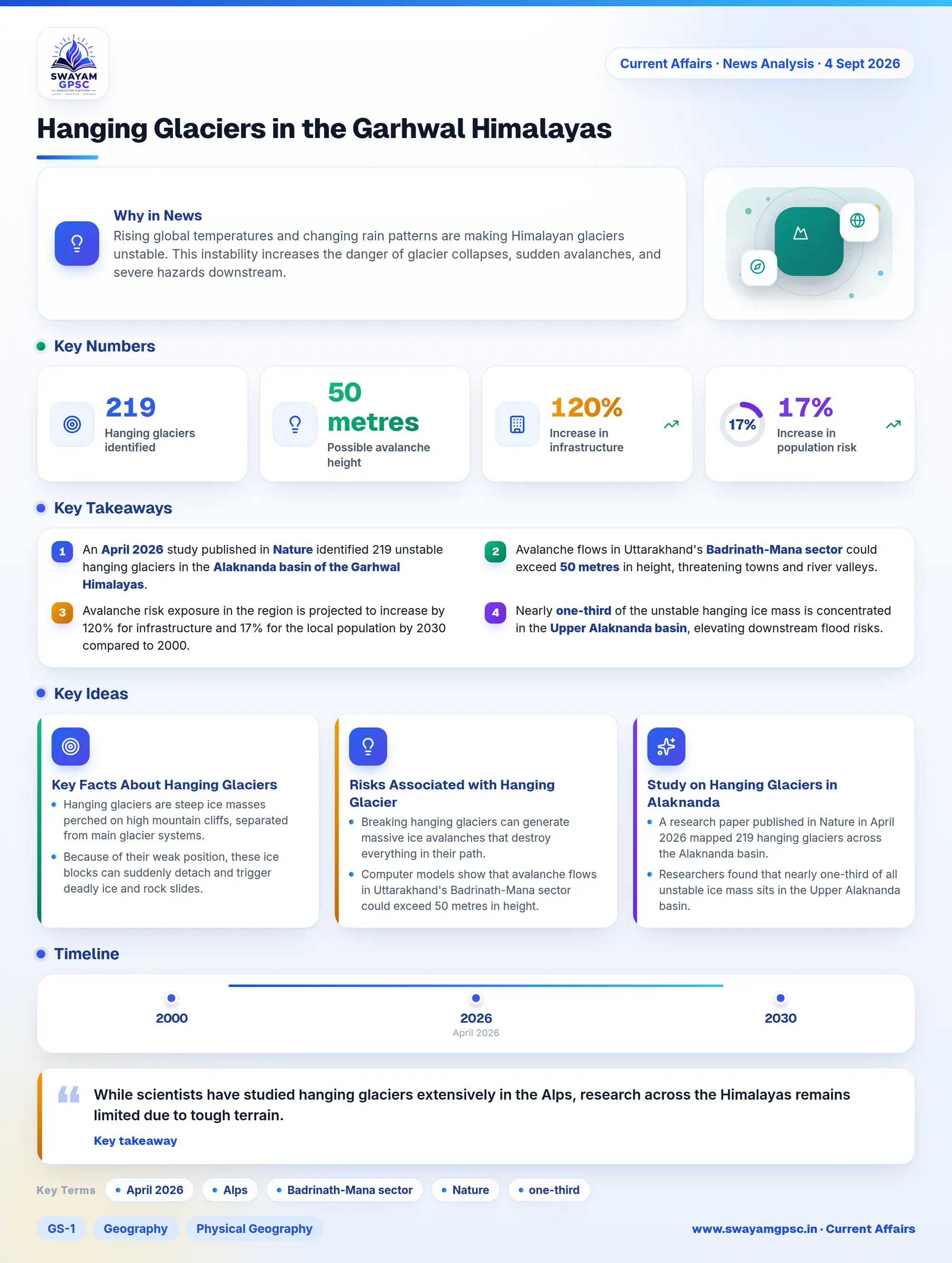
Hanging Glaciers in the Garhwal Himalayas
#GS-1 #Geography #Physical Geography #GS-3 #Environment #Climate Change #Disaster Management #Disaster Preparedness
Key takeaways
- An April 2026 study published in Nature identified 219 unstable hanging glaciers in the Alaknanda basin of the Garhwal Himalayas.
- Avalanche flows in Uttarakhand's Badrinath-Mana sector could exceed 50 metres in height, threatening towns and river valleys.
- Avalanche risk exposure in the region is projected to increase by 120% for infrastructure and 17% for the local population by 2030 compared to 2000.
- Nearly one-third of the unstable hanging ice mass is concentrated in the Upper Alaknanda basin, elevating downstream flood risks.
Why in News
- Rising global temperatures and changing rain patterns are making Himalayan glaciers unstable.
- This instability increases the danger of glacier collapses, sudden avalanches, and severe hazards downstream.
- An April 2026 study identified 219 hanging glaciers in the Alaknanda basin of the Garhwal Himalayas, pointing out their high risk to nearby areas.
Key Facts About Hanging Glaciers
- Hanging glaciers are steep ice masses perched on high mountain cliffs, separated from main glacier systems.
- Because of their weak position, these ice blocks can suddenly detach and trigger deadly ice and rock slides.
- Rapid climate warming and glacier retreat cause these ice formations to lose structural balance over time.
- While scientists have studied hanging glaciers extensively in the Alps, research across the Himalayas remains limited due to tough terrain.
Risks Associated with Hanging Glacier Collapse
- Breaking hanging glaciers can generate massive ice avalanches that destroy everything in their path.
- Computer models show that avalanche flows in Uttarakhand's Badrinath-Mana sector could exceed 50 metres in height.
- Glacier collapses can also trigger Glacial Lake Outburst Floods (GLOFs), releasing huge amounts of stored water into valleys.
- Collapsing glaciers sweep downhill carrying rocks, snow, and mud, creating dangerous debris flows and river blockages.
- Critical infrastructure like hydropower plants, highways, bridges, and pilgrimage sites face extreme danger from these natural events.
Study on Hanging Glaciers in Alaknanda Basin
- A research paper published in Nature in April 2026 mapped 219 hanging glaciers across the Alaknanda basin.
- Researchers found that nearly one-third of all unstable ice mass sits in the Upper Alaknanda basin.
- The study predicts that avalanche risk exposure for buildings and roads will rise by 120% by 2030 compared to 2000.
- The human population living in these high-risk mountain zones is also expected to grow by 17% over the same timeframe.