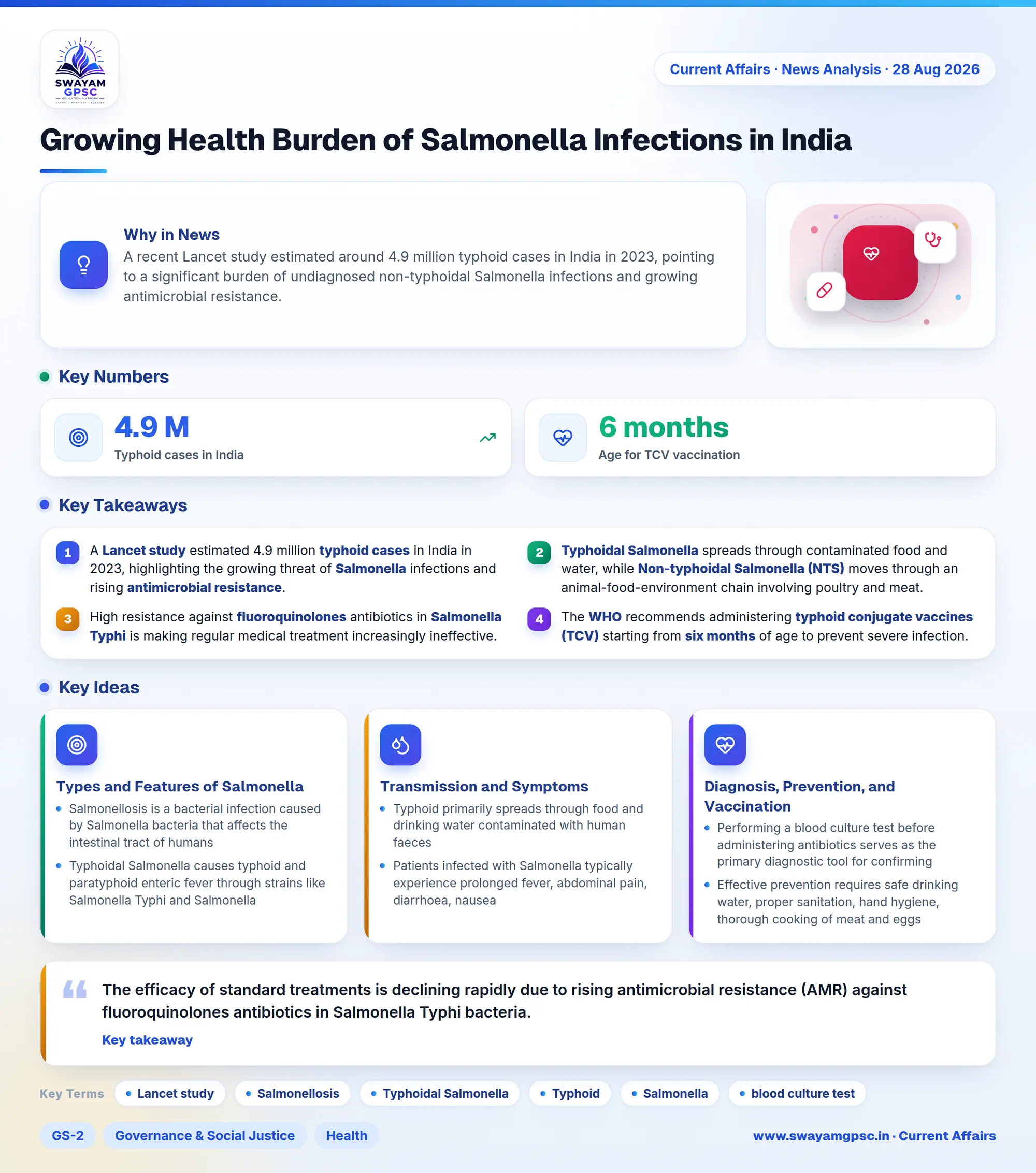
Growing Health Burden of Salmonella Infections in India
#GS-2 #Governance & Social Justice #Health #Current Events #National #Salmonella #Antimicrobial Resistance
Key takeaways
- A Lancet study estimated 4.9 million typhoid cases in India in 2023, highlighting the growing threat of Salmonella infections and rising antimicrobial resistance.
- Typhoidal Salmonella spreads through contaminated food and water, while Non-typhoidal Salmonella (NTS) moves through an animal-food-environment chain involving poultry and meat.
- High resistance against fluoroquinolones antibiotics in Salmonella Typhi is making regular medical treatment increasingly ineffective.
- The WHO recommends administering typhoid conjugate vaccines (TCV) starting from six months of age to prevent severe infection.
- Containing widespread Salmonella transmission requires an integrated One Health approach that addresses human, animal, and environmental factors together.
Why in News
- A recent Lancet study estimated around 4.9 million typhoid cases in India in 2023, pointing to a significant burden of undiagnosed non-typhoidal Salmonella infections and growing antimicrobial resistance.
Types and Features of Salmonella Infections
- Salmonellosis is a bacterial infection caused by Salmonella bacteria that affects the intestinal tract of humans and animals.
- Typhoidal Salmonella causes typhoid and paratyphoid enteric fever through strains like Salmonella Typhi and Salmonella Paratyphi, whereas Non-typhoidal Salmonella (NTS) mainly triggers gastroenteritis and severe bloodstream infections in vulnerable patients.
- Most non-typhoidal Salmonella infections remain untested and unrecorded because mild cases usually resolve on their own without hospitalization or medical testing.
Transmission and Symptoms
- Typhoid primarily spreads through food and drinking water contaminated with human faeces, while NTS follows a complex transmission chain involving poultry, eggs, meat, and polluted surroundings.
- Patients infected with Salmonella typically experience prolonged fever, abdominal pain, diarrhoea, nausea, and vomiting, while severe cases can lead to dangerous intestinal bleeding or tissue perforation.
Diagnosis, Prevention, and Vaccination
- Performing a blood culture test before administering antibiotics serves as the primary diagnostic tool for confirming suspected typhoid cases.
- Effective prevention requires safe drinking water, proper sanitation, hand hygiene, thorough cooking of meat and eggs, correct refrigeration, and avoiding kitchen cross-contamination.
- The WHO recommends giving typhoid conjugate vaccines (TCV) to children starting from six months of age to build long-term immunity.
Challenges
- The efficacy of standard treatments is declining rapidly due to rising antimicrobial resistance (AMR) against fluoroquinolones antibiotics in Salmonella Typhi bacteria.
Way Forward
- Controlling non-typhoidal Salmonella requires an integrated One Health approach that unites human health, animal husbandry, logistics, and kitchen safety practices.