Ecological Restoration of the Skjern River in Denmark
#GS-3 #Environment #Sustainable Development #Biodiversity #Geography #Physical Geography
Key takeaways
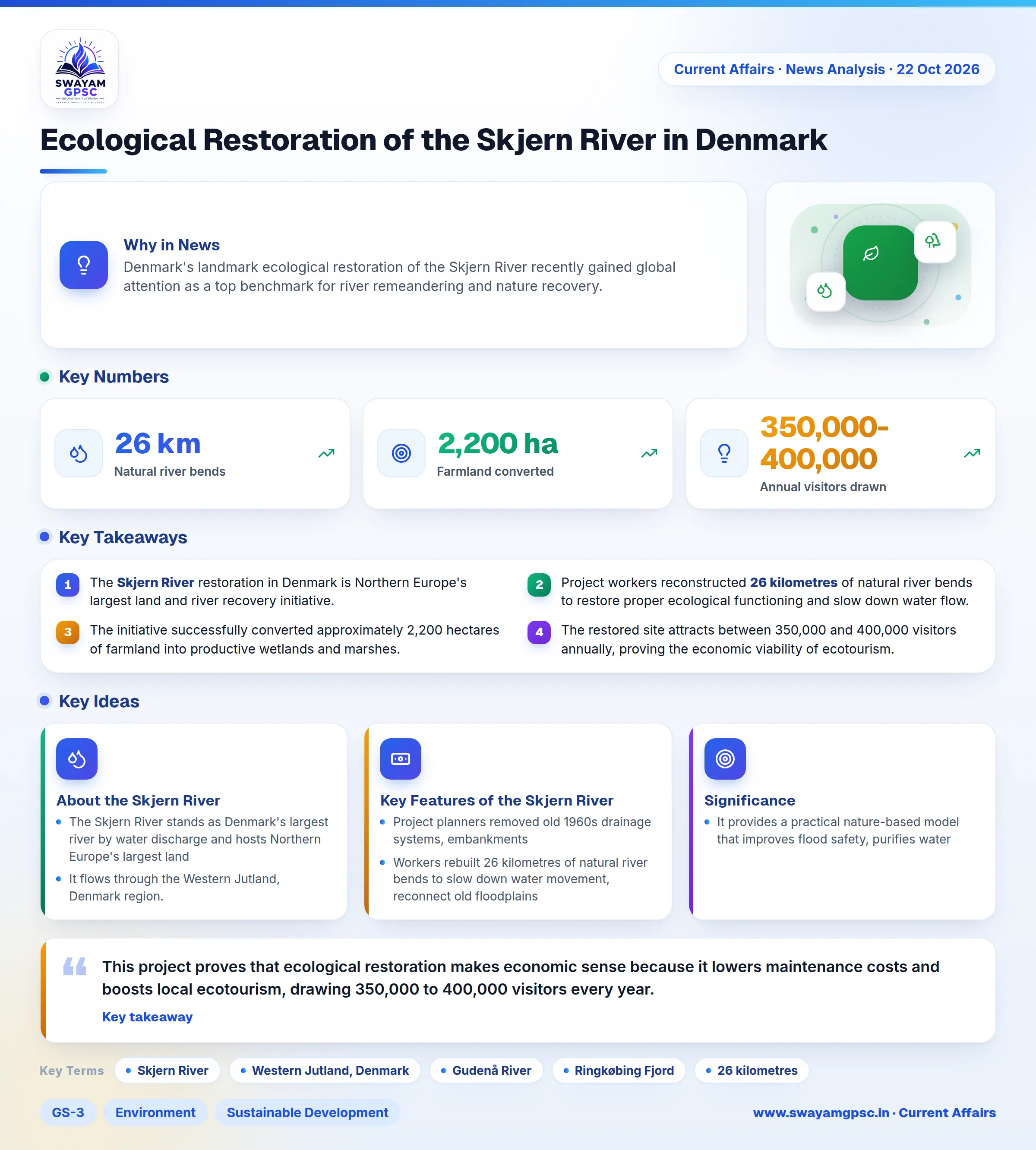
- The Skjern River restoration in Denmark is Northern Europe's largest land and river recovery initiative.
- Project workers reconstructed 26 kilometres of natural river bends to restore proper ecological functioning and slow down water flow.
- The initiative successfully converted approximately 2,200 hectares of farmland into productive wetlands and marshes.
- The restored site attracts between 350,000 and 400,000 visitors annually, proving the economic viability of ecotourism.
Why in News
- Denmark's landmark ecological restoration of the Skjern River recently gained global attention as a top benchmark for river remeandering and nature recovery.
About the Skjern River
- The Skjern River stands as Denmark's largest river by water discharge and hosts Northern Europe's largest land and river restoration initiative to revive its floodplain and delta ecosystem.
- It flows through the Western Jutland, Denmark region.
- The river originates in central Jutland near Tinnet Krat south of Nørre Snede, very close to the source of the Gudenå River.
- It flows westward across Jutland's lowlands and empties into Ringkøbing Fjord, which is a shallow coastal lagoon connected to the North Sea.
Key Features of the Skjern River Restoration
- Project planners removed old 1960s drainage systems, embankments, and artificial channels to undo past agricultural damage and restore natural water flow.
- Workers rebuilt 26 kilometres of natural river bends to slow down water movement, reconnect old floodplains, and improve overall river health.
- The project converted about 2,200 hectares of farmland back into wetlands, marshes, and wet meadows to help hold water naturally.
- Natural filtration of agricultural runoff improved water quality while bringing back breeding grounds for migratory birds, otters, and native Atlantic salmon.
Significance
- This project proves that ecological restoration makes economic sense because it lowers maintenance costs and boosts local ecotourism, drawing 350,000 to 400,000 visitors every year.
- It provides a practical nature-based model that improves flood safety, purifies water, and stores carbon through healthy natural floodplains.