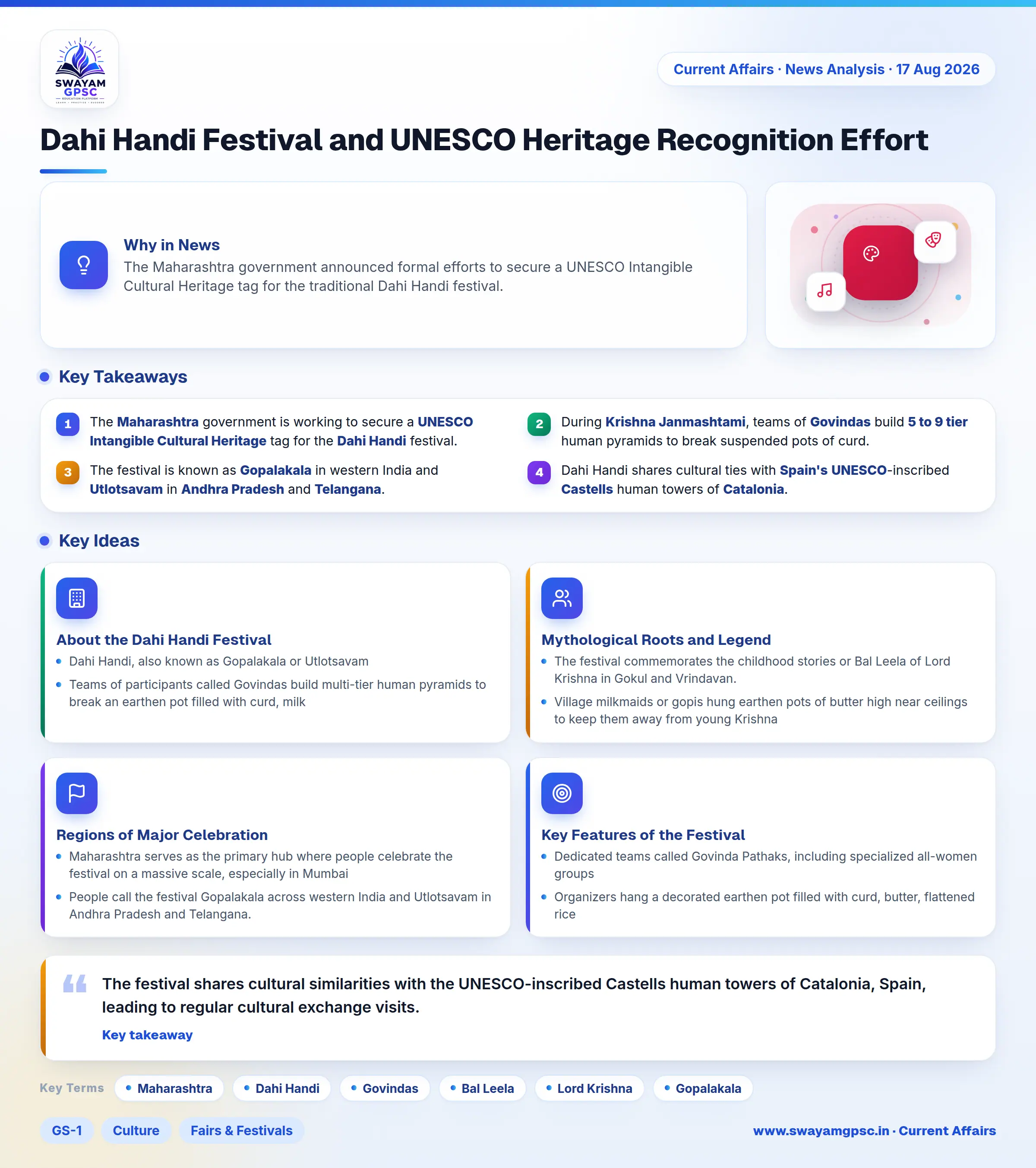
Dahi Handi Festival and UNESCO Heritage Recognition Effort
#GS-1 #Culture #Fairs & Festivals #Current Events #National #Dahi Handi #UNESCO
Key takeaways
- The Maharashtra government is working to secure a UNESCO Intangible Cultural Heritage tag for the Dahi Handi festival.
- During Krishna Janmashtami, teams of Govindas build 5 to 9 tier human pyramids to break suspended pots of curd.
- The festival is known as Gopalakala in western India and Utlotsavam in Andhra Pradesh and Telangana.
- Dahi Handi shares cultural ties with Spain's UNESCO-inscribed Castells human towers of Catalonia.
Why in News
- The Maharashtra government announced formal efforts to secure a UNESCO Intangible Cultural Heritage tag for the traditional Dahi Handi festival.
About the Dahi Handi Festival
- Dahi Handi, also known as Gopalakala or Utlotsavam, is a traditional socio-cultural festival and adventure sport celebrated during Krishna Janmashtami.
- Teams of participants called Govindas build multi-tier human pyramids to break an earthen pot filled with curd, milk, butter, and fruits suspended high in the air.
Mythological Roots and Legend
- The festival commemorates the childhood stories or Bal Leela of Lord Krishna in Gokul and Vrindavan.
- Village milkmaids or gopis hung earthen pots of butter high near ceilings to keep them away from young Krishna and his companions.
- Lord Krishna and his cowherd friends formed cooperative human pyramids to reach the hanging pots and eat the butter.
Regions of Major Celebration
- Maharashtra serves as the primary hub where people celebrate the festival on a massive scale, especially in Mumbai, Thane, Pune, and the Konkan region.
- People call the festival Gopalakala across western India and Utlotsavam in Andhra Pradesh and Telangana.
Key Features of the Festival
- Dedicated teams called Govinda Pathaks, including specialized all-women groups, train for months to construct human towers ranging from 5 to 9 tiers high.
- Organizers hang a decorated earthen pot filled with curd, butter, flattened rice, and fruits high between buildings or on cranes.
- The human pyramid narrows toward the top, where the youngest and lightest participant reaches the apex to break the pot.
- Spectators splash water on the participants to simulate historical obstacles and test the balance of the climbers.
- The festival shares cultural similarities with the UNESCO-inscribed Castells human towers of Catalonia, Spain, leading to regular cultural exchange visits.