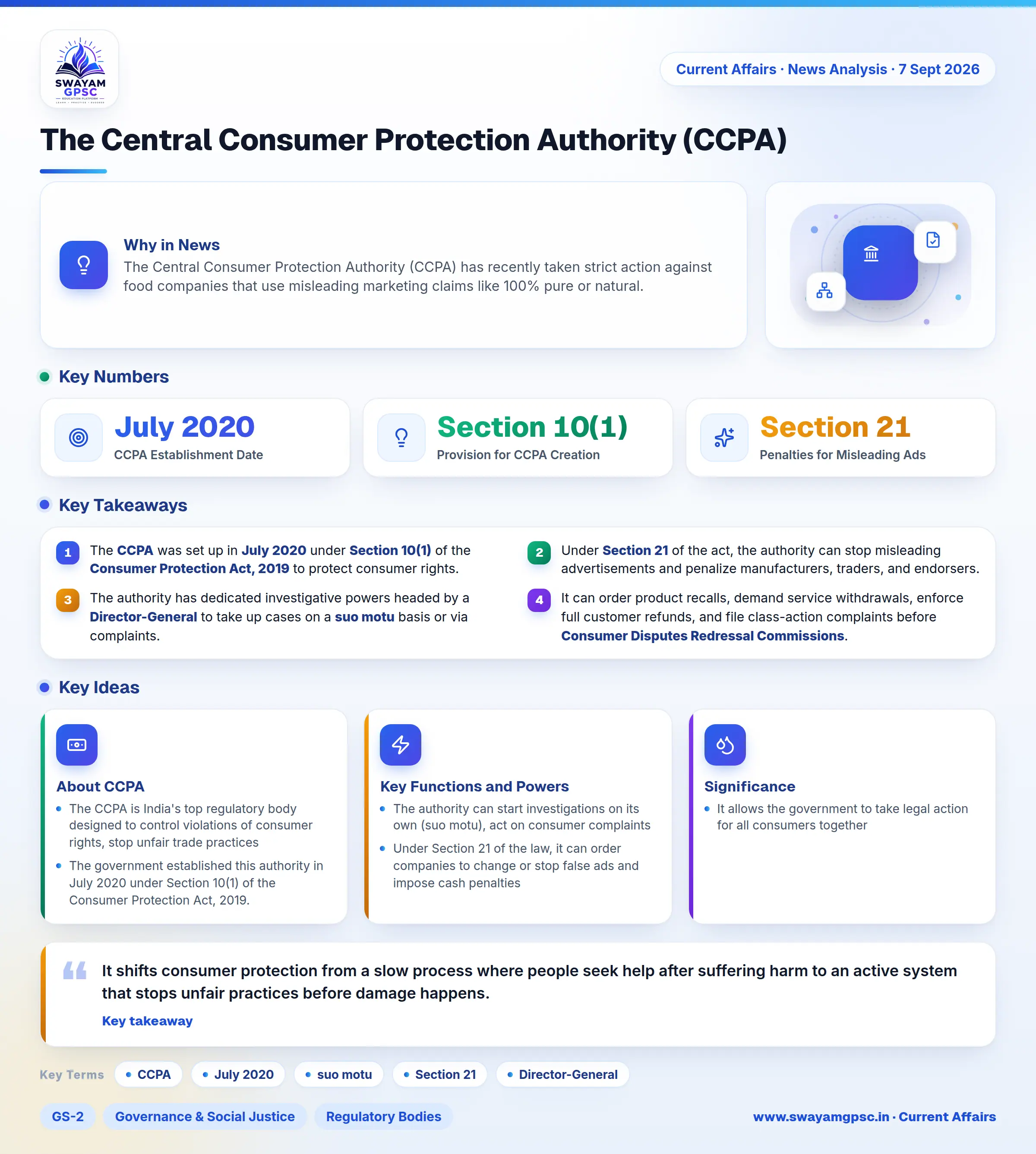
The Central Consumer Protection Authority (CCPA)
#GS-2 #Governance & Social Justice #Regulatory Bodies #Indian Polity & Constitution #Executive #Current Events #National #Consumer Protection #CCPA
Key takeaways
- The CCPA was set up in July 2020 under Section 10(1) of the Consumer Protection Act, 2019 to protect consumer rights.
- Under Section 21 of the act, the authority can stop misleading advertisements and penalize manufacturers, traders, and endorsers.
- The authority has dedicated investigative powers headed by a Director-General to take up cases on a suo motu basis or via complaints.
- It can order product recalls, demand service withdrawals, enforce full customer refunds, and file class-action complaints before Consumer Disputes Redressal Commissions.
Why in News
- The Central Consumer Protection Authority (CCPA) has recently taken strict action against food companies that use misleading marketing claims like 100% pure or natural.
About CCPA
- The CCPA is India's top regulatory body designed to control violations of consumer rights, stop unfair trade practices, and curb misleading advertisements.
- The government established this authority in July 2020 under Section 10(1) of the Consumer Protection Act, 2019.
- It aims to safeguard and enforce consumer rights as a whole group, stopping unfair commercial behavior and maintaining fairness in the market.
Key Functions and Powers
- The authority can start investigations on its own (suo motu), act on consumer complaints, or follow directions from the Central Government through a dedicated investigation team led by a Director-General.
- Under Section 21 of the law, it can order companies to change or stop false ads and impose cash penalties on manufacturers, sellers, and celebrity endorsers.
- It can order companies to recall dangerous or unsafe products from the market, cancel flawed services, and pay full refunds back to consumers.
- It issues binding rules to stop deceitful tactics like hidden service charges, dark patterns, and indirect surrogate ads, while sending out safety notices.
- The authority can directly step in and file legal cases on behalf of consumers before the District, State, or National Consumer Disputes Redressal Commissions.
Significance
- It shifts consumer protection from a slow process where people seek help after suffering harm to an active system that stops unfair practices before damage happens.
- It allows the government to take legal action for all consumers together, so individual citizens do not have to spend time and money fighting big corporations in court.