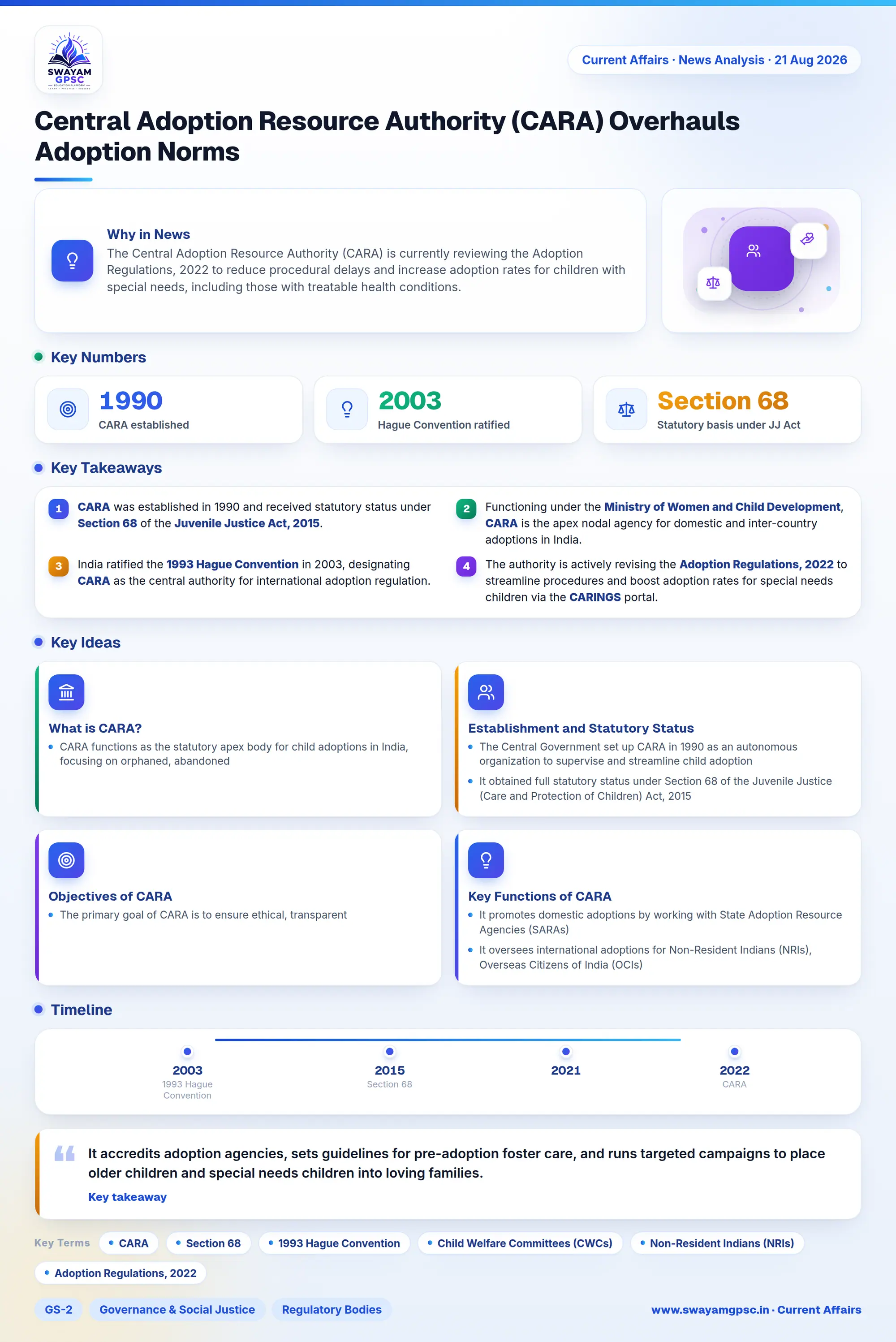
Central Adoption Resource Authority (CARA) Overhauls Adoption Norms
#GS-2 #Governance & Social Justice #Regulatory Bodies #Vulnerable Sections #National #CARA #Child Adoption
Key takeaways
- CARA was established in 1990 and received statutory status under Section 68 of the Juvenile Justice Act, 2015.
- Functioning under the Ministry of Women and Child Development, CARA is the apex nodal agency for domestic and inter-country adoptions in India.
- India ratified the 1993 Hague Convention in 2003, designating CARA as the central authority for international adoption regulation.
- The authority is actively revising the Adoption Regulations, 2022 to streamline procedures and boost adoption rates for special needs children via the CARINGS portal.
Why in News
- The Central Adoption Resource Authority (CARA) is currently reviewing the Adoption Regulations, 2022 to reduce procedural delays and increase adoption rates for children with special needs, including those with treatable health conditions.
What is CARA?
- CARA functions as the statutory apex body for child adoptions in India, focusing on orphaned, abandoned, and surrendered children under the Ministry of Women and Child Development (MWCD).
Establishment and Statutory Status
- The Central Government set up CARA in 1990 as an autonomous organization to supervise and streamline child adoption procedures.
- It obtained full statutory status under Section 68 of the Juvenile Justice (Care and Protection of Children) Act, 2015, which was amended in 2021.
- India ratified the 1993 Hague Convention on Intercountry Adoption in 2003, designating CARA as the nodal authority for cross-border adoptions.
Objectives of CARA
- The primary goal of CARA is to ensure ethical, transparent, and child-focused adoptions while preventing child trafficking and securing permanent homes for vulnerable children.
Key Functions of CARA
- It promotes domestic adoptions by working with State Adoption Resource Agencies (SARAs), Specialized Adoption Agencies (SAAs), and Child Welfare Committees (CWCs), ensuring priority for resident Indian families.
- It oversees international adoptions for Non-Resident Indians (NRIs), Overseas Citizens of India (OCIs), and foreign adoptive parents through recognized agencies and foreign missions.
- It updates legal framework rules like the Adoption Regulations, 2022 to remove procedural delays and streamline administrative timeframes.
- It operates the central online platform CARINGS under Mission Vatsalya to track waiting lists, maintain confidential records, and ensure complete operational transparency.
- It accredits adoption agencies, sets guidelines for pre-adoption foster care, and runs targeted campaigns to place older children and special needs children into loving families.