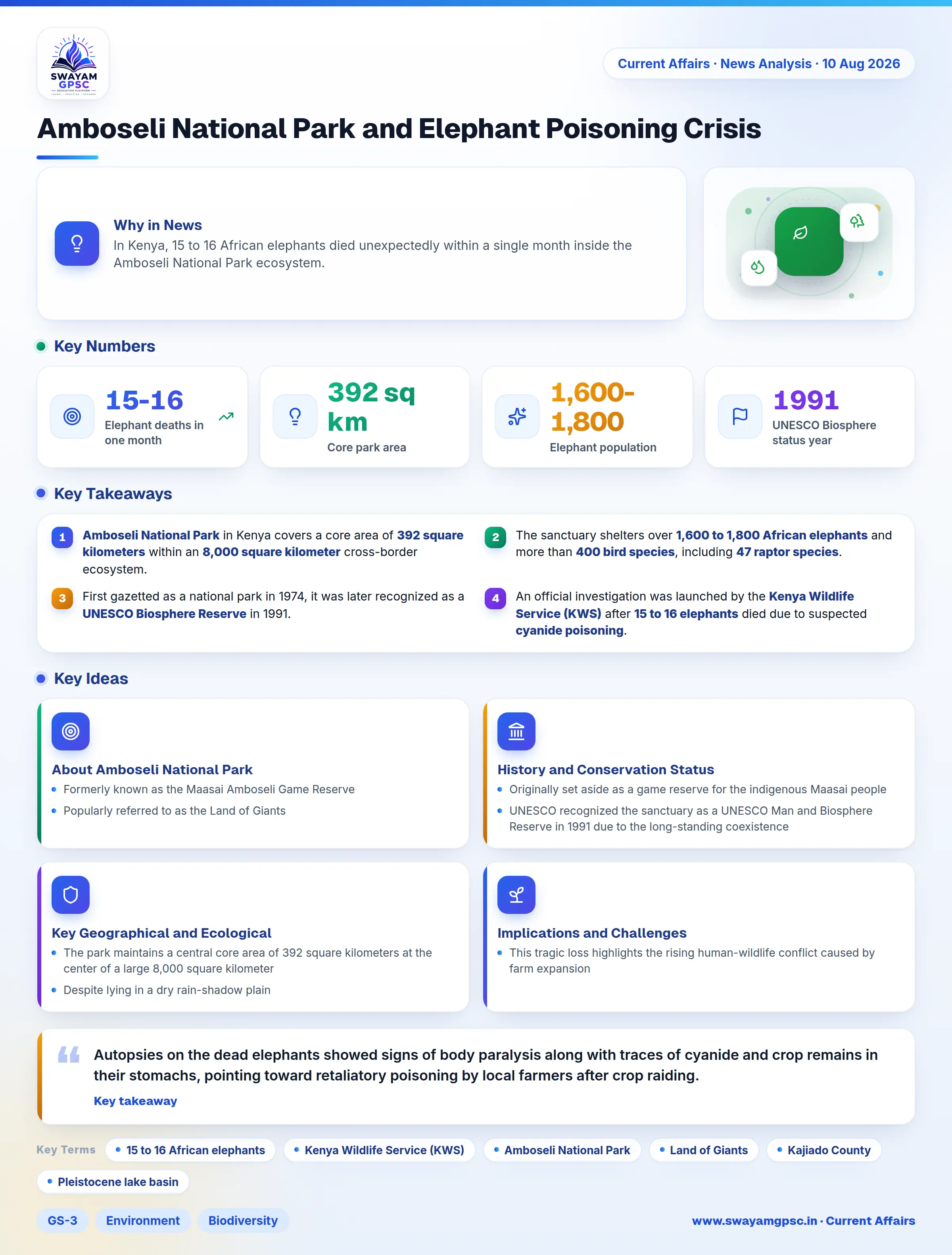
Amboseli National Park and Elephant Poisoning Crisis
#GS-3 #Environment #Biodiversity #Wildlife #GS-2 #Current Events #International #Geography #Mapping
Key takeaways
- Amboseli National Park in Kenya covers a core area of 392 square kilometers within an 8,000 square kilometer cross-border ecosystem.
- The sanctuary shelters over 1,600 to 1,800 African elephants and more than 400 bird species, including 47 raptor species.
- First gazetted as a national park in 1974, it was later recognized as a UNESCO Biosphere Reserve in 1991.
- An official investigation was launched by the Kenya Wildlife Service (KWS) after 15 to 16 elephants died due to suspected cyanide poisoning.
Why in News
- In Kenya, 15 to 16 African elephants died unexpectedly within a single month inside the Amboseli National Park ecosystem.
- The Kenya Wildlife Service (KWS) launched an investigation after early laboratory tests detected traces of cyanide poisoning, which likely originated from agricultural chemicals used on nearby farms.
About Amboseli National Park
- Formerly known as the Maasai Amboseli Game Reserve, Amboseli National Park is one of the most famous protected natural reserves in Kenya.
- Popularly referred to as the Land of Giants, this sanctuary is globally renowned for hosting large herds of free-ranging African elephants against the majestic backdrop of Mount Kilimanjaro.
- The reserve is located in Kajiado County in southern Kenya, directly touching the international border with Tanzania.
- It protects a dried-up Pleistocene lake basin situated within a semi-arid savanna natural ecosystem.
History and Conservation Status
- Originally set aside as a game reserve for the indigenous Maasai people, the government gazetted it as an official National Park in 1974 to safeguard its central wetlands and animal migration paths.
- UNESCO recognized the sanctuary as a UNESCO Man and Biosphere Reserve in 1991 due to the long-standing coexistence between local Maasai pastoralists, their livestock, and native wildlife.
Key Geographical and Ecological Features
- The park maintains a central core area of 392 square kilometers at the center of a large 8,000 square kilometer cross-border ecosystem connecting Kenya and Tanzania.
- Despite lying in a dry rain-shadow plain, underground water flowing from Mount Kilimanjaro and the Chyulu Hills creates permanent freshwater swamps and sulfur springs inside the park.
- It supports a rich wildlife population, including 1,600 to 1,800 elephants, major predators like lions, leopards, cheetahs, and spotted hyenas, along with large herds of zebras, buffaloes, wildebeests, and impalas.
- Recognized as an Important Bird Area (IBA), the park shelters more than 400 bird species, including 47 raptor species and the endangered Malagasy pond heron.
- The natural reserve depends heavily on community-owned group ranches like Kimana, Kuku, and Olgulului, which serve as crucial wildlife corridors connecting Amboseli to Tsavo West National Park and Mount Kilimanjaro.
Implications and Challenges
- Autopsies on the dead elephants showed signs of body paralysis along with traces of cyanide and crop remains in their stomachs, pointing toward retaliatory poisoning by local farmers after crop raiding.
- This tragic loss highlights the rising human-wildlife conflict caused by farm expansion, creating an urgent need to enforce stricter rules on agricultural pesticides.