World Refugee Day 2026: History and Protection Framework
#GS-2 #Current Events #International #International Treaties & Agreements #Quick Facts For Prelims #Rapid Fire CA
Key takeaways
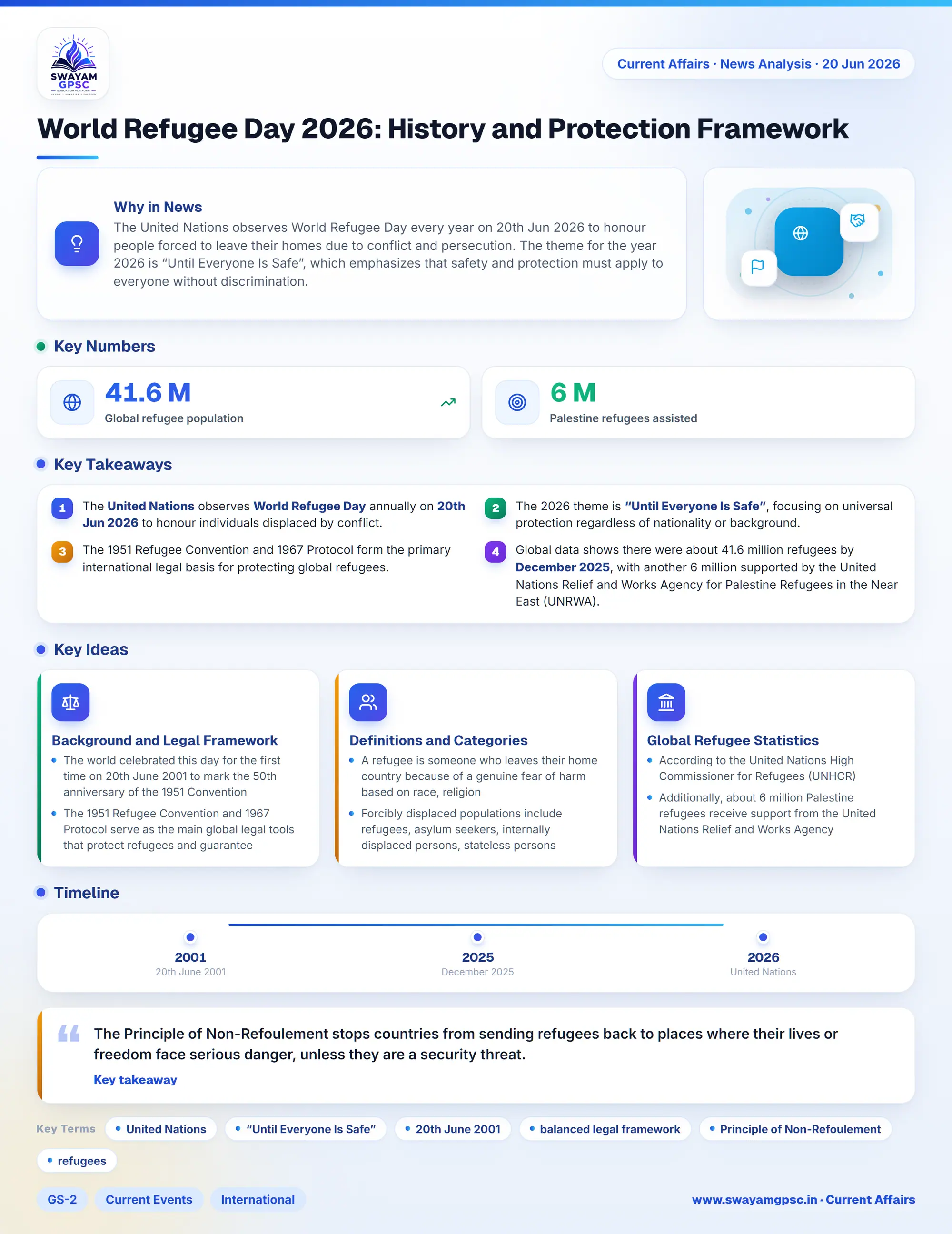
- The United Nations observes World Refugee Day annually on 20th Jun 2026 to honour individuals displaced by conflict.
- The 2026 theme is “Until Everyone Is Safe”, focusing on universal protection regardless of nationality or background.
- The 1951 Refugee Convention and 1967 Protocol form the primary international legal basis for protecting global refugees.
- Global data shows there were about 41.6 million refugees by December 2025, with another 6 million supported by the United Nations Relief and Works Agency for Palestine Refugees in the Near East (UNRWA).
Why in News
- The United Nations observes World Refugee Day every year on 20th Jun 2026 to honour people forced to leave their homes due to conflict and persecution.
- The theme for the year 2026 is “Until Everyone Is Safe”, which emphasizes that safety and protection must apply to everyone without discrimination.
Background and Legal Framework
- The world celebrated this day for the first time on 20th June 2001 to mark the 50th anniversary of the 1951 Convention Relating to the Status of Refugees.
- The 1951 Refugee Convention and 1967 Protocol serve as the main global legal tools that protect refugees and guarantee them basic rights.
- These laws ensure that refugees receive treatment that is at least equal to other foreign nationals and sometimes similar to local citizens.
- The convention outlines both the rights of refugees and their duties toward the host nation, creating a balanced legal framework for safety and accountability.
- The Principle of Non-Refoulement stops countries from sending refugees back to places where their lives or freedom face serious danger, unless they are a security threat.
Definitions and Categories
- A refugee is someone who leaves their home country because of a genuine fear of harm based on race, religion, nationality, social group, or political beliefs.
- Forcibly displaced populations include refugees, asylum seekers, internally displaced persons, stateless persons, and returnees who manage to go back home.
Global Refugee Statistics
- According to the United Nations High Commissioner for Refugees (UNHCR), the world had about 41.6 million refugees by the end of December 2025.
- Additionally, about 6 million Palestine refugees receive support from the United Nations Relief and Works Agency for Palestine Refugees in the Near East (UNRWA).