WHO Study on Global Adolescent Physical Inactivity Trends
#GS-2 #Governance & Social Justice #Health #Vulnerable Sections #GS-3 #Infrastructure #Current Events #International #Physical Inactivity #Adolescent Health
Key takeaways
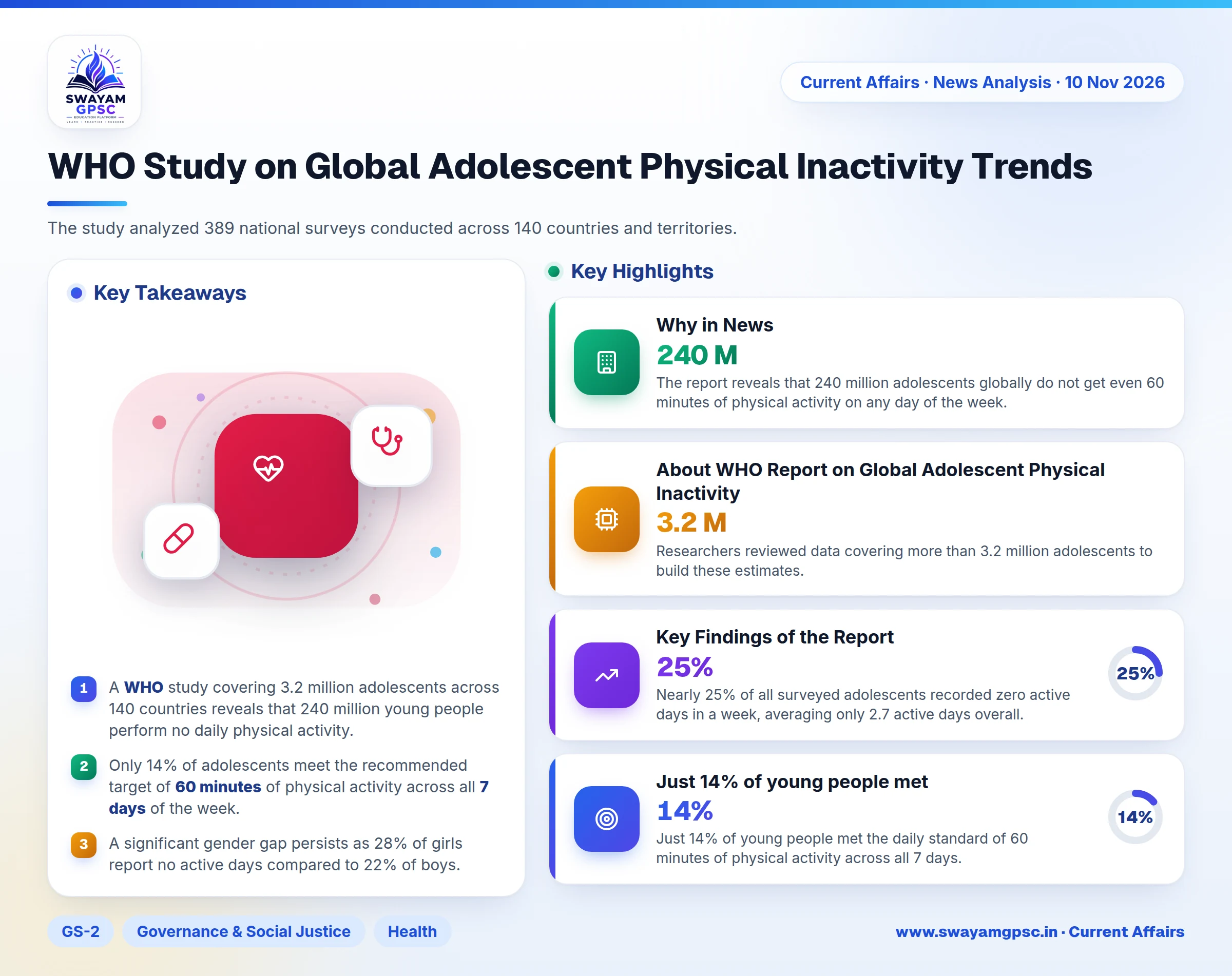
- A WHO study covering 3.2 million adolescents across 140 countries reveals that 240 million young people perform no daily physical activity.
- Only 14% of adolescents meet the recommended target of 60 minutes of physical activity across all 7 days of the week.
- A significant gender gap persists as 28% of girls report no active days compared to 22% of boys.
- Global physical inactivity levels among teenagers have remained unchanged for 15 years, ranging from 4% to over 40% depending on the country.
Why in News
- A new study by the World Health Organization (WHO) published in The Lancet Global Health highlights a major global health concern among young people.
- The report reveals that 240 million adolescents globally do not get even 60 minutes of physical activity on any day of the week.
- The data underlines deep gender disparities in activity levels that have not improved over time.
About WHO Report on Global Adolescent Physical Inactivity
- This global assessment by the WHO tracks exercise patterns among adolescents between 11 and 17 years of age.
- The study analyzed 389 national surveys conducted across 140 countries and territories.
- Researchers reviewed data covering more than 3.2 million adolescents to build these estimates.
Key Findings of the Report
- Nearly 25% of all surveyed adolescents recorded zero active days in a week, averaging only 2.7 active days overall.
- Just 14% of young people met the daily standard of 60 minutes of physical activity across all 7 days.
- A clear gender gap exists because 28% of girls had zero active days compared to 22% of boys.
- Only 11% of girls achieved daily activity compared to 17% of boys.
- Global progress has remained flat for 15 years, with national inactivity rates ranging from 4% to over 40%.
Significance of the Findings
- Encouraging regular movement reduces adult health risks like heart disease, type 2 diabetes, and specific forms of cancer.
- Governments must build safe public spaces, gender-focused sports facilities, and engaging physical education activities in schools to boost participation among girls.
- Improving activity levels requires joint efforts across urban planning, public transport, school education, and healthcare sectors to promote daily walking, cycling, and sports.