Western Ghats on Wheels: Karnataka Launches Mobile Biodiversity Museum
#GS-3 #Environment #Biodiversity #Sustainable Development #GS-2 #Governance & Social Justice #Education #Current Events #National #GS-1 #Geography #Western Ghats on Wheels #Project Sahyadri Samvardhana 2026
Key takeaways
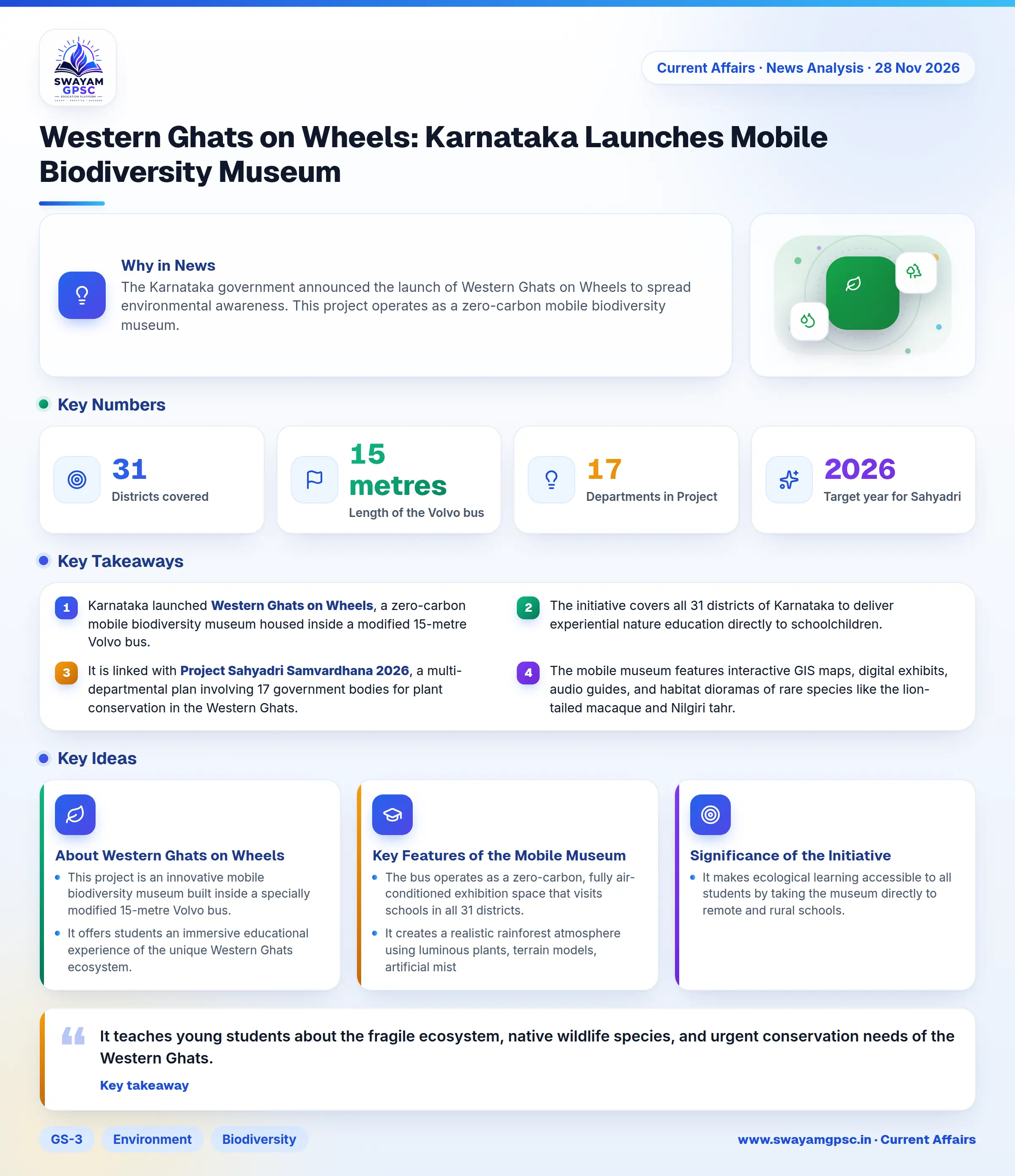
- Karnataka launched Western Ghats on Wheels, a zero-carbon mobile biodiversity museum housed inside a modified 15-metre Volvo bus.
- The initiative covers all 31 districts of Karnataka to deliver experiential nature education directly to schoolchildren.
- It is linked with Project Sahyadri Samvardhana 2026, a multi-departmental plan involving 17 government bodies for plant conservation in the Western Ghats.
- The mobile museum features interactive GIS maps, digital exhibits, audio guides, and habitat dioramas of rare species like the lion-tailed macaque and Nilgiri tahr.
Why in News
- The Karnataka government announced the launch of Western Ghats on Wheels to spread environmental awareness.
- This project operates as a zero-carbon mobile biodiversity museum.
- It aims to bring the experience of the Western Ghats rainforest directly to school students across all 31 districts of Karnataka.
About Western Ghats on Wheels
- This project is an innovative mobile biodiversity museum built inside a specially modified 15-metre Volvo bus.
- It offers students an immersive educational experience of the unique Western Ghats ecosystem.
- The Karnataka State Western Ghats Conservation Task Force Committee manages this green educational initiative.
- It is linked with Project Sahyadri Samvardhana 2026, a strategic conservation plan involving 17 government departments.
- This larger project aims to build scientific and decentralized plant conservation networks throughout the Western Ghats region.
- The main objective is to boost biodiversity awareness, environmental education, and conservation thinking among school students through hands-on learning.
Key Features of the Mobile Museum
- The bus operates as a zero-carbon, fully air-conditioned exhibition space that visits schools in all 31 districts.
- It creates a realistic rainforest atmosphere using luminous plants, terrain models, artificial mist, and waterfall effects.
- Students can see life-size models of rare regional animals like the lion-tailed macaque and Nilgiri tahr in recreated natural habitats.
- The museum includes modern multi-touch GIS biodiversity maps, interactive digital displays, and audio guides available in multiple languages.
Significance of the Initiative
- It teaches young students about the fragile ecosystem, native wildlife species, and urgent conservation needs of the Western Ghats.
- It makes ecological learning accessible to all students by taking the museum directly to remote and rural schools.