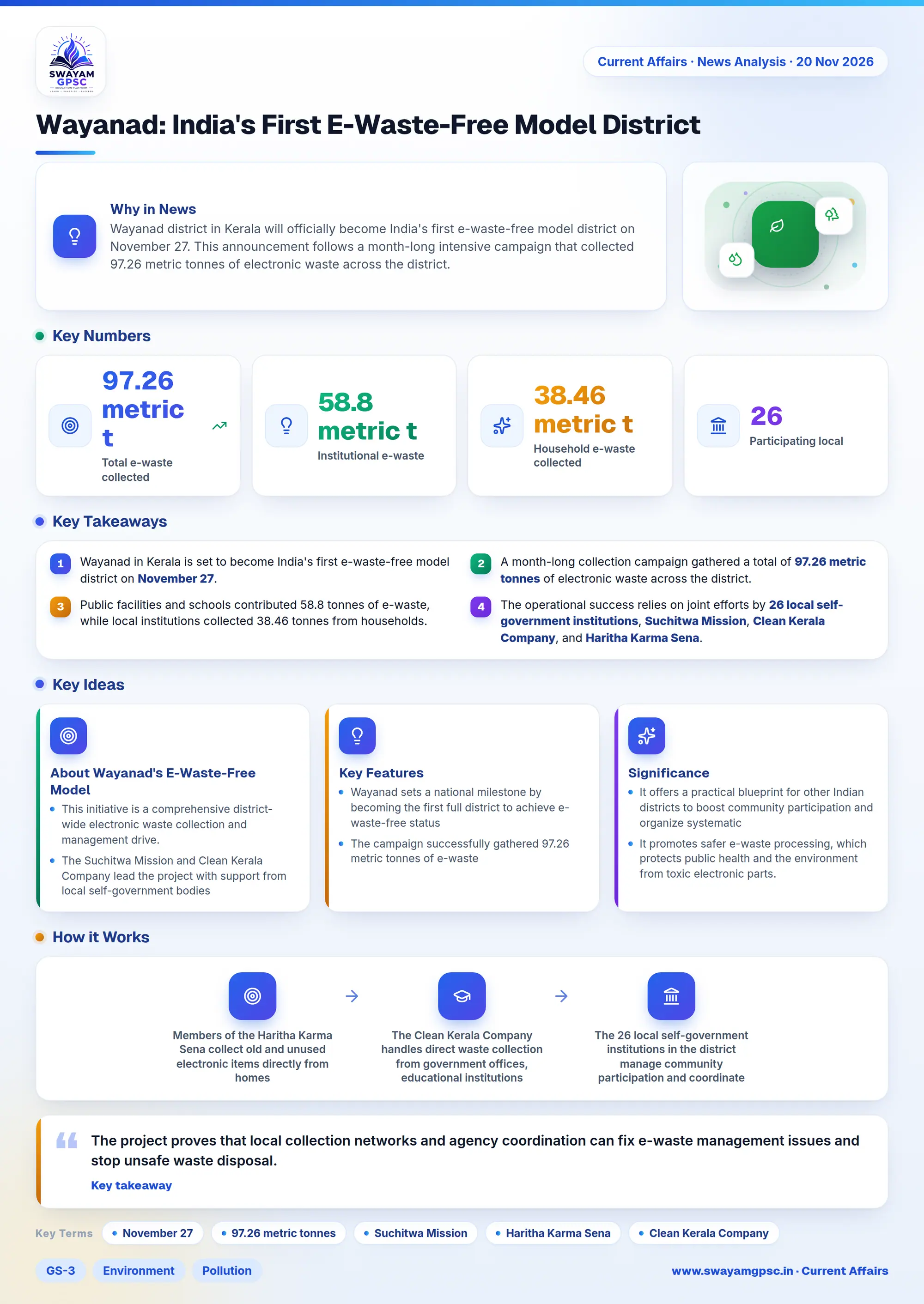
Wayanad: India's First E-Waste-Free Model District
#GS-3 #Environment #Pollution #Sustainable Development #GS-2 #Governance & Social Justice #Local Government #Current Events #National #E-Waste Management #Kerala
Key takeaways
- Wayanad in Kerala is set to become India's first e-waste-free model district on November 27.
- A month-long collection campaign gathered a total of 97.26 metric tonnes of electronic waste across the district.
- Public facilities and schools contributed 58.8 tonnes of e-waste, while local institutions collected 38.46 tonnes from households.
- The operational success relies on joint efforts by 26 local self-government institutions, Suchitwa Mission, Clean Kerala Company, and Haritha Karma Sena.
Why in News
- Wayanad district in Kerala will officially become India's first e-waste-free model district on November 27.
- This announcement follows a month-long intensive campaign that collected 97.26 metric tonnes of electronic waste across the district.
About Wayanad's E-Waste-Free Model District Initiative
- This initiative is a comprehensive district-wide electronic waste collection and management drive.
- The Suchitwa Mission and Clean Kerala Company lead the project with support from local self-government bodies and the Haritha Karma Sena.
How it Works
- Members of the Haritha Karma Sena collect old and unused electronic items directly from homes through coordinated collection drives.
- The Clean Kerala Company handles direct waste collection from government offices, educational institutions, and public facilities.
- The 26 local self-government institutions in the district manage community participation and coordinate overall operations with waste management agencies.
Key Features
- Wayanad sets a national milestone by becoming the first full district to achieve e-waste-free status, taking local village-level successes to a larger scale.
- The campaign successfully gathered 97.26 metric tonnes of e-waste, which includes 38.46 tonnes from local institutions and 58.8 tonnes from public offices and schools.
- The model relies on strong community action by connecting local government bodies, the Suchitwa Mission, Clean Kerala Company, and Haritha Karma Sena.
- The administration will formally honor the participating local bodies and Haritha Karma Sena workers for their key role in this achievement.
Significance
- The project proves that local collection networks and agency coordination can fix e-waste management issues and stop unsafe waste disposal.
- It offers a practical blueprint for other Indian districts to boost community participation and organize systematic e-waste drives.
- It promotes safer e-waste processing, which protects public health and the environment from toxic electronic parts.